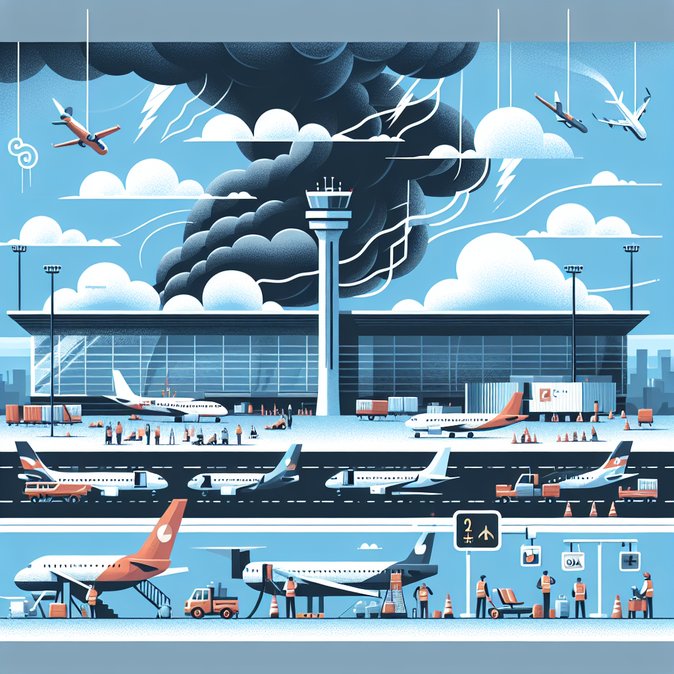
High winds and driving rain from Storm Dave swept across northern and western Europe on 7 April, forcing airlines to cancel at least 238 flights and delay 1,469 more. Frankfurt (Main) Airport—the continent’s busiest cargo hub and a pivotal transfer point for business travellers—was one of five major airports hit, alongside Keflavik, Stockholm-Arlanda, Dublin and several London gateways. Runway capacity was reduced as air-traffic controllers increased separation minima, leading carriers such as Lufthansa, easyJet and SAS to scrap rotations and reroute aircraft. Knock-on effects are expected to linger for 24–48 hours while crews and aircraft are repositioned. Because the disruption is weather-related, EC 261 compensation is unlikely. Airlines must still provide meals, hotel rooms and re-routing or refunds, but travellers should secure written confirmation of the cause to avoid disputes. Mobility managers should check on connecting itineraries through Frankfurt and update travellers on their rights; AirHelp’s disruption tracker can aid in documentation.
![Storm Dave: Frankfurt Among European Hubs Disrupted by Severe Weather]()
For travellers whose re-routing now entails unexpected entries into additional Schengen states, ensuring that passports and visas remain compliant can become an extra headache. VisaHQ’s Germany portal (https://www.visahq.com/germany/) streamlines the process by quickly checking requirements, expediting visa extensions or transit visas when needed, and providing real-time status updates—allowing mobility managers to concentrate on rebooking flights rather than scrambling over paperwork.
Cargo stakeholders should anticipate delays in time-sensitive shipments, particularly perishables and pharma, and consider shifting loads through Amsterdam or Paris if slack capacity exists. With climate-driven weather events increasing in frequency, the episode is another reminder for global-mobility teams to embed weather contingencies into travel risk assessments.

For travellers whose re-routing now entails unexpected entries into additional Schengen states, ensuring that passports and visas remain compliant can become an extra headache. VisaHQ’s Germany portal (https://www.visahq.com/germany/) streamlines the process by quickly checking requirements, expediting visa extensions or transit visas when needed, and providing real-time status updates—allowing mobility managers to concentrate on rebooking flights rather than scrambling over paperwork.
Cargo stakeholders should anticipate delays in time-sensitive shipments, particularly perishables and pharma, and consider shifting loads through Amsterdam or Paris if slack capacity exists. With climate-driven weather events increasing in frequency, the episode is another reminder for global-mobility teams to embed weather contingencies into travel risk assessments.