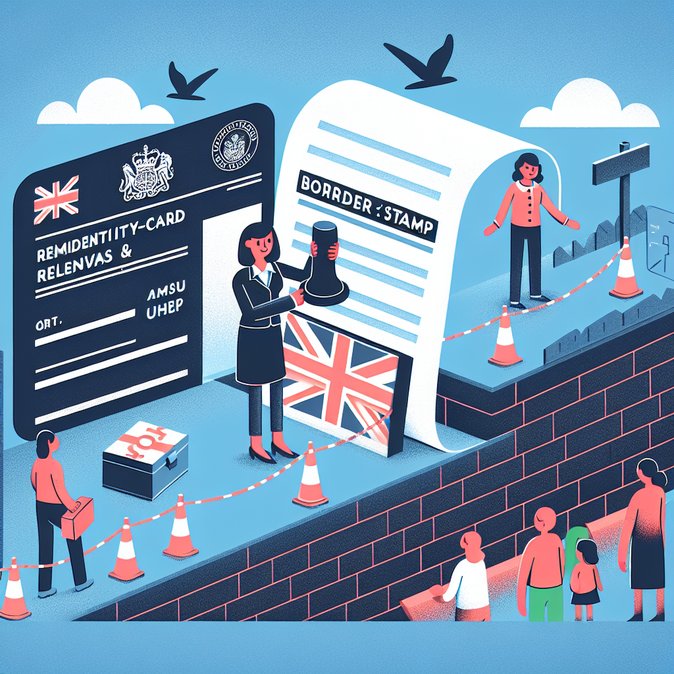
France’s Interior Minister Laurent Nuñez has unveiled an emergency plan to hire 500 temporary staff across the country’s prefectures in an effort to slash the growing delays in processing residency cards. According to the minister, the additional personnel—equivalent to a 20 % boost in head-count—will be deployed as early as May and will concentrate on the two prefectural “pain points”: first-issue cartes de séjour for non-EU nationals and renewals for the 40,000 five-year Brexit Withdrawal Agreement (WA) cards that begin to expire this summer. Backlogs have ballooned since applications moved online in 2021. Immigration lawyers report waits of six to eight months for standard renewals, during which time foreign employees cannot renew their social-security numbers or re-enter France if they travel. Staffing was singled out by the Cour des Comptes and by advocacy groups such as Amnesty International as a structural weakness in the French migration system, prompting businesses to lobby the government after several assignees risked falling out of legal status and losing their right to work.
![France to recruit 500 extra staff to clear residency-card backlog]()
For companies and individuals seeking extra reassurance, VisaHQ can step in to manage the paperwork maze: its France portal (https://www.visahq.com/france/) provides document checks, appointment scheduling and real-time status updates, reducing the risk of errors that could prolong the process.
Nuñez told Ouest France that the prefectures will also receive upgraded IT equipment and a new case-management dashboard that flags files approaching the 90-day statutory deadline. A parallel proposal would double the validity of stored biometric data from five to ten years, allowing frequent renewers to skip in-person fingerprinting. For global mobility managers the changes mean shorter lead-times and less contingency buffering in assignment timelines. Companies are advised, however, to keep renewing employees on payroll until they have obtained their récépissé (filing receipt), which remains the only proof of continued work authorisation during the transition period. Prefectures will start publishing average processing times by department from July, giving HR teams a clearer picture of where appointments are most congested.
For companies and individuals seeking extra reassurance, VisaHQ can step in to manage the paperwork maze: its France portal (https://www.visahq.com/france/) provides document checks, appointment scheduling and real-time status updates, reducing the risk of errors that could prolong the process.
Nuñez told Ouest France that the prefectures will also receive upgraded IT equipment and a new case-management dashboard that flags files approaching the 90-day statutory deadline. A parallel proposal would double the validity of stored biometric data from five to ten years, allowing frequent renewers to skip in-person fingerprinting. For global mobility managers the changes mean shorter lead-times and less contingency buffering in assignment timelines. Companies are advised, however, to keep renewing employees on payroll until they have obtained their récépissé (filing receipt), which remains the only proof of continued work authorisation during the transition period. Prefectures will start publishing average processing times by department from July, giving HR teams a clearer picture of where appointments are most congested.