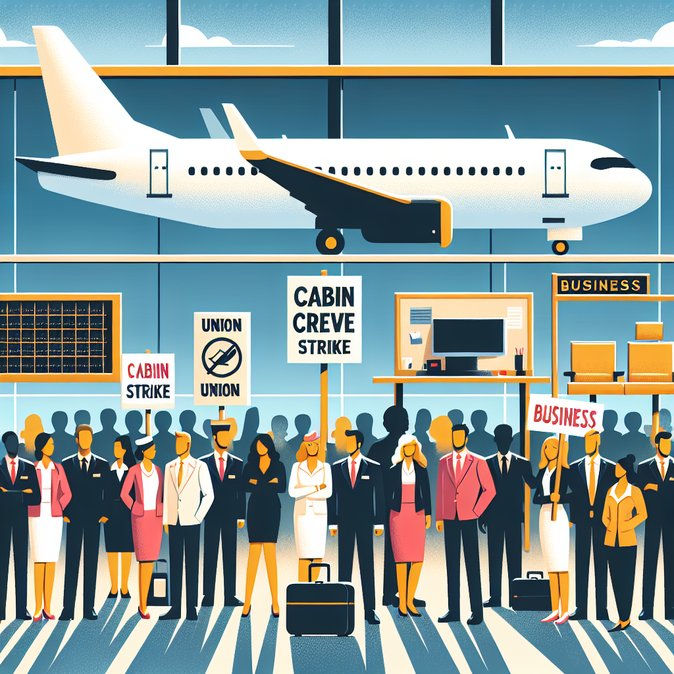
Germany’s Easter getaway could be thrown into chaos after the Independent Flight Attendants’ Union (Ufo) confirmed on 6 April that more than 94 percent of Lufthansa mainline cabin crew – and 98 percent at regional subsidiary CityLine – backed industrial action in a company-wide ballot. Ufo accuses Lufthansa of “months of stalling tactics” in talks over a new framework agreement covering rosters, base assignments and entry-level pay. The union wants a starting salary of €2,450 per month and clearer rules on duty schedules. Management and pilots only narrowly averted strikes in February, while ground staff reached a wage deal with ver.di in March, leaving cabin crew as the last large group without a settlement. Any walk-out is likely to target the peak Easter return rush between 7 and 13 April. Munich Airport – Lufthansa’s second-largest hub – cancelled hundreds of flights during earlier pilot strikes and is already operating at near-holiday capacity. Travel-management firms are warning corporate travellers to maintain flexible tickets and monitor re-booking windows, as Lufthansa typically opens free-of-charge re-routing three days before a strike.
![Lufthansa cabin crew vote paves way for Easter strike, Munich hub on alert]()
Amid this uncertainty, travellers shouldn’t overlook visa and entry requirements. VisaHQ (https://www.visahq.com/germany/) can quickly determine whether passengers transiting through or entering Germany need a Schengen visa, provide expedited processing, and even adjust documentation if last-minute rerouting sends them via another European hub—helping keep travel plans on track when flights are in flux.
For multinational employers the timing is awkward: face-to-face meetings and trade fairs such as Hannover Messe begin next week, and many international itineraries rely on tight intra-European connections through Munich and Frankfurt. Should the stoppage go ahead, HR mobility teams will need contingency plans that might include rail segments or alternative hubs such as Zurich and Vienna within the wider Lufthansa Group. Longer-term, analysts see the repeated labour disputes as a risk to Germany’s reputation for reliability. The carrier is simultaneously preparing events for its 100-year anniversary on 15 April and cannot afford further service disruptions that drive high-yield passengers to Middle-East or low-cost rivals.
Amid this uncertainty, travellers shouldn’t overlook visa and entry requirements. VisaHQ (https://www.visahq.com/germany/) can quickly determine whether passengers transiting through or entering Germany need a Schengen visa, provide expedited processing, and even adjust documentation if last-minute rerouting sends them via another European hub—helping keep travel plans on track when flights are in flux.
For multinational employers the timing is awkward: face-to-face meetings and trade fairs such as Hannover Messe begin next week, and many international itineraries rely on tight intra-European connections through Munich and Frankfurt. Should the stoppage go ahead, HR mobility teams will need contingency plans that might include rail segments or alternative hubs such as Zurich and Vienna within the wider Lufthansa Group. Longer-term, analysts see the repeated labour disputes as a risk to Germany’s reputation for reliability. The carrier is simultaneously preparing events for its 100-year anniversary on 15 April and cannot afford further service disruptions that drive high-yield passengers to Middle-East or low-cost rivals.