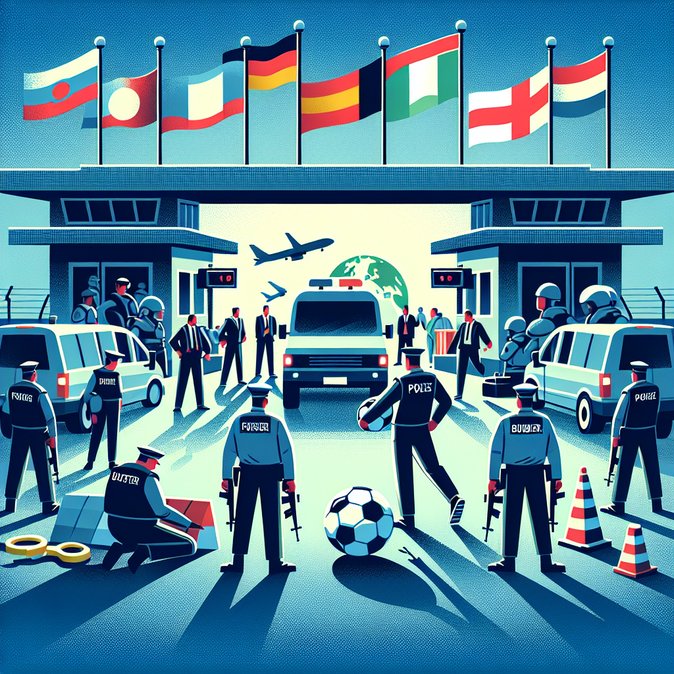
With Canada set to co-host the 2026 FIFA World Cup, bilateral security preparations have raised mobility and civil-liberty questions. On 6 April, U.S. Immigration and Customs Enforcement (ICE) told The Canadian Press that its Homeland Security Investigations (HSI) personnel stationed in Canada do not carry firearms and will not conduct enforcement actions such as arrests or search-warrant executions on Canadian soil. ICE maintains five liaison offices nationwide—including in Toronto and Vancouver, both match venues—focused on investigations of narcotics, weapons smuggling and human trafficking.
![U.S. ICE clarifies agents in Canada will be unarmed during 2026 FIFA World Cup collaborations]()
For organisations managing travel around the tournament, VisaHQ’s Canada portal (https://www.visahq.com/canada/) offers a quick way to verify visa requirements, submit electronic travel authorisation applications and track policy updates on both sides of the border, reducing the risk of last-minute documentation surprises for fans, staff and corporate guests.
The reassurance follows a Toronto City Council motion opposing any armed ICE presence during the tournament and public concern that U.S. agents could detain foreign fans transiting to U.S. matches. From a global-mobility standpoint, the clarification reduces the risk of unexpected U.S. immigration enforcement encounters for business travellers and corporate guests moving between World Cup host cities. It also underscores the jurisdictional boundaries that apply when foreign law-enforcement officers work in Canada under cross-border agreements. Ottawa’s Public Safety Ministry reiterated that ICE has “no authority or jurisdiction” domestically; any operational activity will be led by Canadian agencies with U.S. support limited to intelligence sharing. Companies planning corporate hospitality programmes should still brief travellers on differing U.S. and Canadian entry rules and ensure electronic devices comply with both countries’ inspection regimes.

For organisations managing travel around the tournament, VisaHQ’s Canada portal (https://www.visahq.com/canada/) offers a quick way to verify visa requirements, submit electronic travel authorisation applications and track policy updates on both sides of the border, reducing the risk of last-minute documentation surprises for fans, staff and corporate guests.
The reassurance follows a Toronto City Council motion opposing any armed ICE presence during the tournament and public concern that U.S. agents could detain foreign fans transiting to U.S. matches. From a global-mobility standpoint, the clarification reduces the risk of unexpected U.S. immigration enforcement encounters for business travellers and corporate guests moving between World Cup host cities. It also underscores the jurisdictional boundaries that apply when foreign law-enforcement officers work in Canada under cross-border agreements. Ottawa’s Public Safety Ministry reiterated that ICE has “no authority or jurisdiction” domestically; any operational activity will be led by Canadian agencies with U.S. support limited to intelligence sharing. Companies planning corporate hospitality programmes should still brief travellers on differing U.S. and Canadian entry rules and ensure electronic devices comply with both countries’ inspection regimes.
More From Canada
View all
Canada rolls out sweeping April immigration rule changes, from passport fees to Super Visa flexibility
Ottawa sets concrete foreign-credential recognition target: 32 000 newcomers to benefit in 2026-27