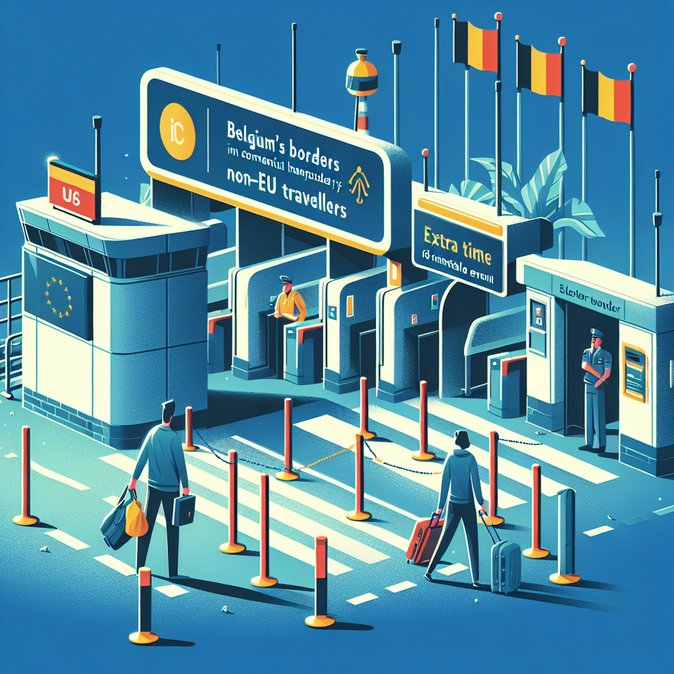
With the Easter school break in full swing, Belgium is making last-minute preparations for the complete activation of the European Union’s Entry/Exit System (EES) on 10 April. SafeAbroad’s latest bulletin notes that only half of non-EU travellers have so far been processed under the biometric scheme; from Thursday, 100 % will face facial-image and fingerprint capture when entering or leaving the Schengen Area. Brussels Airport expects more than 1.25 million passengers between 3 and 19 April, with 6 and 13 April flagged as peak travel days.
![EU Entry/Exit System Goes Fully Live on 10 April—Belgium Warns of Holiday-Weekend Queues]()
To help travellers avoid last-minute document surprises, services like VisaHQ can pre-screen passports and visas online and provide guidance on EES registration. Their Belgium portal (https://www.visahq.com/belgium/) gives both leisure and corporate clients a quick way to check entry rules, order expedited renewals and sign up for alerts on any additional border requirements—useful peace of mind during this busy rollout.
First-time enrolment in the EES can add several minutes per traveller; industry simulations suggest overall border-queue times could rise by up to 70 % during the first fortnight of full implementation. Belgium’s Interior Ministry says additional kiosks and roving border officers will be deployed, but has urged airlines to stagger arrival waves where possible. Carriers operating out of Brussels South Charleroi have been told to open check-in three hours before departure for flights to the UK, US and North Africa to absorb potential outbound delays. Corporate mobility teams should brief employees on the need for a machine-readable passport with at least two blank pages and ensure names are entered consistently across airline bookings and EES enrolment. Travellers who already gave biometrics in 2025 will be recognised automatically, but must still present the same passport. The seamless-travel upside—fewer manual stamps and automated exit recording—will only be felt once enrolment saturates. Until then, Belgian businesses with back-to-back client meetings or tight crew rotations should build extra layover time into itineraries and monitor real-time queue data released by Brussels Airport’s mobility dashboard.

To help travellers avoid last-minute document surprises, services like VisaHQ can pre-screen passports and visas online and provide guidance on EES registration. Their Belgium portal (https://www.visahq.com/belgium/) gives both leisure and corporate clients a quick way to check entry rules, order expedited renewals and sign up for alerts on any additional border requirements—useful peace of mind during this busy rollout.
First-time enrolment in the EES can add several minutes per traveller; industry simulations suggest overall border-queue times could rise by up to 70 % during the first fortnight of full implementation. Belgium’s Interior Ministry says additional kiosks and roving border officers will be deployed, but has urged airlines to stagger arrival waves where possible. Carriers operating out of Brussels South Charleroi have been told to open check-in three hours before departure for flights to the UK, US and North Africa to absorb potential outbound delays. Corporate mobility teams should brief employees on the need for a machine-readable passport with at least two blank pages and ensure names are entered consistently across airline bookings and EES enrolment. Travellers who already gave biometrics in 2025 will be recognised automatically, but must still present the same passport. The seamless-travel upside—fewer manual stamps and automated exit recording—will only be felt once enrolment saturates. Until then, Belgian businesses with back-to-back client meetings or tight crew rotations should build extra layover time into itineraries and monitor real-time queue data released by Brussels Airport’s mobility dashboard.