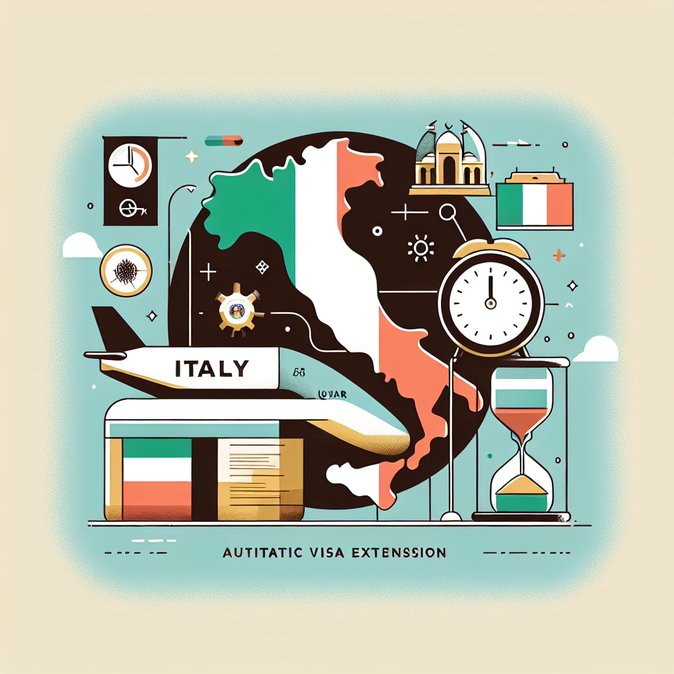
Italy has joined a coordinated European initiative granting automatic visa extensions and overstay-fine waivers to nationals stuck in the United Arab Emirates, Qatar and Israel after airspace closures severed normal flight links with Europe. The measure, confirmed by the Italian Foreign Ministry on 5 April, applies to tourists and business travellers whose visas are expiring while they await replacement flights. The Middle-East conflict erupted on 28 February when US-Israeli strikes on Iranian targets led Tehran to close the Strait of Hormuz and to missile exchanges that prompted Gulf states to restrict civilian air corridors. Hundreds of flights were cancelled at Dubai, Doha and Tel Aviv, stranding an estimated 6,000 Italian citizens.
![Italy issues visa-overstay waivers for citizens stranded in Gulf airports]()
In situations like these, VisaHQ can serve as a lifeline for affected travellers and HR teams. The company’s Italy portal (https://www.visahq.com/italy/) delivers up-to-the-minute visa guidance, facilitates extension requests and supplies the supporting documents airlines or border officials may ask for, ensuring compliance is maintained even when plans are upended.
Consular outposts in Dubai and Tel Aviv were instructed to issue letters confirming that holders will not be penalised for overstays and to liaise with local immigration desks. Under Italy’s decree, travellers whose Schengen visas or GCC visit permits expire between 28 February and 30 April will see validity automatically prolonged until 31 May. Employers with posted workers on short-term missions can therefore avoid emergency repatriations and continue salary payments under existing contractual terms. The decree also authorises ITA Airways to operate additional "humanitarian" flights once Gulf authorities reopen slots, mirroring steps taken by Germany’s Lufthansa and the UK’s British Airways. For global mobility teams the waiver removes an immediate compliance headache but does not eliminate tax-residency risk. Professionals stranded beyond 183 days may trigger tax obligations in host countries; firms should monitor days-in-country and consider split-payroll solutions if the crisis drags on. Travellers are advised to keep boarding-pass stubs and consular letters to evidence force-majeure stays when renewing future Schengen visas. Italian officials stress that the dispensation is temporary and will lapse automatically once normal schedules resume. Still, observers hail the rapid, collective response — also adopted by Switzerland, Germany, the Netherlands and Turkey — as a blueprint for crisis-time mobility governance.
In situations like these, VisaHQ can serve as a lifeline for affected travellers and HR teams. The company’s Italy portal (https://www.visahq.com/italy/) delivers up-to-the-minute visa guidance, facilitates extension requests and supplies the supporting documents airlines or border officials may ask for, ensuring compliance is maintained even when plans are upended.
Consular outposts in Dubai and Tel Aviv were instructed to issue letters confirming that holders will not be penalised for overstays and to liaise with local immigration desks. Under Italy’s decree, travellers whose Schengen visas or GCC visit permits expire between 28 February and 30 April will see validity automatically prolonged until 31 May. Employers with posted workers on short-term missions can therefore avoid emergency repatriations and continue salary payments under existing contractual terms. The decree also authorises ITA Airways to operate additional "humanitarian" flights once Gulf authorities reopen slots, mirroring steps taken by Germany’s Lufthansa and the UK’s British Airways. For global mobility teams the waiver removes an immediate compliance headache but does not eliminate tax-residency risk. Professionals stranded beyond 183 days may trigger tax obligations in host countries; firms should monitor days-in-country and consider split-payroll solutions if the crisis drags on. Travellers are advised to keep boarding-pass stubs and consular letters to evidence force-majeure stays when renewing future Schengen visas. Italian officials stress that the dispensation is temporary and will lapse automatically once normal schedules resume. Still, observers hail the rapid, collective response — also adopted by Switzerland, Germany, the Netherlands and Turkey — as a blueprint for crisis-time mobility governance.