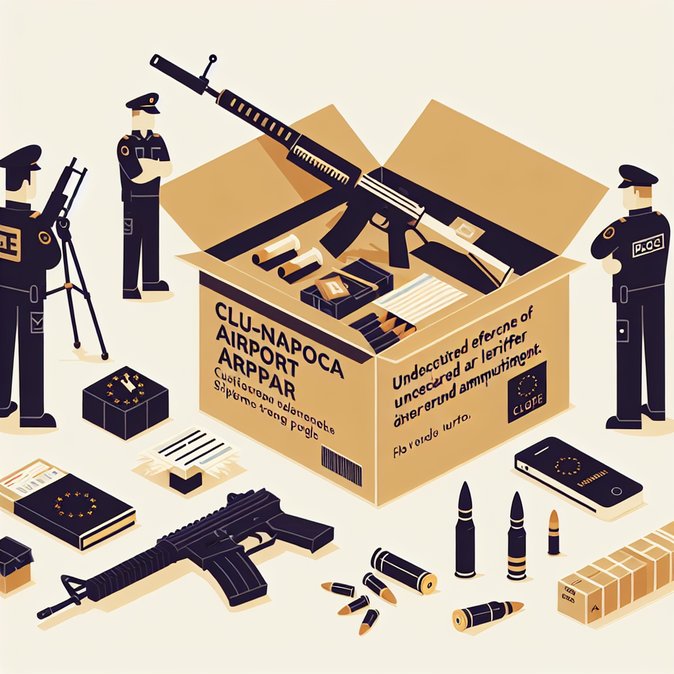
Romania’s frontier police at Cluj-Napoca Airport on 4 April intercepted an air-rifle and 200 cartridges sent from a Czech supplier to a private Romanian buyer. The consignment lacked the import licence and proof-of-conformity required for Category D weapons under both countries’ implementation of the EU Firearms Directive.
![Romanian border police seize undeclared Czech air rifle shipment, spotlighting tighter firearms compliance]()
Businesses and individuals who find themselves facing similar cross-border licensing puzzles can benefit from VisaHQ’s tailored services; through its Czech Republic page (https://www.visahq.com/czech-republic/), the platform offers practical assistance in obtaining permits, tracking regulatory changes, and expediting related travel or shipping documentation for both senders and recipients.
Officers seized the goods and opened an administrative-offence file; the recipient faces fines of up to RON 20,000, while the Czech exporter could be barred from future simplified customs procedures. Although air rifles are not subject to the strictest controls, they still require a declaration and CE safety marking when moved across EU borders. For Czech e-commerce and sporting-goods companies, the case underscores the need to verify that overseas customers hold the correct authorisations before shipping, even within the single market. Mobility practitioners arranging expatriate moves that include personal sporting weapons should note that carriers increasingly request advance copies of import permits to avoid liability at destination. The incident also illustrates heightened screening at secondary EU airports ahead of the full Entry/Exit System go-live on 10 April, when border agencies will gain faster access to customs and police databases. Companies should therefore audit any cross-border shipments of controlled items to pre-empt costly seizures and reputational damage.

Businesses and individuals who find themselves facing similar cross-border licensing puzzles can benefit from VisaHQ’s tailored services; through its Czech Republic page (https://www.visahq.com/czech-republic/), the platform offers practical assistance in obtaining permits, tracking regulatory changes, and expediting related travel or shipping documentation for both senders and recipients.
Officers seized the goods and opened an administrative-offence file; the recipient faces fines of up to RON 20,000, while the Czech exporter could be barred from future simplified customs procedures. Although air rifles are not subject to the strictest controls, they still require a declaration and CE safety marking when moved across EU borders. For Czech e-commerce and sporting-goods companies, the case underscores the need to verify that overseas customers hold the correct authorisations before shipping, even within the single market. Mobility practitioners arranging expatriate moves that include personal sporting weapons should note that carriers increasingly request advance copies of import permits to avoid liability at destination. The incident also illustrates heightened screening at secondary EU airports ahead of the full Entry/Exit System go-live on 10 April, when border agencies will gain faster access to customs and police databases. Companies should therefore audit any cross-border shipments of controlled items to pre-empt costly seizures and reputational damage.