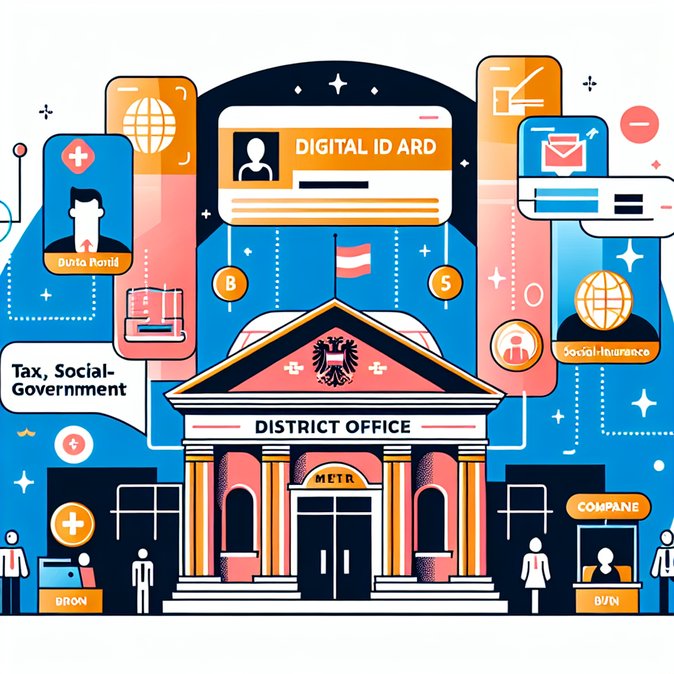
Starting today, 1 April 2026, the Bezirkshauptmannschaften (district authorities) of Imst, Reutte and Lienz are issuing the ID-Austria digital identity not only to Austrian citizens but also to foreign nationals who live or work in Tirol. Until now, expatriates had to travel to the provincial police headquarters in Innsbruck, visit one of the few participating municipalities or apply at the tax office to obtain the e-ID. Expanding the service is part of the Tirol government’s broader “Vereinfachung & Entbürokratisierung” programme, which aims to move as many public-administration touchpoints as possible online. Digital-affairs councillor Mario Gerber said the new outlets should “remove red tape for international employees—from Germany, Italy or Croatia—who increasingly use the ID-Austria to access FinanzOnline, social-insurance portals and other services”.
![Tirol extends ID-Austria digital identity to foreign residents from 1 April 2026]()
If you or your assignees need additional help with any of the paperwork, VisaHQ provides clear, step-by-step assistance for Austrian immigration matters—from visa applications to the new ID-Austria registration—through its dedicated portal at https://www.visahq.com/austria/ The service can save companies and individuals significant time by bundling requirements, appointment booking and document checks in one place.
For employers running international assignments, the change means on-boarding foreign staff becomes easier: new hires can register their e-ID close to where they live instead of losing a workday travelling to Innsbruck. Because ID-Austria is now the mandatory login for the Business Service Portal (USP) and many labour-law filings, HR departments had warned of processing bottlenecks ahead of the summer season. The province also published new uptake figures: more than 440,000 Tirol residents—over 65 % of the population—already hold an ID-Austria, compared with 61 % nationwide. Officials credit an aggressive outreach campaign and 70 bookable e-government services accessible via a single smartphone app. Practically, foreign nationals will need a valid passport, Meldezettel (registration certificate) and in most cases a residence permit. At BH Imst appointments must be booked online, while BH Reutte and BH Lienz operate a walk-in counter. The Tirol government has promised English-language guidance and is considering an Italian interface by the summer. Companies with large expatriate workforces—tourism, construction and cross-border manufacturing—are advised to circulate the new options and schedule enrolments early to avoid delays before the Entry-Exit System (EES) becomes mandatory on 10 April.

If you or your assignees need additional help with any of the paperwork, VisaHQ provides clear, step-by-step assistance for Austrian immigration matters—from visa applications to the new ID-Austria registration—through its dedicated portal at https://www.visahq.com/austria/ The service can save companies and individuals significant time by bundling requirements, appointment booking and document checks in one place.
For employers running international assignments, the change means on-boarding foreign staff becomes easier: new hires can register their e-ID close to where they live instead of losing a workday travelling to Innsbruck. Because ID-Austria is now the mandatory login for the Business Service Portal (USP) and many labour-law filings, HR departments had warned of processing bottlenecks ahead of the summer season. The province also published new uptake figures: more than 440,000 Tirol residents—over 65 % of the population—already hold an ID-Austria, compared with 61 % nationwide. Officials credit an aggressive outreach campaign and 70 bookable e-government services accessible via a single smartphone app. Practically, foreign nationals will need a valid passport, Meldezettel (registration certificate) and in most cases a residence permit. At BH Imst appointments must be booked online, while BH Reutte and BH Lienz operate a walk-in counter. The Tirol government has promised English-language guidance and is considering an Italian interface by the summer. Companies with large expatriate workforces—tourism, construction and cross-border manufacturing—are advised to circulate the new options and schedule enrolments early to avoid delays before the Entry-Exit System (EES) becomes mandatory on 10 April.