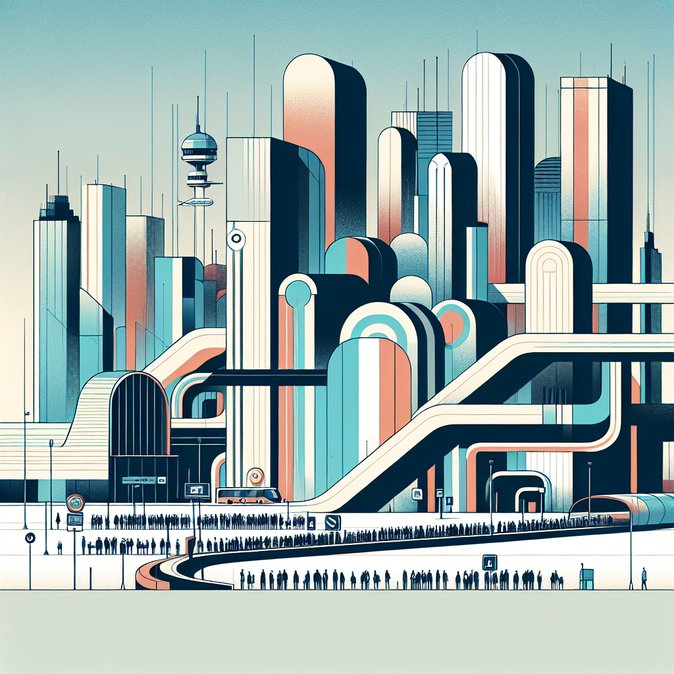
An analysis published on 30 March 2026 by industry outlet Travel & Tour World warns that Europe’s new Entry/Exit System (EES) – already in partial use – will require Italian border police to register every non-EU traveller’s fingerprints and facial image from 31 March 2026. With Easter traffic peaking this week, unions at Rome Fiumicino and Milan Malpensa say staffing levels remain 20 % below what the Interior Ministry’s own modelling recommends. EES replaces manual passport stamping with a biometric database managed by EU-LISA. At Italian airports a hybrid model is in force: about half of third-country nationals are still waved through traditional booths, while early-adopter e-gates collect fingerprints for a limited set of nationalities. From 31 March, border officers will have to enrol all first-time arrivals, a process airlines estimate will add two to three minutes per passenger if kiosks malfunction or travellers are unfamiliar with the procedure. ENAC, Italy’s civil-aviation regulator, projects that peak-hour queues at Fiumicino could reach 90 minutes without contingency lanes.
![Schengen Entry/Exit System countdown: Italian airports brace for 100 % biometric checks from 31 March 2026]()
For travellers looking to minimise delays, VisaHQ can help streamline the paperwork well before departure. Its Italy page (https://www.visahq.com/italy/) provides step-by-step guidance on visa types, real-time requirement checks, and secure document submission, ensuring passengers arrive with the correct documentation and fewer surprises at the new biometric checkpoints.
The Transport Ministry is rushing to install 120 additional self-service kiosks across five airports and has authorised overtime for 600 frontier police officers during the Easter window. Meanwhile, Tour Operator Italia, which handles group visas for cruise lines, is urging carriers to stagger flight arrivals and to pre-collect biometric data where allowed by EU rules. Business-travel associations fear knock-on effects: missed rail connections from airport stations and breaches of EU working-time limits for drivers waiting to pick up executives. For mobility managers the advice is clear: build extra buffer time into itineraries, brief inbound assignees on the fingerprint process, and encourage the use of Italy’s “Viaggiare Sicuri” app to receive real-time alerts about border bottlenecks. In the medium term, airports hope that once the initial enrolment wave is complete, automated gates will speed up repeat entries – but the next fortnight is expected to be the system’s toughest stress-test yet. Italy is also considering invoking the “emergency pause” clause adopted by the EU Council in February, which would allow temporary suspension of biometric capture if queues exceed 60 minutes; a decision would require Cabinet approval and notification to Brussels.
For travellers looking to minimise delays, VisaHQ can help streamline the paperwork well before departure. Its Italy page (https://www.visahq.com/italy/) provides step-by-step guidance on visa types, real-time requirement checks, and secure document submission, ensuring passengers arrive with the correct documentation and fewer surprises at the new biometric checkpoints.
The Transport Ministry is rushing to install 120 additional self-service kiosks across five airports and has authorised overtime for 600 frontier police officers during the Easter window. Meanwhile, Tour Operator Italia, which handles group visas for cruise lines, is urging carriers to stagger flight arrivals and to pre-collect biometric data where allowed by EU rules. Business-travel associations fear knock-on effects: missed rail connections from airport stations and breaches of EU working-time limits for drivers waiting to pick up executives. For mobility managers the advice is clear: build extra buffer time into itineraries, brief inbound assignees on the fingerprint process, and encourage the use of Italy’s “Viaggiare Sicuri” app to receive real-time alerts about border bottlenecks. In the medium term, airports hope that once the initial enrolment wave is complete, automated gates will speed up repeat entries – but the next fortnight is expected to be the system’s toughest stress-test yet. Italy is also considering invoking the “emergency pause” clause adopted by the EU Council in February, which would allow temporary suspension of biometric capture if queues exceed 60 minutes; a decision would require Cabinet approval and notification to Brussels.