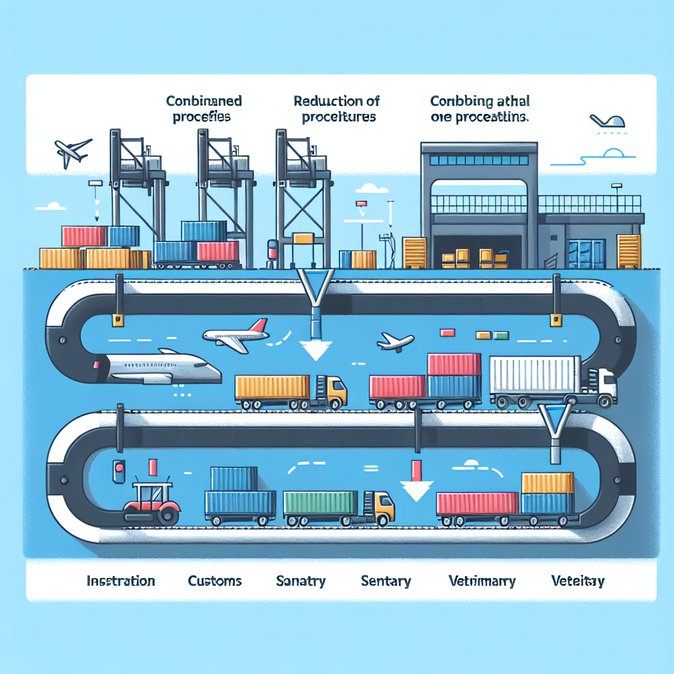
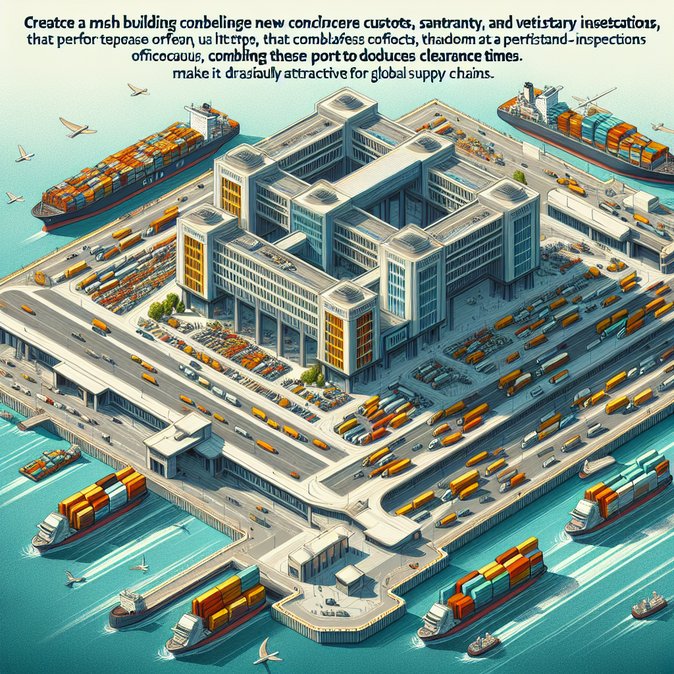
The Port of Gioia Tauro – Italy’s busiest container hub – quietly switched on a new single Border Control Post (BCP) on 31 March 2026. The BCP merges all of the sanitary, phytosanitary, veterinary and customs inspections that inbound containers previously had to undergo at separate facilities scattered around the terminal. Italy’s port authority says the reform cuts average inspection times from 24 hours to “well under eight”, and eliminates costly re-handling of boxes that used to shuttle between control sheds.
The pilot responds to EU Regulation 2017/625, which encourages Member States to concentrate border checks in one place so that food-safety agencies, health authorities and customs can work side-by-side and share scanners and laboratories.
![Gioia Tauro activates Italy’s first ‘single-window’ Border Control Post]()
On the people side, VisaHQ’s online platform (https://www.visahq.com/italy/) can tame the bureaucracy that greets executives, ship crews and relocating families at the airport. The service simplifies Italian visa applications, residence permits and other consular paperwork, providing real-time tracking and expert support so travelers land in sync with their cargo and avoid costly delays.
Until now, only Rotterdam and Valencia had implemented true single-window physical inspection lanes; Gioia Tauro is the first in Italy. Terminal operator MedCenter Container Terminal – controlled by MSC – spent about €12 million on a temperature-controlled warehouse, double rail tracks for “reefers in transit”, and secure IT links that feed results directly into the EU’s TRACES database. For Italian importers the biggest gain is predictability. Fresh-produce importers from Latin America report that bananas, avocados and cut flowers can now clear the port in half a day, allowing trucks to reach Milan or Bologna markets without paying for weekend storage. The new process also supports Italy’s pledge to digitise 100 percent of customs documentation by 2027 under the National Recovery and Resilience Plan. Multinationals relocating staff or moving household goods should also feel the difference. Household removals, which often trigger mixed-goods inspections, had been singled out by relocation firms as a bottleneck. With the BCP, shipments declared under transfer-of-residence rules (Art. 9, Reg. 1186/2009) are routed to a dedicated lane where customs and the health ministry seal containers in a single appointment, saving days of storage fees. The Transport Ministry confirmed that lessons from Gioia Tauro will feed a national rollout: Naples and La Spezia are next in line for single-window BCPs by early 2027. If replicated, the model could remove one of the most persistent irritants for companies that use Italy as a gateway for Mediterranean or Balkan operations.
The pilot responds to EU Regulation 2017/625, which encourages Member States to concentrate border checks in one place so that food-safety agencies, health authorities and customs can work side-by-side and share scanners and laboratories.
On the people side, VisaHQ’s online platform (https://www.visahq.com/italy/) can tame the bureaucracy that greets executives, ship crews and relocating families at the airport. The service simplifies Italian visa applications, residence permits and other consular paperwork, providing real-time tracking and expert support so travelers land in sync with their cargo and avoid costly delays.
Until now, only Rotterdam and Valencia had implemented true single-window physical inspection lanes; Gioia Tauro is the first in Italy. Terminal operator MedCenter Container Terminal – controlled by MSC – spent about €12 million on a temperature-controlled warehouse, double rail tracks for “reefers in transit”, and secure IT links that feed results directly into the EU’s TRACES database. For Italian importers the biggest gain is predictability. Fresh-produce importers from Latin America report that bananas, avocados and cut flowers can now clear the port in half a day, allowing trucks to reach Milan or Bologna markets without paying for weekend storage. The new process also supports Italy’s pledge to digitise 100 percent of customs documentation by 2027 under the National Recovery and Resilience Plan. Multinationals relocating staff or moving household goods should also feel the difference. Household removals, which often trigger mixed-goods inspections, had been singled out by relocation firms as a bottleneck. With the BCP, shipments declared under transfer-of-residence rules (Art. 9, Reg. 1186/2009) are routed to a dedicated lane where customs and the health ministry seal containers in a single appointment, saving days of storage fees. The Transport Ministry confirmed that lessons from Gioia Tauro will feed a national rollout: Naples and La Spezia are next in line for single-window BCPs by early 2027. If replicated, the model could remove one of the most persistent irritants for companies that use Italy as a gateway for Mediterranean or Balkan operations.
More From Italy
View all
Italian Supreme Court sends humanitarian-protection case to public hearing, signalling possible reset of stay-permit rules

Schengen Entry/Exit System countdown: Italian airports brace for 100 % biometric checks from 31 March 2026