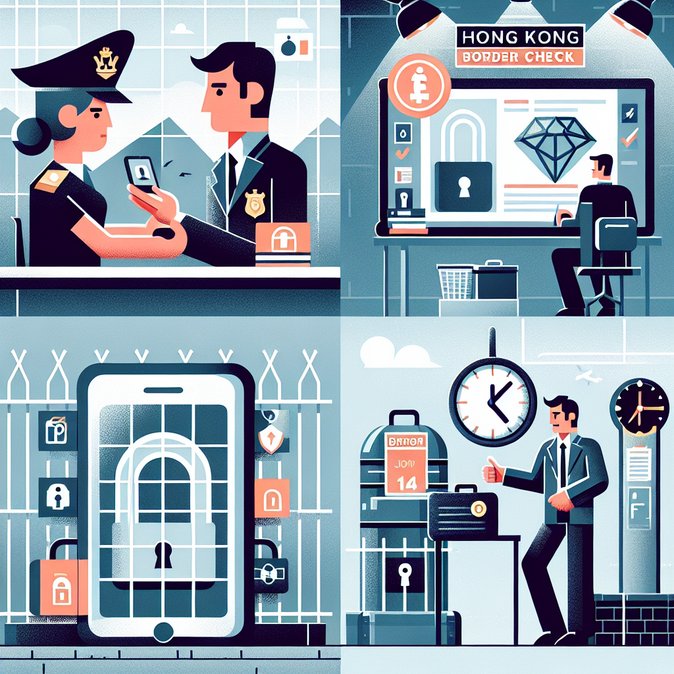
Travellers entering or leaving Hong Kong now face some of the world’s toughest digital-device inspection powers after legislation that came into effect on 30 March authorised customs, immigration and police officers to compel anyone to unlock smartphones, laptops and tablets. Failure to comply carries penalties of up to one year in prison and a HK$100,000 (US$12,700) fine. Officials say the measure aligns Hong Kong with ‘international best practice on counter-terrorism and cyber-crime’. In practice, however, it hands frontline officers sweeping discretion: the power applies to residents and visitors of all nationalities, and officers need only have ‘reasonable suspicion’ that the device contains material endangering national security. Travellers must also provide any de-encryption assistance requested, effectively outlawing the use of secondary passwords or secret vault apps at the border. Business-mobility professionals warn that the law fundamentally changes the risk calculus for executives transiting Hong Kong’s airport or land checkpoints. Companies that routinely move proprietary data across borders—investment banks, life-sciences firms, game developers—will need stricter data-segmentation protocols. Several multinational employers are advising staff to travel with ‘clean’ loaner devices that carry only cloud-based access to email and virtual desktops. Others are routing sensitive travel through Singapore or Seoul to avoid potential data exposure.
![New Hong Kong law lets border officers demand phone and laptop passwords]()
For travellers who need help navigating these fast-moving rules, VisaHQ’s Hong Kong desk (https://www.visahq.com/hong-kong/) offers real-time updates, application support and tailored briefings on customs and device-search procedures, assisting both individuals and corporate mobility teams.
Privacy advocates argue that the legislation undermines the city’s position as a global financial hub where confidential client data must remain secure. The Hong Kong Bar Association has called for an independent appeals mechanism and clearer guidelines on when devices can be cloned or retained. The government counters that most travellers will not be affected and that robust audit trails will prevent abuse. For now, mobility managers should update pre-trip briefings, prepare rapid-response hotlines for executives detained at the border, and review insurance coverage for data-breach liabilities originating from compelled device searches. The coming Easter/Qingming surge will provide the first large-scale test of how aggressively officers invoke their new powers.

For travellers who need help navigating these fast-moving rules, VisaHQ’s Hong Kong desk (https://www.visahq.com/hong-kong/) offers real-time updates, application support and tailored briefings on customs and device-search procedures, assisting both individuals and corporate mobility teams.
Privacy advocates argue that the legislation undermines the city’s position as a global financial hub where confidential client data must remain secure. The Hong Kong Bar Association has called for an independent appeals mechanism and clearer guidelines on when devices can be cloned or retained. The government counters that most travellers will not be affected and that robust audit trails will prevent abuse. For now, mobility managers should update pre-trip briefings, prepare rapid-response hotlines for executives detained at the border, and review insurance coverage for data-breach liabilities originating from compelled device searches. The coming Easter/Qingming surge will provide the first large-scale test of how aggressively officers invoke their new powers.