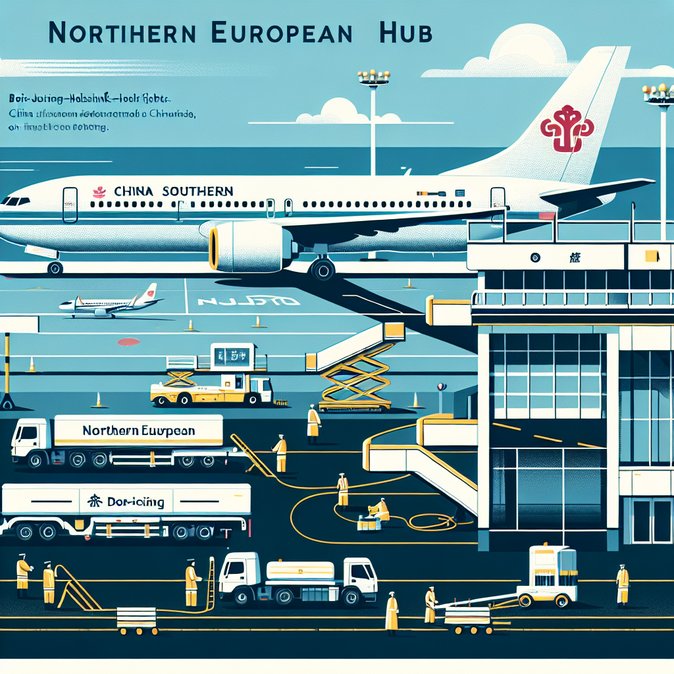
Finland welcomed a major new long-haul link on 29 March when China Southern Airlines operated its first nonstop flight from Beijing Daxing International Airport (PKX) to Helsinki-Vantaa (HEL). The eight-hour, 50-minute westbound leg (CZ 8171/8172) will run three times a week (Tuesday, Thursday and Sunday) until mid-June before ramping up to daily service for the peak summer season.
![China Southern inaugurates nonstop Beijing-Daxing – Helsinki service, opening new Asia–Nordics corridor]()
If you’re among the travellers eyeing this fresh connectivity, remember that securing the right paperwork is still step one. VisaHQ’s online platform (https://www.visahq.com/finland/) streamlines Finland’s Schengen visa application from China and dozens of other countries, offering up-to-date checklists, courier handling and real-time status alerts so your team can focus on flight options rather than consulate queues.
The Boeing 787-9 is configured with 28 lie-flat business-class seats and 269 economy seats, giving both corporate road-warriors and leisure travellers a direct bridge between the Chinese capital and the “gateway to the Nordics”. For Finland, the route is strategically important. Helsinki has built its hub model around fast east-west transfers; after three years of pandemic disruption and closed Russian airspace, the return of a Chinese mega-carrier restores an essential traffic stream. The service adds more than 2,500 weekly seats each way and is timed for rapid onward connections to 50+ intra-European cities served by Finnair and its oneworld partners, shortening typical total journey times between Chinese second-tier markets and Northern Europe by four to six hours. Business communities on both sides have lobbied hard for the link. Chinese investment into Finland’s clean-tech and digital industries rebounded 11 % last year, while Finnish brands such as KONE, Wärtsilä and Rovio have growing footprints in China. A direct flight lowers travel costs and simplifies mobility compliance: travellers avoid third-country transits that can complicate Schengen 90/180-day calculations and Chinese visa-free policy for EU nationals arriving via Beijing. Tourism bodies expect a rapid uptick. Visit Finland is co-funding a €2 million marketing campaign positioning Helsinki as a stop-over to Lapland and the wider Nordic region. Pre-Covid China was Finland’s fifth-largest long-haul market; Finavia forecasts Chinese arrivals could recover to 60 % of 2019 levels by year-end if additional frequencies materialise. The carrier, for its part, highlights Helsinki’s compact airport layout and Finnair’s punctuality record as key attributes for building a Northern European mini-hub. Practical tip: Schengen short-stay visa processing in China still averages 15 calendar days, but peak-season slots sell out quickly. Corporate travel managers should encourage Beijing-based staff to apply no later than eight weeks before departure and remind them that biometrics will migrate to the EU Entry/Exit System (EES) by 10 April 2026, ending passport stamps.

If you’re among the travellers eyeing this fresh connectivity, remember that securing the right paperwork is still step one. VisaHQ’s online platform (https://www.visahq.com/finland/) streamlines Finland’s Schengen visa application from China and dozens of other countries, offering up-to-date checklists, courier handling and real-time status alerts so your team can focus on flight options rather than consulate queues.
The Boeing 787-9 is configured with 28 lie-flat business-class seats and 269 economy seats, giving both corporate road-warriors and leisure travellers a direct bridge between the Chinese capital and the “gateway to the Nordics”. For Finland, the route is strategically important. Helsinki has built its hub model around fast east-west transfers; after three years of pandemic disruption and closed Russian airspace, the return of a Chinese mega-carrier restores an essential traffic stream. The service adds more than 2,500 weekly seats each way and is timed for rapid onward connections to 50+ intra-European cities served by Finnair and its oneworld partners, shortening typical total journey times between Chinese second-tier markets and Northern Europe by four to six hours. Business communities on both sides have lobbied hard for the link. Chinese investment into Finland’s clean-tech and digital industries rebounded 11 % last year, while Finnish brands such as KONE, Wärtsilä and Rovio have growing footprints in China. A direct flight lowers travel costs and simplifies mobility compliance: travellers avoid third-country transits that can complicate Schengen 90/180-day calculations and Chinese visa-free policy for EU nationals arriving via Beijing. Tourism bodies expect a rapid uptick. Visit Finland is co-funding a €2 million marketing campaign positioning Helsinki as a stop-over to Lapland and the wider Nordic region. Pre-Covid China was Finland’s fifth-largest long-haul market; Finavia forecasts Chinese arrivals could recover to 60 % of 2019 levels by year-end if additional frequencies materialise. The carrier, for its part, highlights Helsinki’s compact airport layout and Finnair’s punctuality record as key attributes for building a Northern European mini-hub. Practical tip: Schengen short-stay visa processing in China still averages 15 calendar days, but peak-season slots sell out quickly. Corporate travel managers should encourage Beijing-based staff to apply no later than eight weeks before departure and remind them that biometrics will migrate to the EU Entry/Exit System (EES) by 10 April 2026, ending passport stamps.