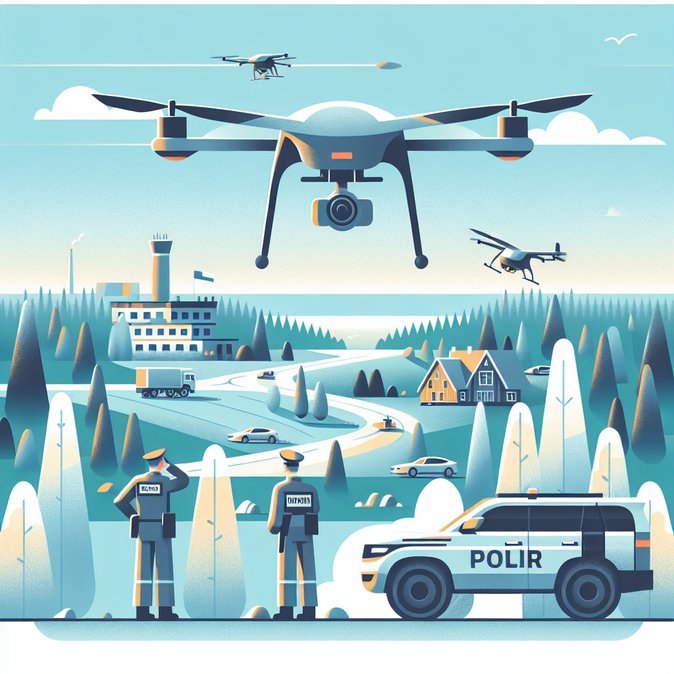
Finnish President Alexander Stubb moved quickly on Sunday evening to calm public concern after two unmanned aircraft fell inside Finland’s south-eastern region earlier in the day. In a post on X, the President stressed that “Finland is not under military threat” and praised the swift, coordinated response of the Air Force, Border Guard and local police. According to the President’s Office, radar data showed the drones entered Finnish airspace from the east at around 10:40 a.m. local time, losing altitude and crashing within minutes. One craft has been confirmed as a Ukrainian-manufactured An-196; investigators have not yet identified the operator of the second drone.
While officials cautioned against premature conclusions, they emphasised that accidental deviation from a flight path remains a plausible scenario. Stubb’s reassurance comes at a delicate moment for Finland’s international mobility sector. Since joining NATO in 2023, the country has seen a sharp increase in both military exercises and commercial overflights—raising stakeholder sensitivity to any air-space anomalies. By declaring the incident non-threatening, the President aims to avoid unnecessary disruption to passenger traffic at Helsinki Airport, which handled nearly 17 million travellers last year.
![President Stubb Says ‘No Military Threat’ to Finland After UAV Incursion]()
The Transport and Communications Agency, Traficom, echoed the President’s message, stating that “no changes to civil-aviation procedures are currently warranted.”
For travellers and HR departments that still need to double-check passport validity, visa categories or work-permit timelines, VisaHQ’s Finland portal (https://www.visahq.com/finland/) provides a fast, user-friendly way to verify requirements and submit applications online—helping organisations keep mobility plans on track even when external events create momentary uncertainty.
However, Traficom reminded drone operators—commercial and recreational alike—of their obligation to file flight plans in the Droneinfo service and maintain geo-awareness systems active at all times. For employers relocating staff to Finland or scheduling short-term assignments, the practical takeaway is continuity: flights and visa-processing operations remain unaffected. Nevertheless, mobility managers should brief travellers on the authorities’ heightened vigilance and ensure that any company-owned drones used for industrial inspections comply strictly with the new Remote ID and geo-fencing rules introduced in January 2026.
While officials cautioned against premature conclusions, they emphasised that accidental deviation from a flight path remains a plausible scenario. Stubb’s reassurance comes at a delicate moment for Finland’s international mobility sector. Since joining NATO in 2023, the country has seen a sharp increase in both military exercises and commercial overflights—raising stakeholder sensitivity to any air-space anomalies. By declaring the incident non-threatening, the President aims to avoid unnecessary disruption to passenger traffic at Helsinki Airport, which handled nearly 17 million travellers last year.
The Transport and Communications Agency, Traficom, echoed the President’s message, stating that “no changes to civil-aviation procedures are currently warranted.”
For travellers and HR departments that still need to double-check passport validity, visa categories or work-permit timelines, VisaHQ’s Finland portal (https://www.visahq.com/finland/) provides a fast, user-friendly way to verify requirements and submit applications online—helping organisations keep mobility plans on track even when external events create momentary uncertainty.
However, Traficom reminded drone operators—commercial and recreational alike—of their obligation to file flight plans in the Droneinfo service and maintain geo-awareness systems active at all times. For employers relocating staff to Finland or scheduling short-term assignments, the practical takeaway is continuity: flights and visa-processing operations remain unaffected. Nevertheless, mobility managers should brief travellers on the authorities’ heightened vigilance and ensure that any company-owned drones used for industrial inspections comply strictly with the new Remote ID and geo-fencing rules introduced in January 2026.