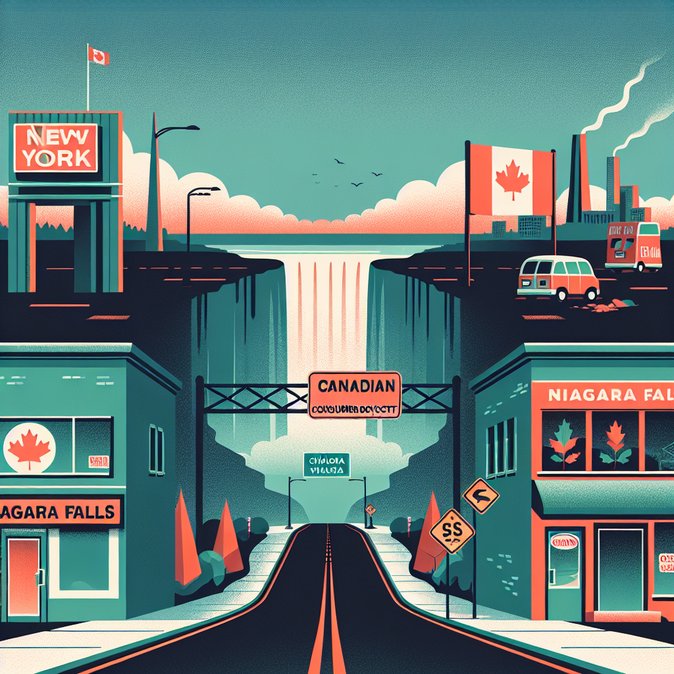
Travel-and-hospitality operators on both sides of the Niagara River are sounding the alarm after Canadian visits to upstate New York plunged more than 30 percent in late 2025 and early 2026, according to Statistics Canada data highlighted in a March 29 report by Travel and Tour World. The precipitous drop—widely attributed to retaliatory tariffs imposed by the second Trump administration and incendiary talk of annexing Canada—has wiped an estimated US$4.5 billion from the cross-border tourism economy. Lewiston’s artisanal shops, Niagara Falls motels and Buffalo’s off-season hotel market are hardest hit. Small-business owners interviewed describe revenue declines of 20–30 percent, forcing layoffs and reduced hours. Destination Niagara USA has shifted its entire 2026 marketing budget away from Ontario day-trippers toward domestic “drive markets” in Pennsylvania and Ohio; it is also fast-tracking a CA$200 million events-center project to diversify away from border-dependent retail tourism. For Canadian leisure travelers, the chilling effect is twofold: tariffs have increased the price of U.S. goods, and heightened U.S. Immigration and Customs Enforcement activity has created a perception—fed by social media—of a “hostile” border environment.
![Canadian Boycott and Trump Tariffs Gut Cross-Border Tourism, Triggering Emergency Pivot in Niagara Region]()
For travelers who still need to venture south despite the headwinds, VisaHQ can soften the logistical blow: its Canada portal (https://www.visahq.com/canada/) consolidates up-to-date entry requirements, digital visa applications and courier support, helping both tourists and corporate mobility teams sidestep last-minute document snags and cross-border uncertainty.
Even sports travel, a perennial bright spot, is down: local hoteliers report fewer Canadians booking packages for Buffalo Bills games. The boycott’s ripple effects are being felt north of the border as well. Duty-free retailers in Ontario report sales declines of up to 80 percent, and regional transit agencies are reassessing cross-border bus routes. Analysts caution that, although political rhetoric could shift after the November 2026 U.S. mid-terms, rebuilding traveler confidence may take years. Global-mobility managers should note that employee trips to U.S. border towns now require additional due-diligence: unclear customs scrutiny times and last-minute hotel-rate volatility could disrupt site visits and short-term assignments. Companies may find it cheaper—and less stressful for staff—to stage internal meetings on the Canadian side or in third-country hubs until tensions subside.

For travelers who still need to venture south despite the headwinds, VisaHQ can soften the logistical blow: its Canada portal (https://www.visahq.com/canada/) consolidates up-to-date entry requirements, digital visa applications and courier support, helping both tourists and corporate mobility teams sidestep last-minute document snags and cross-border uncertainty.
Even sports travel, a perennial bright spot, is down: local hoteliers report fewer Canadians booking packages for Buffalo Bills games. The boycott’s ripple effects are being felt north of the border as well. Duty-free retailers in Ontario report sales declines of up to 80 percent, and regional transit agencies are reassessing cross-border bus routes. Analysts caution that, although political rhetoric could shift after the November 2026 U.S. mid-terms, rebuilding traveler confidence may take years. Global-mobility managers should note that employee trips to U.S. border towns now require additional due-diligence: unclear customs scrutiny times and last-minute hotel-rate volatility could disrupt site visits and short-term assignments. Companies may find it cheaper—and less stressful for staff—to stage internal meetings on the Canadian side or in third-country hubs until tensions subside.