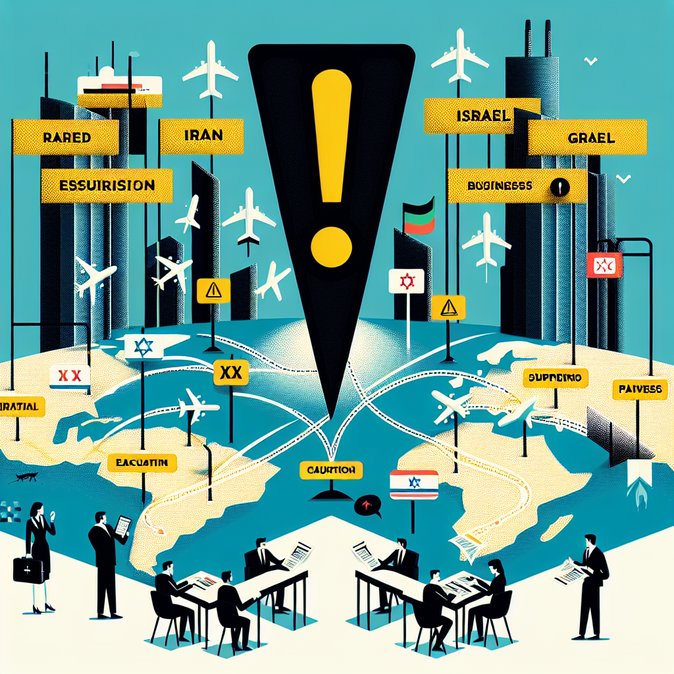
Hong Kong’s Security Bureau quietly raised the stakes for travellers on Monday, March 23, issuing its highest-level ‘black’ Outbound Travel Alert (OTA) for Iran and Israel and upgrading six neighbouring Gulf states to ‘amber’. The rare step, announced at 17:15 HKT, reflects what officials called the “highly unpredictable security situation” following a sharp escalation of regional hostilities over the weekend. A black OTA is Hong Kong’s strongest advisory and, in practical terms, tells residents and corporates to cancel or postpone all travel.
The upgrade has immediate implications for the thousands of Hong Kong passport-holders who transit the Gulf on business itineraries, as well as for corporates routing cargo and project teams through Dubai and Doha hubs.
![Hong Kong escalates Outbound Travel Alert to ‘black’ for Iran and Israel, issues amber warnings across Gulf region]()
During periods like this when regulations and entry requirements can change by the hour, VisaHQ’s Hong Kong platform offers a convenient way to verify the latest visa rules, secure urgent travel documents or line up paperwork for rerouted flights. Mobility managers and individual travellers alike can consult country pages or launch applications directly at https://www.visahq.com/hong-kong/ making it easier to stay compliant while contingency plans evolve.
“Insurance underwriters treat a black alert as a material change in risk,” noted Kelvin Yip, mobility practice leader at a global brokerage, adding that most corporate travel policies will now exclude cover for trips that proceed. Multinationals with staff already on the ground have been told to activate evacuation or shelter-in-place protocols and to register itineraries with the Immigration Department’s 1868 hotline. At the same briefing, the Bureau issued new amber alerts—signifying ‘significant threat’ and advising extra caution—for Bahrain, Jordan, Oman, Qatar, Saudi Arabia and the United Arab Emirates. Kuwait, while not formally under the OTA system, was added to the Security Bureau’s watch-list with a separate caution. The government promised rolling updates via its mobile app and urged citizens to use the voluntary “Registration of Outbound Travel Information” service so consular messages can be pushed by SMS. For mobility managers, the advisory is a reminder that Hong Kong’s post-pandemic talent drive still requires meticulous duty-of-care planning. Several financial-services firms had only recently resumed rotating staff through Dubai after Covid restrictions; those assignments are now under review. Airlines such as Cathay Pacific and Emirates remain free to fly, but companies booking inter-company secondments or ‘bleisure’ add-ons may struggle to source travel insurance or kidnap-and-ransom coverage at viable rates. Looking ahead, the Bureau said it will “closely monitor” regional developments and will not hesitate to impose further restrictions. Mobility advisers recommend hedging with alternative routings via Istanbul or Europe and doubling-checking staff visa requirements should emergency diversions be needed. Companies should also brief travellers on contingency communications should internet black-outs occur, something that has happened repeatedly in the conflict zone this month.
The upgrade has immediate implications for the thousands of Hong Kong passport-holders who transit the Gulf on business itineraries, as well as for corporates routing cargo and project teams through Dubai and Doha hubs.

During periods like this when regulations and entry requirements can change by the hour, VisaHQ’s Hong Kong platform offers a convenient way to verify the latest visa rules, secure urgent travel documents or line up paperwork for rerouted flights. Mobility managers and individual travellers alike can consult country pages or launch applications directly at https://www.visahq.com/hong-kong/ making it easier to stay compliant while contingency plans evolve.
“Insurance underwriters treat a black alert as a material change in risk,” noted Kelvin Yip, mobility practice leader at a global brokerage, adding that most corporate travel policies will now exclude cover for trips that proceed. Multinationals with staff already on the ground have been told to activate evacuation or shelter-in-place protocols and to register itineraries with the Immigration Department’s 1868 hotline. At the same briefing, the Bureau issued new amber alerts—signifying ‘significant threat’ and advising extra caution—for Bahrain, Jordan, Oman, Qatar, Saudi Arabia and the United Arab Emirates. Kuwait, while not formally under the OTA system, was added to the Security Bureau’s watch-list with a separate caution. The government promised rolling updates via its mobile app and urged citizens to use the voluntary “Registration of Outbound Travel Information” service so consular messages can be pushed by SMS. For mobility managers, the advisory is a reminder that Hong Kong’s post-pandemic talent drive still requires meticulous duty-of-care planning. Several financial-services firms had only recently resumed rotating staff through Dubai after Covid restrictions; those assignments are now under review. Airlines such as Cathay Pacific and Emirates remain free to fly, but companies booking inter-company secondments or ‘bleisure’ add-ons may struggle to source travel insurance or kidnap-and-ransom coverage at viable rates. Looking ahead, the Bureau said it will “closely monitor” regional developments and will not hesitate to impose further restrictions. Mobility advisers recommend hedging with alternative routings via Istanbul or Europe and doubling-checking staff visa requirements should emergency diversions be needed. Companies should also brief travellers on contingency communications should internet black-outs occur, something that has happened repeatedly in the conflict zone this month.