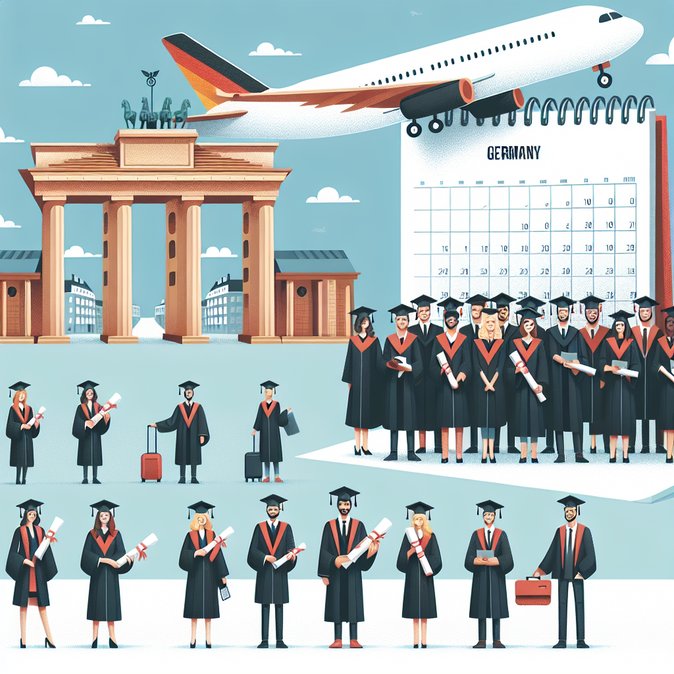
An exchange on r/askberliners on 16 March underscores lingering confusion over Germany’s 18-month post-study residence permit. A graduate asked whether spending more than six consecutive months outside the EU would automatically void their permit; commenters warned that both passport stamps and carrier data feed the Entry/Exit System and that a stay abroad beyond 180 days risks cancellation unless the local Ausländerbehörde grants an exemption in advance. The six-month rule derives from §51(1) Nr. 7 Aufenthaltsgesetz, which extinguishes most German residence titles after uninterrupted absence of 180 days. While the law predates the digital Entry/Exit System (EES), the latter – due to be fully operational on 10 April 2026 – will give authorities instant visibility of exit and re-entry dates, reducing the scope for discretion at the border.
![Six-month absence rule for post-study residence permits sparks debate among graduates]()
If you find yourself needing hands-on help with these German immigration formalities—be it securing a fresh post-study residence permit, applying for a new work visa after a lapse, or arranging a Fiktionsbescheinigung—VisaHQ’s specialists can streamline the process. Their Germany hub (https://www.visahq.com/germany/) consolidates up-to-date requirements, appointment booking tools, and status tracking so graduates and employers avoid missteps that could derail assignments.
For employers considering former international students for global assignments, the episode is a timely reminder to map German immigration liabilities before sending talent abroad. A post-study permit is employer-agnostic, but if it lapses, the graduate must obtain a new work visa from abroad; this can add 10-12 weeks and jeopardise project timelines. Mobility managers should build a compliance checklist: (1) record the employee’s last day in Germany; (2) schedule a re-entry within 180 days; (3) if longer travel is unavoidable, obtain written approval from the Ausländerbehörde citing “temporary assignment”. Airlines may deny boarding if the passport shows an expired permit and the traveller lacks a Fiktionsbescheinigung.

If you find yourself needing hands-on help with these German immigration formalities—be it securing a fresh post-study residence permit, applying for a new work visa after a lapse, or arranging a Fiktionsbescheinigung—VisaHQ’s specialists can streamline the process. Their Germany hub (https://www.visahq.com/germany/) consolidates up-to-date requirements, appointment booking tools, and status tracking so graduates and employers avoid missteps that could derail assignments.
For employers considering former international students for global assignments, the episode is a timely reminder to map German immigration liabilities before sending talent abroad. A post-study permit is employer-agnostic, but if it lapses, the graduate must obtain a new work visa from abroad; this can add 10-12 weeks and jeopardise project timelines. Mobility managers should build a compliance checklist: (1) record the employee’s last day in Germany; (2) schedule a re-entry within 180 days; (3) if longer travel is unavoidable, obtain written approval from the Ausländerbehörde citing “temporary assignment”. Airlines may deny boarding if the passport shows an expired permit and the traveller lacks a Fiktionsbescheinigung.