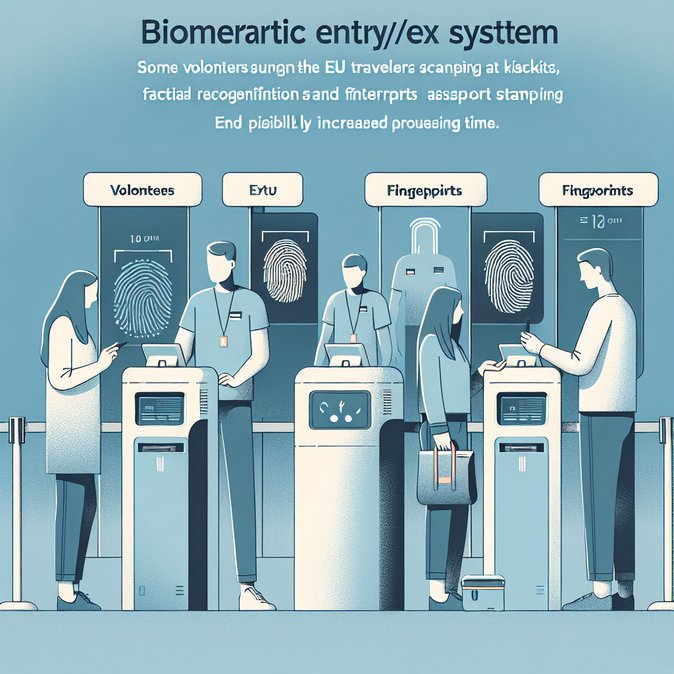
Vienna International Airport (VIE) quietly switched on a new bank of self-service kiosks in Terminal 3 this morning (14 March 2026), inviting third-country nationals departing for long-haul destinations to volunteer for a ‘shadow’ border-control process that mirrors the EU Entry/Exit System (EES). The airport is one of six Austrian airfields selected by the Interior Ministry to pilot end-to-end biometric capture and automated border-clearance software before the system becomes mandatory EU-wide on 10 April 2026. Under the trial, travellers scan their passport, provide four fingerprints and have a live facial image captured at the kiosk. The data are checked against test servers operated by eu-LISA and returned to border officers’ tablets in real time. Travellers then proceed to a staffed counter, where normal exit-stamps are still placed in passports during the transition phase. The ministry stresses that data collected today are stored in a segregated sandbox and will be deleted once functionality and response times are validated.
![Vienna International Airport begins ‘live-passenger’ trial of EU Entry/Exit System kiosks ahead of April deadline]()
For passengers wondering how the new biometric regime affects their personal travel plans, VisaHQ offers an easy way to verify entry requirements and stay limits in advance; its Austria portal (https://www.visahq.com/austria/) can calculate Schengen-area allowances, flag visa obligations and even handle courier submission if consular paperwork is needed—helping travellers arrive at VIE fully prepared.
Airlines had warned that the combination of Easter peak traffic and unfamiliar biometric steps could add 30–45 minutes to outbound processing times. By running the dry-run three weeks early and offering additional ‘EES ambassadors’ in the departure hall, Flughafen Wien AG hopes to identify pain-points and fine-tune passenger-flow signage long before the legal go-live date. Early feedback from an ANA Tokyo departure this morning suggests the extra process added an average of six minutes per passenger—within the airport’s target window. Austria began phasing in EES hardware at Vienna and Salzburg last October and has since extended installation to Innsbruck, Graz, Linz and Klagenfurt. Once operational, manual stamping will end for short-stay visitors, and the system will automatically calculate remaining Schengen-area allowance—critical for business travellers who shuttle frequently between EU clients. Corporate mobility managers are advised to brief non-EU employees and assignees on the upcoming change, reminding them to allow extra time at Austrian airports through mid-April and to keep a close eye on 90/180-day limits, which will now be enforced automatically.

For passengers wondering how the new biometric regime affects their personal travel plans, VisaHQ offers an easy way to verify entry requirements and stay limits in advance; its Austria portal (https://www.visahq.com/austria/) can calculate Schengen-area allowances, flag visa obligations and even handle courier submission if consular paperwork is needed—helping travellers arrive at VIE fully prepared.
Airlines had warned that the combination of Easter peak traffic and unfamiliar biometric steps could add 30–45 minutes to outbound processing times. By running the dry-run three weeks early and offering additional ‘EES ambassadors’ in the departure hall, Flughafen Wien AG hopes to identify pain-points and fine-tune passenger-flow signage long before the legal go-live date. Early feedback from an ANA Tokyo departure this morning suggests the extra process added an average of six minutes per passenger—within the airport’s target window. Austria began phasing in EES hardware at Vienna and Salzburg last October and has since extended installation to Innsbruck, Graz, Linz and Klagenfurt. Once operational, manual stamping will end for short-stay visitors, and the system will automatically calculate remaining Schengen-area allowance—critical for business travellers who shuttle frequently between EU clients. Corporate mobility managers are advised to brief non-EU employees and assignees on the upcoming change, reminding them to allow extra time at Austrian airports through mid-April and to keep a close eye on 90/180-day limits, which will now be enforced automatically.
More From Austria
View all
Last Saturday truck-ban on the Brenner corridor concludes today, easing Austria–Italy freight bottleneck

Austrian-Swiss agreement allows cross-border buses to pick up local passengers, boosting commuter flexibility