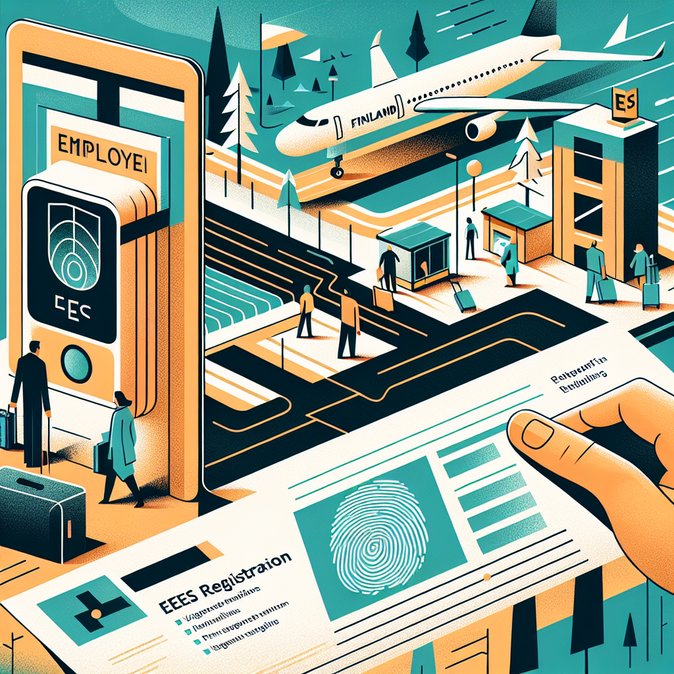
Travellers heading to Finland have been reminded that the European Union’s new Entry/Exit System (EES) will become fully operational on 10 April 2026. The date was confirmed in the latest update to the UK Foreign Office’s Finland travel advice page published on 12 March 2026. Although the EES has been rolling out gradually at external Schengen borders, this is the first official guidance that names a firm go-live date – giving border agencies and businesses less than a month to finalise preparations. EES will replace manual passport stamping for non-EU short-stay visitors with an automated biometric register that captures fingerprints and a facial image at the first point of entry.
![Finland prepares for EU Entry/Exit System launch as travel advice updated]()
For travellers who would like extra reassurance before the new system goes live, VisaHQ’s Finland portal (https://www.visahq.com/finland/) offers clear, up-to-date guidance on EES requirements, the soon-to-follow ETIAS authorisation, and any visa or residence-permit questions you might have. The service can even pre-check your documents and send alerts when regulations change, helping both tourists and corporate mobility teams avoid last-minute surprises at the border.
For Finland, that primarily means Helsinki Airport, land crossings from Norway and Sweden, seaports such as Turku and Helsinki’s West Harbour, as well as the still-closed eastern border crossing points with Russia. Border guards will use EES terminals to verify remaining visa-free days and prevent “over-stays” that can currently slip through paper checks. According to the Finnish Border Guard, the system is expected to cut inspection times once travellers are enrolled, but first-time registration could add several minutes per passenger in the early weeks of operation. Airlines, cruise operators and ground-handling companies are now racing to update their pre-departure communications. Finnair told Global Mobility News that it will begin sending automated e-mails and SMS alerts on 18 March to all non-EU ticket holders reminding them of the new procedure. Business-travel management companies are also flagging the change, warning corporate travellers to allow extra time for border formalities during April and May. Companies operating rotational fly-in fly-out shifts through Helsinki Vantaa are revising duty-of-care guidance, particularly for crews arriving from visa-waiver countries such as the United States or the United Kingdom. For employers relocating staff to Finland, the biggest practical implication is documentation: HR teams will need to keep copies of EES registration receipts (issued electronically after enrolment) to prove lawful entry when filing local residence-permit extensions. Immigration lawyers advise that anyone who has recently renewed a passport should travel with the old document as well, as previous Schengen entry stamps will no longer be transferred into the EES and could be requested to verify historical stay days. Finland’s Ministry of the Interior has yet to publish its own public-facing FAQ, but officials told local media that extensive system tests, including simulated passenger flows at Helsinki Airport, were completed on 6 March. Additional self-service kiosks and staffed lanes are being installed this week, and signage in English, Finnish and Swedish will direct first-time users. Despite the tight timeline, authorities insist that the country will be ready – echoing the EU-wide ambition to make external border crossings “smarter” and more secure ahead of the full launch of the related ETIAS travel authorisation scheme later this year.

For travellers who would like extra reassurance before the new system goes live, VisaHQ’s Finland portal (https://www.visahq.com/finland/) offers clear, up-to-date guidance on EES requirements, the soon-to-follow ETIAS authorisation, and any visa or residence-permit questions you might have. The service can even pre-check your documents and send alerts when regulations change, helping both tourists and corporate mobility teams avoid last-minute surprises at the border.
For Finland, that primarily means Helsinki Airport, land crossings from Norway and Sweden, seaports such as Turku and Helsinki’s West Harbour, as well as the still-closed eastern border crossing points with Russia. Border guards will use EES terminals to verify remaining visa-free days and prevent “over-stays” that can currently slip through paper checks. According to the Finnish Border Guard, the system is expected to cut inspection times once travellers are enrolled, but first-time registration could add several minutes per passenger in the early weeks of operation. Airlines, cruise operators and ground-handling companies are now racing to update their pre-departure communications. Finnair told Global Mobility News that it will begin sending automated e-mails and SMS alerts on 18 March to all non-EU ticket holders reminding them of the new procedure. Business-travel management companies are also flagging the change, warning corporate travellers to allow extra time for border formalities during April and May. Companies operating rotational fly-in fly-out shifts through Helsinki Vantaa are revising duty-of-care guidance, particularly for crews arriving from visa-waiver countries such as the United States or the United Kingdom. For employers relocating staff to Finland, the biggest practical implication is documentation: HR teams will need to keep copies of EES registration receipts (issued electronically after enrolment) to prove lawful entry when filing local residence-permit extensions. Immigration lawyers advise that anyone who has recently renewed a passport should travel with the old document as well, as previous Schengen entry stamps will no longer be transferred into the EES and could be requested to verify historical stay days. Finland’s Ministry of the Interior has yet to publish its own public-facing FAQ, but officials told local media that extensive system tests, including simulated passenger flows at Helsinki Airport, were completed on 6 March. Additional self-service kiosks and staffed lanes are being installed this week, and signage in English, Finnish and Swedish will direct first-time users. Despite the tight timeline, authorities insist that the country will be ready – echoing the EU-wide ambition to make external border crossings “smarter” and more secure ahead of the full launch of the related ETIAS travel authorisation scheme later this year.