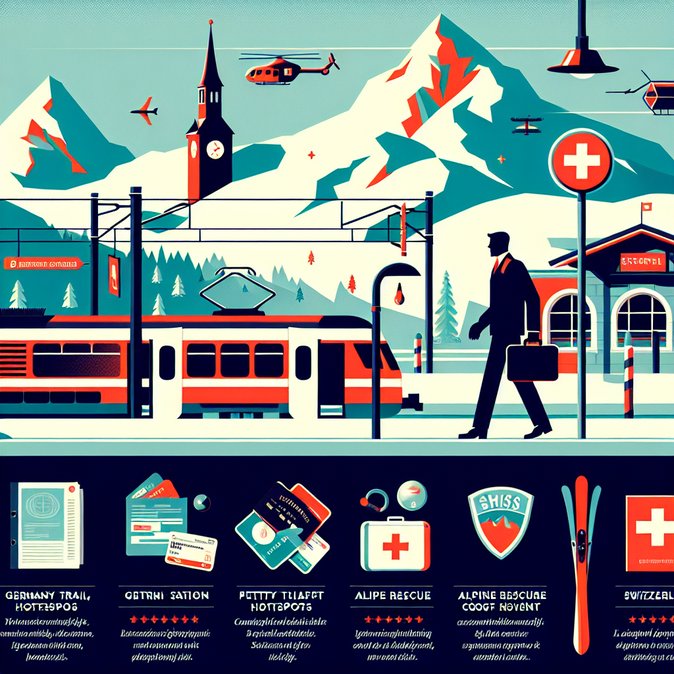
The German Federal Foreign Office (AA) refreshed its travel and security advice for Switzerland on 13 March, adding detailed warnings about pick-pocketing in transport hubs and rapidly changing mountain weather. Although overall risk remains low, the AA urges visitors to keep valuables secure, favour cash-free payments, and monitor local forecasts when hiking or skiing.
The bulletin also repeats longstanding guidance on registering in the ministry’s ‘Sicher Reisen’ app and subscribing to its crisis-alert newsletter—standard practice for German companies sending staff abroad. Employers organising off-sites in alpine resorts are advised to check avalanche bulletins and ensure insurance policies cover helicopter evacuation, which can cost upwards of €10,000 and is not included in the European Health Insurance Card.
![Germany updates travel advisory for Switzerland: focus on petty crime and alpine weather]()
Should your trip involve onward journeys outside the Schengen area or special documentation such as work permits, VisaHQ can simplify the process. The service (https://www.visahq.com/germany/) offers German travellers and businesses an easy, step-by-step platform for securing visas, passport renewals and other consular paperwork, complete with real-time tracking and dedicated support—handy peace of mind when rules change at short notice.
Cross-border commuters should note that Swiss police may ask for proof of accommodation and sufficient funds when entering by road or rail, despite both countries being in Schengen. Carrying a digital copy of your Aufenthaltstitel (residence permit) is recommended if your German ID card does not show your current address. By issuing the update at the start of the spring skiing season, Berlin hopes to head off a repeat of last year’s spike in lost-passport cases, many linked to après-ski theft. Consular staff in Bern processed more than 1,200 emergency travel documents in March 2025 alone, leading to 72-hour turnaround times for replacements. The latest update contains no COVID-19 restrictions—Switzerland abolished all pandemic-era entry rules in 2023—nor any new border-control measures. However, it reminds drivers to buy a digital vignette or display the CHF 40 motorway sticker before using Swiss autobahns.
The bulletin also repeats longstanding guidance on registering in the ministry’s ‘Sicher Reisen’ app and subscribing to its crisis-alert newsletter—standard practice for German companies sending staff abroad. Employers organising off-sites in alpine resorts are advised to check avalanche bulletins and ensure insurance policies cover helicopter evacuation, which can cost upwards of €10,000 and is not included in the European Health Insurance Card.
Should your trip involve onward journeys outside the Schengen area or special documentation such as work permits, VisaHQ can simplify the process. The service (https://www.visahq.com/germany/) offers German travellers and businesses an easy, step-by-step platform for securing visas, passport renewals and other consular paperwork, complete with real-time tracking and dedicated support—handy peace of mind when rules change at short notice.
Cross-border commuters should note that Swiss police may ask for proof of accommodation and sufficient funds when entering by road or rail, despite both countries being in Schengen. Carrying a digital copy of your Aufenthaltstitel (residence permit) is recommended if your German ID card does not show your current address. By issuing the update at the start of the spring skiing season, Berlin hopes to head off a repeat of last year’s spike in lost-passport cases, many linked to après-ski theft. Consular staff in Bern processed more than 1,200 emergency travel documents in March 2025 alone, leading to 72-hour turnaround times for replacements. The latest update contains no COVID-19 restrictions—Switzerland abolished all pandemic-era entry rules in 2023—nor any new border-control measures. However, it reminds drivers to buy a digital vignette or display the CHF 40 motorway sticker before using Swiss autobahns.