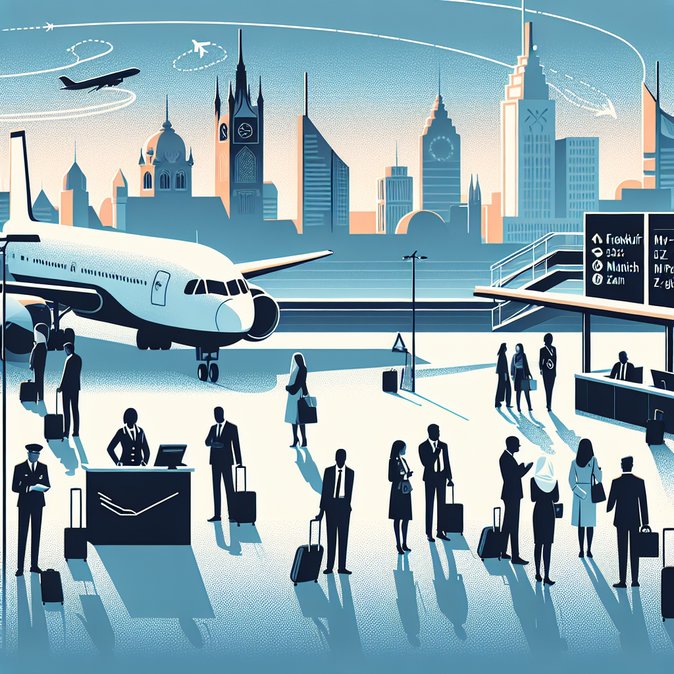
German carrier Lufthansa confirmed on 11 March that its cockpit union, Vereinigung Cockpit, will stage a full 48-hour walk-out on Thursday and Friday (12–13 March). The airline has published a special timetable that will protect around 60 % of scheduled long-haul flights and ‘more than 50 %’ of the overall network, but many short-haul services to Frankfurt and Munich – key hubs for Czech passengers – will be axed or retimed. Lufthansa says partner airlines (Austrian, Swiss, Brussels Airlines and Eurowings) will up-gauge aircraft where possible and accept Lufthansa tickets on identical routings. Travellers whose flights are cancelled will be rebooked automatically and notified by e-mail or the Lufthansa app; those booked via travel agencies should contact the agency directly.
![Lufthansa Pilots Call 48-Hour Strike for 12–13 March; Czech Travellers Urged to Re-Route]()
For travellers who suddenly find themselves rerouted through unfamiliar hubs, ensuring that transit or destination visa requirements are met can add another layer of stress. VisaHQ’s Czech portal (https://www.visahq.com/czech-republic/) lets passengers and corporate travel teams obtain or check visa and entry documentation quickly online, even for last-minute itinerary changes involving alternate carriers such as Austrian or Swiss. The service streamlines bulk applications and keeps users up to date on embassy processing times, helping executives avoid costly delays when strikes disrupt normal flight patterns.
The union has exempted flights to the Middle East out of security concerns, but not flights overflying the region, so schedules remain fluid. For Czech corporates the strike coincides awkwardly with the Mid-March trade-fair season and the final week of many financial-year roadshows. Travel managers are scrambling to reroute executives through Vienna, Zurich or Warsaw to maintain same-day turnarounds. Prague airport expects an uptick in Austrian Airlines and Swiss capacity, but warns of longer queues at check-in as passengers revalidate tickets. Rail alternatives on the Prague–Frankfurt and Prague–Munich corridors are likely to sell out. Under EU261 rules the strike is a ‘company-internal’ labour action, so passengers whose flights are cancelled less than 14 days before departure can claim financial compensation in addition to care and re-routing. However, travellers must file claims individually after travel is complete. Companies with large passenger volumes should prepare bulk-claim documentation and track staff expenses linked to overnight stays. Lufthansa Cargo has cancelled only 20 % of its freighter programme, so high-value exports from Czechia’s automotive and electronics plants should see limited disruption. Nevertheless, forwarders advise shippers to lock in belly-hold capacity early for the following week, when the backlog will flush through Frankfurt and Munich.

For travellers who suddenly find themselves rerouted through unfamiliar hubs, ensuring that transit or destination visa requirements are met can add another layer of stress. VisaHQ’s Czech portal (https://www.visahq.com/czech-republic/) lets passengers and corporate travel teams obtain or check visa and entry documentation quickly online, even for last-minute itinerary changes involving alternate carriers such as Austrian or Swiss. The service streamlines bulk applications and keeps users up to date on embassy processing times, helping executives avoid costly delays when strikes disrupt normal flight patterns.
The union has exempted flights to the Middle East out of security concerns, but not flights overflying the region, so schedules remain fluid. For Czech corporates the strike coincides awkwardly with the Mid-March trade-fair season and the final week of many financial-year roadshows. Travel managers are scrambling to reroute executives through Vienna, Zurich or Warsaw to maintain same-day turnarounds. Prague airport expects an uptick in Austrian Airlines and Swiss capacity, but warns of longer queues at check-in as passengers revalidate tickets. Rail alternatives on the Prague–Frankfurt and Prague–Munich corridors are likely to sell out. Under EU261 rules the strike is a ‘company-internal’ labour action, so passengers whose flights are cancelled less than 14 days before departure can claim financial compensation in addition to care and re-routing. However, travellers must file claims individually after travel is complete. Companies with large passenger volumes should prepare bulk-claim documentation and track staff expenses linked to overnight stays. Lufthansa Cargo has cancelled only 20 % of its freighter programme, so high-value exports from Czechia’s automotive and electronics plants should see limited disruption. Nevertheless, forwarders advise shippers to lock in belly-hold capacity early for the following week, when the backlog will flush through Frankfurt and Munich.