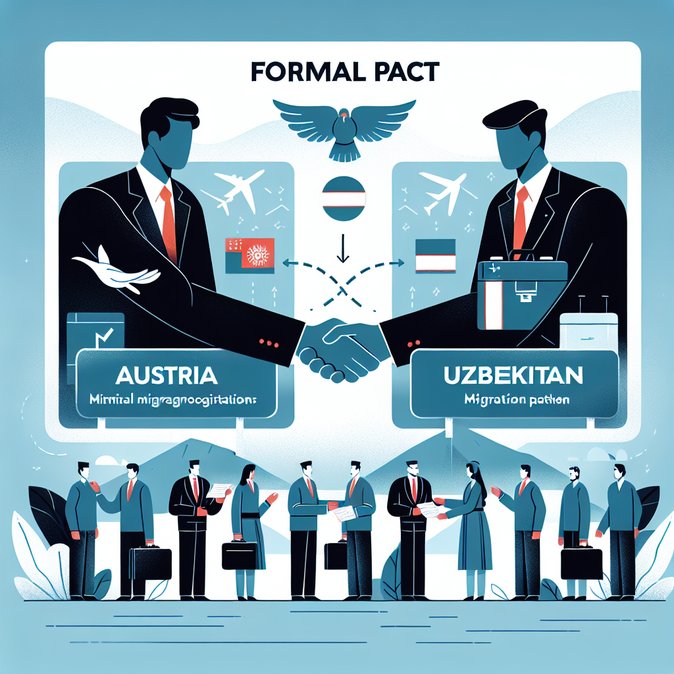
The Austrian cabinet gave the green light on 11 March to open negotiations with Uzbekistan on a comprehensive migration partnership. According to reporting by VIENNA.AT, the proposed agreement would cover the readmission of Uzbek nationals as well as third-country citizens who transit Uzbekistan en route to Austria and are later found not to qualify for asylum. It would also facilitate charter “through-transit” flights for deportees whose home countries lack direct air links to Vienna. Beyond return cooperation, the pact is designed to expand legal mobility channels. Draft language seen by diplomats refers to exchange schemes for skilled workers, students, researchers and their families. Austrian companies in construction and engineering have long recruited expertise from Central Asia but have struggled with visa backlogs; the government believes a bilateral quota could speed up Rot-Weiß-Rot (Red-White-Red) cards for in-demand professions.
![Vienna launches migration-pact talks with Uzbekistan, aims to streamline returns and legal pathways]()
For employers and travelers who will need to navigate Austria’s evolving visa landscape once this pact takes shape, VisaHQ can provide a useful head start. Its Austria portal (https://www.visahq.com/austria/) consolidates the latest requirements, step-by-step application tools and live support for work, study and family-reunion visas—including the coveted Rot-Weiß-Rot card—helping HR teams and skilled workers avoid delays as new mobility channels emerge.
Foreign Minister Beate Meinl-Reisinger framed the initiative as a twin-track strategy: “clear consequences for those without protection grounds, but new opportunities for talents we actually need.” Interior Minister Gerhard Karner emphasised that Uzbekistan’s proximity to Afghanistan makes cooperation vital for processing onward movements from conflict zones. If concluded, the deal would mirror Austria’s existing return arrangements with Morocco and Georgia and align with the EU’s 2024 Talent Partnerships agenda. Negotiators hope to sign a memorandum of understanding before the summer, though observers warn that enforcement hinges on the practicalities of document verification and transit-visa issuance in Tashkent. For global-mobility and HR teams, the talks signal potential future fast-tracks for Uzbek specialists in sectors such as rail engineering, IT outsourcing and hospitality. Conversely, asylum-case managers should expect swifter removal timelines once the agreement enters force, shortening the window for voluntary-return counselling.

For employers and travelers who will need to navigate Austria’s evolving visa landscape once this pact takes shape, VisaHQ can provide a useful head start. Its Austria portal (https://www.visahq.com/austria/) consolidates the latest requirements, step-by-step application tools and live support for work, study and family-reunion visas—including the coveted Rot-Weiß-Rot card—helping HR teams and skilled workers avoid delays as new mobility channels emerge.
Foreign Minister Beate Meinl-Reisinger framed the initiative as a twin-track strategy: “clear consequences for those without protection grounds, but new opportunities for talents we actually need.” Interior Minister Gerhard Karner emphasised that Uzbekistan’s proximity to Afghanistan makes cooperation vital for processing onward movements from conflict zones. If concluded, the deal would mirror Austria’s existing return arrangements with Morocco and Georgia and align with the EU’s 2024 Talent Partnerships agenda. Negotiators hope to sign a memorandum of understanding before the summer, though observers warn that enforcement hinges on the practicalities of document verification and transit-visa issuance in Tashkent. For global-mobility and HR teams, the talks signal potential future fast-tracks for Uzbek specialists in sectors such as rail engineering, IT outsourcing and hospitality. Conversely, asylum-case managers should expect swifter removal timelines once the agreement enters force, shortening the window for voluntary-return counselling.