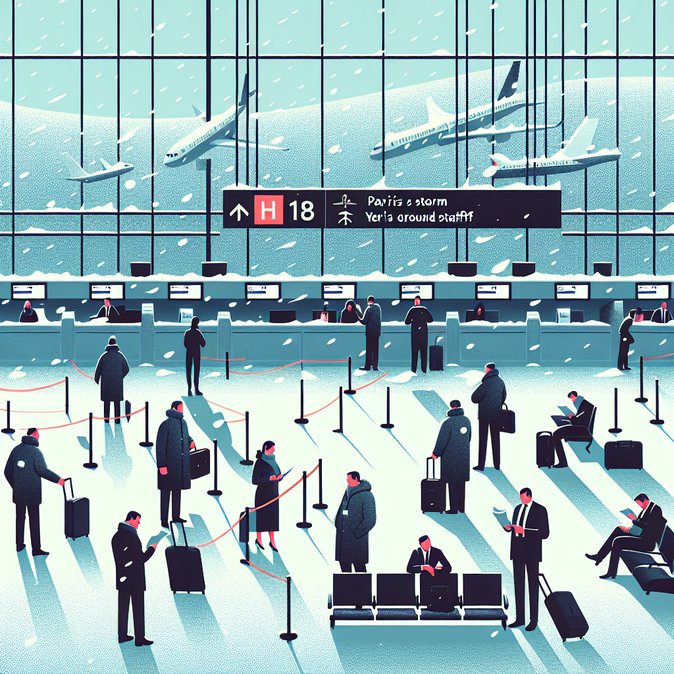
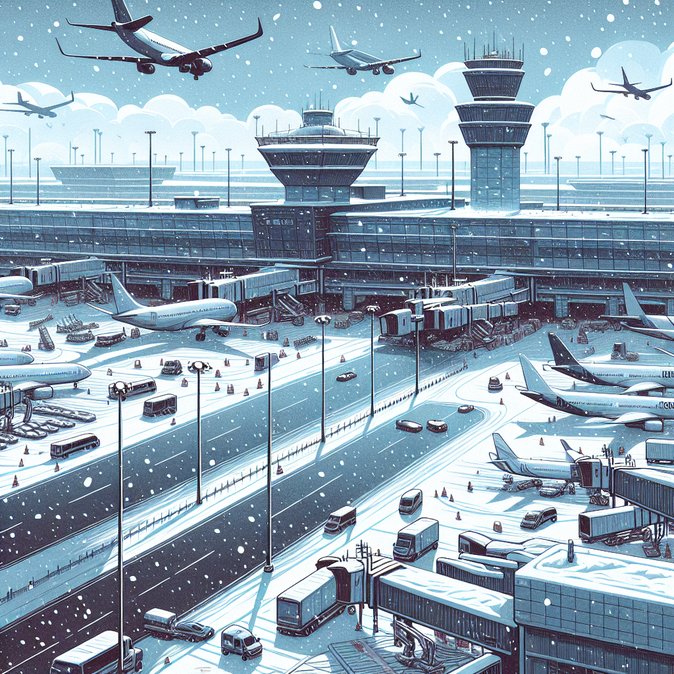
Hundreds of travellers found themselves marooned in Terminal 2E on the morning of 10 March after a violent Atlantic front swept across northern France and triggered operational chaos at Paris-Charles-de-Gaulle Airport (CDG). Météo-France recorded wind-gusts of 90 km/h and torrential rain that reduced runway visibility below minimums for nearly two hours. The storm arrived on the back of an already-fragile operating environment: ground-handling companies are still 12 % understaffed compared with pre-pandemic levels, and unions say overtime limits introduced in January have left rosters dangerously thin. The result was a cascade of disruption—25 flight cancellations and 194 delays—affecting Lufthansa, ITA Airways, Finnair, Air France, easyJet and more. (travelandtourworld.com)
Knock-on effects were quickly felt far beyond France. Heathrow, Dubai, Doha and Tel Aviv each reported inbound holding patterns of up to 45 minutes as airlines waited for revised CDG slots, while Scandinavian carriers were forced to swap crews because legally-mandated duty limits expired while aircraft sat on the apron in Paris. Cargo operators were hit too: FedEx temporarily re-routed two Asia–Europe freighters to Liège after CDG’s night curfew window closed.
For travellers suddenly rerouted through unfamiliar airports, visa requirements can add another layer of stress. VisaHQ’s online platform (https://www.visahq.com/france/) lets passengers check entry rules for France and more than 200 other countries in real time and submit digital applications within minutes, ensuring that an unexpected diversion or overnight stay doesn’t turn into a paperwork nightmare.
![Severe Weather & Staffing Crunch Cause 25 Cancellations, 194 Delays at Paris-CDG]()
For corporate travel managers the timing could hardly be worse. The JEC World composites fair, which gathers 40 000 delegates at Paris-Nord Villepinte between 10-12 March, relies heavily on trans-Atlantic and intra-EU feed through CDG. Several exhibitors told local press they had to send sales staff by train from Frankfurt and Amsterdam to cover missed set-up slots, adding last-minute hotel costs and jeopardising show deadlines.
Airlines offered limited remedies. Air France authorised free re-booking within five days for all intra-European tickets, while Lufthansa issued a €10 meal voucher to delayed passengers— gestures branded “insufficient” by the French consumers’ association UFC-Que Choisir. Under EU261, travellers delayed more than three hours may claim compensation unless the airline proves the disruption was caused solely by extraordinary circumstances; lawyers argue that chronic understaffing undermines that defence and expect a wave of claims.
Looking ahead, Aéroports de Paris said 30 additional seasonal ramp staff will be recruited before Easter, and it will trial a “collaborative decision-making” data platform to give carriers real-time visibility on stand availability and de-icing queues. Meteorologists warn, however, that another Atlantic low could arrive next week, meaning contingency planning will remain vital for anyone flying through France’s primary hub.
Knock-on effects were quickly felt far beyond France. Heathrow, Dubai, Doha and Tel Aviv each reported inbound holding patterns of up to 45 minutes as airlines waited for revised CDG slots, while Scandinavian carriers were forced to swap crews because legally-mandated duty limits expired while aircraft sat on the apron in Paris. Cargo operators were hit too: FedEx temporarily re-routed two Asia–Europe freighters to Liège after CDG’s night curfew window closed.
For travellers suddenly rerouted through unfamiliar airports, visa requirements can add another layer of stress. VisaHQ’s online platform (https://www.visahq.com/france/) lets passengers check entry rules for France and more than 200 other countries in real time and submit digital applications within minutes, ensuring that an unexpected diversion or overnight stay doesn’t turn into a paperwork nightmare.
For corporate travel managers the timing could hardly be worse. The JEC World composites fair, which gathers 40 000 delegates at Paris-Nord Villepinte between 10-12 March, relies heavily on trans-Atlantic and intra-EU feed through CDG. Several exhibitors told local press they had to send sales staff by train from Frankfurt and Amsterdam to cover missed set-up slots, adding last-minute hotel costs and jeopardising show deadlines.
Airlines offered limited remedies. Air France authorised free re-booking within five days for all intra-European tickets, while Lufthansa issued a €10 meal voucher to delayed passengers— gestures branded “insufficient” by the French consumers’ association UFC-Que Choisir. Under EU261, travellers delayed more than three hours may claim compensation unless the airline proves the disruption was caused solely by extraordinary circumstances; lawyers argue that chronic understaffing undermines that defence and expect a wave of claims.
Looking ahead, Aéroports de Paris said 30 additional seasonal ramp staff will be recruited before Easter, and it will trial a “collaborative decision-making” data platform to give carriers real-time visibility on stand availability and de-icing queues. Meteorologists warn, however, that another Atlantic low could arrive next week, meaning contingency planning will remain vital for anyone flying through France’s primary hub.