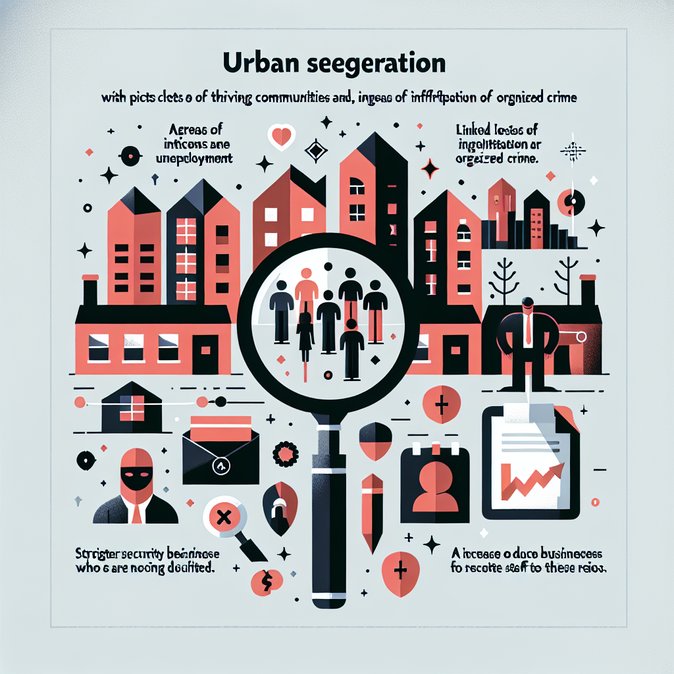
Finland’s Security and Intelligence Service (Supo) released its annual National Security Review on 10 March 2026, warning parliament that growing socio-economic segregation—often concentrated in districts with high immigrant populations—has become a breeding ground for violent extremism and organised-crime recruitment. Presenting the report to the Intelligence Oversight Committee, Supo director Juha Martelius said the overall terrorism threat level remains ‘elevated’ (3 on a five-point scale). While Russia and China dominate traditional espionage concerns, the domestic risk profile is shifting toward younger perpetrators inspired by either radical Islamist or far-right ideologies. “Clusters of poverty and marginalisation, where unemployment and immigration overlap, create spaces where gangs and extremist networks find vulnerable youth,” Martelius told MPs. For global mobility stakeholders the findings highlight a new, practical dimension of location risk-assessment. Companies placing foreign employees in Helsinki, Tampere or Turku are unlikely to face direct security threats, but Supo’s data suggest that inadequate integration support for teenagers can spill over into gang crime affecting logistics hubs and industrial parks. The agency revealed that criminal organisations are actively attempting to infiltrate state institutions, including ports—critical for export-oriented firms—and even the Police University College’s recruitment pipeline.
![Supo security review links urban segregation and youth extremism to migration patterns]()
For employers and assignees navigating Finland’s tightened security environment, VisaHQ can streamline one crucial part of the process: securing the right visas and work permits. Via its dedicated Finland portal (https://www.visahq.com/finland/), the service delivers real-time entry-document guidance, application tracking and optional concierge assistance that folds in background-check and document-legalisation needs—helping organisations stay ahead of the administrative delays Supo’s new vetting measures may cause.
The review urges municipalities to invest in integration programmes, sports clubs and after-school activities that keep immigrant youth engaged. Supo also calls for tighter background checks for jobs that grant access to critical infrastructure. Mobility managers should therefore expect longer vetting times for foreign hires in certain safety-sensitive roles, and may need to budget for additional documentation or security clearances. More broadly, the report underscores the importance of holistic assignment support: language training for entire families, mentoring for trailing spouses and career guidance for teenage children can mitigate the very social exclusion Supo identifies. Employers that frame such services as both duty-of-care and compliance with Finland’s security environment will be better positioned as the government continues its multi-year overhaul of migration and integration policy.

For employers and assignees navigating Finland’s tightened security environment, VisaHQ can streamline one crucial part of the process: securing the right visas and work permits. Via its dedicated Finland portal (https://www.visahq.com/finland/), the service delivers real-time entry-document guidance, application tracking and optional concierge assistance that folds in background-check and document-legalisation needs—helping organisations stay ahead of the administrative delays Supo’s new vetting measures may cause.
The review urges municipalities to invest in integration programmes, sports clubs and after-school activities that keep immigrant youth engaged. Supo also calls for tighter background checks for jobs that grant access to critical infrastructure. Mobility managers should therefore expect longer vetting times for foreign hires in certain safety-sensitive roles, and may need to budget for additional documentation or security clearances. More broadly, the report underscores the importance of holistic assignment support: language training for entire families, mentoring for trailing spouses and career guidance for teenage children can mitigate the very social exclusion Supo identifies. Employers that frame such services as both duty-of-care and compliance with Finland’s security environment will be better positioned as the government continues its multi-year overhaul of migration and integration policy.