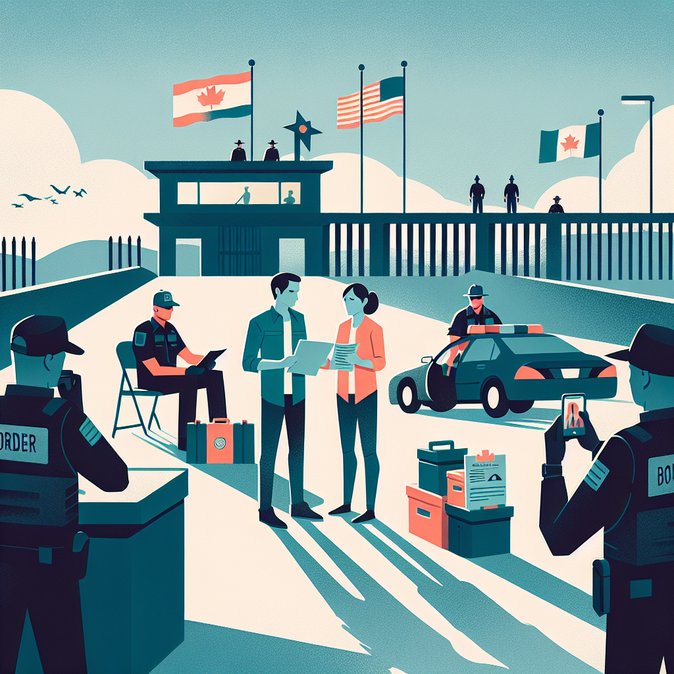
Germany’s Bundespolizei intercepted a suspected migrant-smuggling attempt at the Frankfurt (Oder) city bridge on Monday evening, underscoring the continued re-introduction of temporary land-border checks with Poland. Officers stopped a Polish-registered car carrying four men; while the Belarusian driver and a Ukrainian passenger held valid documents, two Georgian nationals had overstayed their Schengen limit and allegedly paid €500 each for the ride.(tantower.wordpress.com)
The driver now faces criminal proceedings for attempted facilitation of unauthorised entry under §96 Residence Act, and all four occupants were refused entry and turned back to Poland. The operation forms part of the “Ringfahndung 2026” programme, which allows stationary controls at selected crossings to combat irregular migration and people-smuggling networks between Belarus, Poland and Germany.(tantower.wordpress.com)
![Border-police sting at Frankfurt (Oder) highlights Germany’s renewed internal controls]()
For mobility managers the case is another signal that even Schengen-internal trips may face ID checks. Companies moving staff between Polish logistics hubs and eastern-German plants should ensure passengers carry passports and, where required, A1 certificates or residence permits, as driver spot-checks are increasing. Failure to present documents can delay shipments and lead to fines for transport providers.(tantower.wordpress.com)
VisaHQ’s Germany portal (https://www.visahq.com/germany/) offers a quick way for businesses and travelers to verify passport validity, monitor Schengen day counts and obtain any supporting documents—such as A1 certificates or residence permits—needed for border crossings like Frankfurt (Oder). The service generates customized checklists and can even courier applications, helping mobility teams steer clear of the costly delays and penalties highlighted above.
The Interior Ministry is expected to decide later this month whether to prolong the controls for another six-month cycle; business associations on both sides of the border argue that predictable screening corridors and trusted-carrier lanes are needed to keep just-in-time supply chains moving.(tantower.wordpress.com)
The driver now faces criminal proceedings for attempted facilitation of unauthorised entry under §96 Residence Act, and all four occupants were refused entry and turned back to Poland. The operation forms part of the “Ringfahndung 2026” programme, which allows stationary controls at selected crossings to combat irregular migration and people-smuggling networks between Belarus, Poland and Germany.(tantower.wordpress.com)
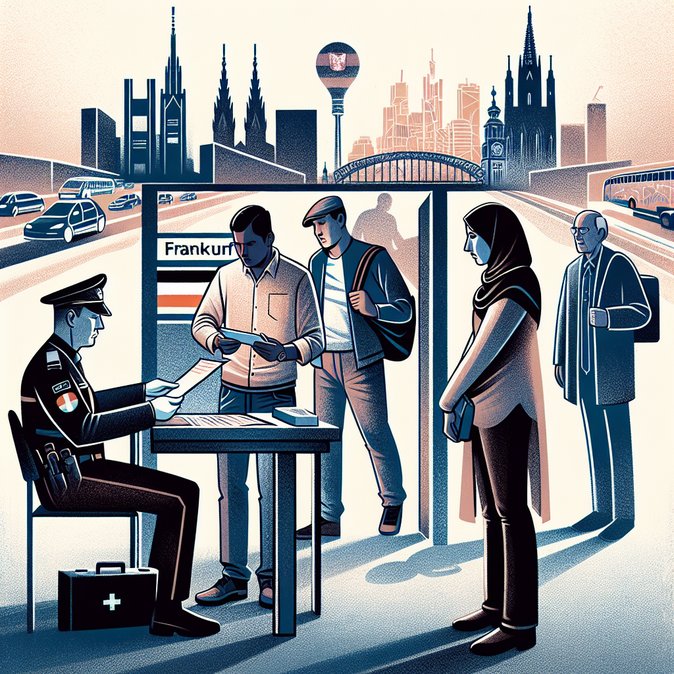
For mobility managers the case is another signal that even Schengen-internal trips may face ID checks. Companies moving staff between Polish logistics hubs and eastern-German plants should ensure passengers carry passports and, where required, A1 certificates or residence permits, as driver spot-checks are increasing. Failure to present documents can delay shipments and lead to fines for transport providers.(tantower.wordpress.com)
VisaHQ’s Germany portal (https://www.visahq.com/germany/) offers a quick way for businesses and travelers to verify passport validity, monitor Schengen day counts and obtain any supporting documents—such as A1 certificates or residence permits—needed for border crossings like Frankfurt (Oder). The service generates customized checklists and can even courier applications, helping mobility teams steer clear of the costly delays and penalties highlighted above.
The Interior Ministry is expected to decide later this month whether to prolong the controls for another six-month cycle; business associations on both sides of the border argue that predictable screening corridors and trusted-carrier lanes are needed to keep just-in-time supply chains moving.(tantower.wordpress.com)