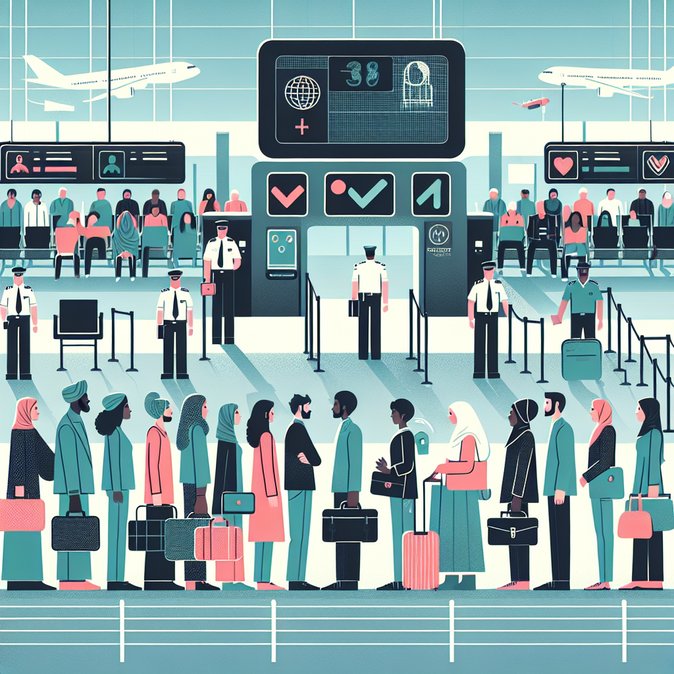
Police statistics released on 9 March 2026 show that officers at Turin’s Caselle Airport refused entry to 12 third-country nationals during the first two months of the year for lacking valid visas or proof of sufficient funds. The data offer one of the first operational snapshots of how the EU’s new Entry/Exit System (EES), partially rolled out in Italy last October, is reshaping frontline controls ahead of its bloc-wide go-live in April. (torinoggi.it)
According to airport authorities, biometric kiosks flagged multiple cases of document tampering and over-stay attempts. Six travellers were caught trying to board UK-bound flights on forged passports; four others were arrested under outstanding criminal warrants linked to drug trafficking. Border agents credited the EES’s automatic cross-checking against police and passenger-name-record databases for the fast detections. (torinoggi.it)
![Turin-Caselle Border Police Use Entry/Exit System to Block Visa-less Travellers and Identity Fraud]()
Travellers unsure about whether they need a Schengen visa—or which documents will satisfy the new biometric checks—can streamline planning through VisaHQ, an online visa and passport service that offers up-to-date entry requirements, application support and expedited processing for Italy and other Schengen destinations. Its interactive portal (https://www.visahq.com/italy/) helps users verify if they require a visa, organise supporting paperwork and avoid last-minute surprises at airports like Caselle.
For employers the figures are a reminder that Schengen-area trips exceeding the 90/180-day rule are increasingly unlikely to go unnoticed. Immigration counsel recommend that globally mobile staff keep digital logs of time spent in the EU and carry evidence of outbound itineraries, hotel bookings and financial means, even when travelling visa-free.
The Interior Ministry confirmed that travellers denied entry were repatriated at the airline’s expense, signalling stricter carrier-liability enforcement. Airlines operating from secondary airports such as Caselle should review document-verification procedures and crew briefings to mitigate potential fines.
According to airport authorities, biometric kiosks flagged multiple cases of document tampering and over-stay attempts. Six travellers were caught trying to board UK-bound flights on forged passports; four others were arrested under outstanding criminal warrants linked to drug trafficking. Border agents credited the EES’s automatic cross-checking against police and passenger-name-record databases for the fast detections. (torinoggi.it)
Travellers unsure about whether they need a Schengen visa—or which documents will satisfy the new biometric checks—can streamline planning through VisaHQ, an online visa and passport service that offers up-to-date entry requirements, application support and expedited processing for Italy and other Schengen destinations. Its interactive portal (https://www.visahq.com/italy/) helps users verify if they require a visa, organise supporting paperwork and avoid last-minute surprises at airports like Caselle.
For employers the figures are a reminder that Schengen-area trips exceeding the 90/180-day rule are increasingly unlikely to go unnoticed. Immigration counsel recommend that globally mobile staff keep digital logs of time spent in the EU and carry evidence of outbound itineraries, hotel bookings and financial means, even when travelling visa-free.
The Interior Ministry confirmed that travellers denied entry were repatriated at the airline’s expense, signalling stricter carrier-liability enforcement. Airlines operating from secondary airports such as Caselle should review document-verification procedures and crew briefings to mitigate potential fines.