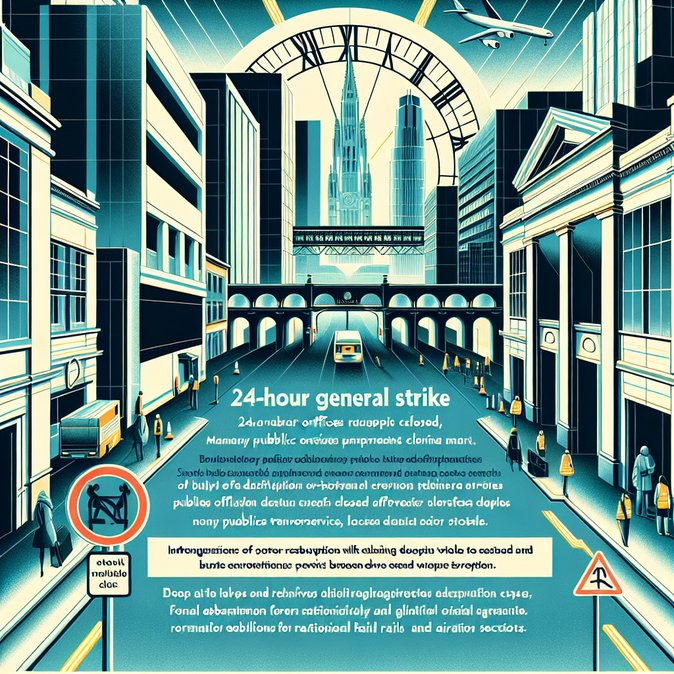
Italy woke up on Monday, 9 March 2026, to the first nationwide general strike of the year, a 24-hour walk-out called by a coalition of base trade-union confederations including USB, USI 1912, Slai-Cobas and CLAP. Organisers timed the stoppage to coincide with the day after International Women’s Day, putting gender-equality and workplace-safety demands centre stage. Although transport unions formally stayed outside the mobilisation, the strike’s unusually broad scope—spanning schools, health-care facilities, local administrations and some private-sector services—quickly produced knock-on effects for business and leisure travellers. (travelandtourworld.com)
By mid-morning, municipal offices in Rome, Milan, Naples and Florence were operating with skeleton staff. Companies seeking the all-important “nulla osta” work-permit clearances or residence-permit renewals reported suspended counter services, and several consular posts postponed biometric-capture appointments. In the education sector, the FLC-CGIL teachers’ union added its own 24-hour walk-out, forcing universities with large international cohorts—Bocconi, Bologna, the European University Institute—to cancel lectures and reschedule visa-letter collections. (intrieste.com)
![Nationwide General Strike Paralyses Italian Public Services and Threatens Travel Plans]()
Amid this uncertainty, VisaHQ can streamline the process for anyone needing to secure or extend Italian travel documents. Its Italy-dedicated portal (https://www.visahq.com/italy/) offers up-to-date guidance, document checklists and fast-track options that help individuals and HR teams stay on schedule even when local immigration counters are slowed by strikes or other disruptions.
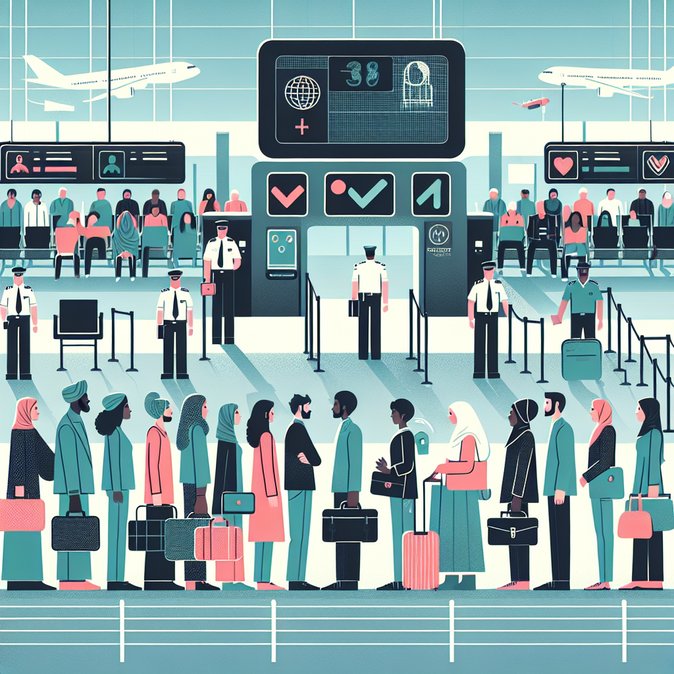
Transport disruption, though limited compared with previous Italian strikes, was uneven. Trenitalia and Italo kept high-speed services running during statutory “guaranteed windows”, yet regional commuters in Lazio and Campania encountered cancellations after militant local bus workers joined the protest. Airport operations were largely protected by mandatory minimum-service rules, but ground-handling companies at Venice Marco Polo and Naples Capodichino warned of slower baggage delivery and potential delays for connecting passengers. (travelandtourworld.com)
For multinational employers the single-day action highlighted Italy’s growing climate of labour unrest ahead of critical collective-bargaining renewals later this spring. Global mobility managers were advised to check the validity of time-sensitive immigration paperwork submitted on 8 March, build extra buffers into assignment start-dates, and alert travelling staff to possible regional transport slow-downs even after the official end of the strike. The Interior Ministry confirmed that immigration-counter appointments missed on 9 March may be re-booked without penalty within 15 days. (intrieste.com)
By mid-morning, municipal offices in Rome, Milan, Naples and Florence were operating with skeleton staff. Companies seeking the all-important “nulla osta” work-permit clearances or residence-permit renewals reported suspended counter services, and several consular posts postponed biometric-capture appointments. In the education sector, the FLC-CGIL teachers’ union added its own 24-hour walk-out, forcing universities with large international cohorts—Bocconi, Bologna, the European University Institute—to cancel lectures and reschedule visa-letter collections. (intrieste.com)
Amid this uncertainty, VisaHQ can streamline the process for anyone needing to secure or extend Italian travel documents. Its Italy-dedicated portal (https://www.visahq.com/italy/) offers up-to-date guidance, document checklists and fast-track options that help individuals and HR teams stay on schedule even when local immigration counters are slowed by strikes or other disruptions.
Transport disruption, though limited compared with previous Italian strikes, was uneven. Trenitalia and Italo kept high-speed services running during statutory “guaranteed windows”, yet regional commuters in Lazio and Campania encountered cancellations after militant local bus workers joined the protest. Airport operations were largely protected by mandatory minimum-service rules, but ground-handling companies at Venice Marco Polo and Naples Capodichino warned of slower baggage delivery and potential delays for connecting passengers. (travelandtourworld.com)
For multinational employers the single-day action highlighted Italy’s growing climate of labour unrest ahead of critical collective-bargaining renewals later this spring. Global mobility managers were advised to check the validity of time-sensitive immigration paperwork submitted on 8 March, build extra buffers into assignment start-dates, and alert travelling staff to possible regional transport slow-downs even after the official end of the strike. The Interior Ministry confirmed that immigration-counter appointments missed on 9 March may be re-booked without penalty within 15 days. (intrieste.com)