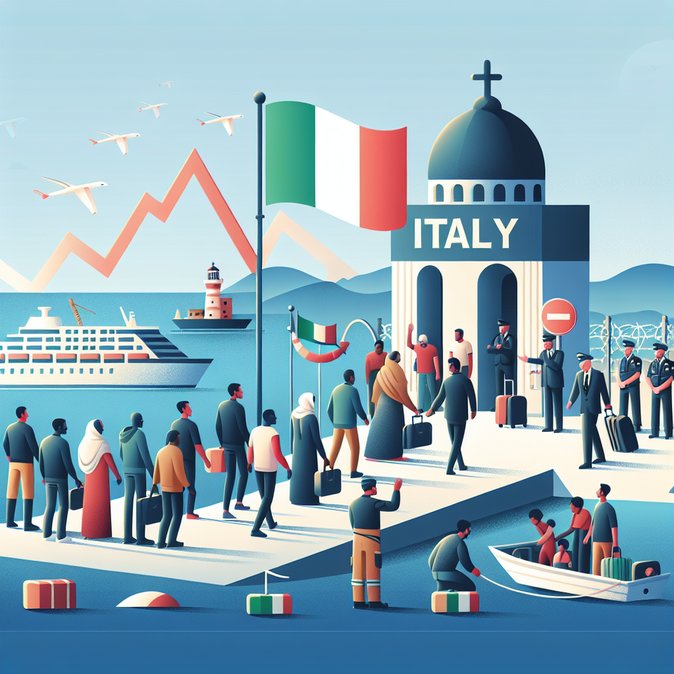
The European Commission announced on 9 March 2026 that it has coordinated more than 42 emergency flights to repatriate European citizens stranded in the Middle East after regional airspace closures. Italy’s foreign ministry said roughly 25,000 nationals have returned via commercial and charter services since 2 March, including Etihad-operated rotations into Rome and Milan and a series of Muscat–Rome special flights arranged with Oman Air.
![EU Supports Mass Repatriation Flights From Gulf; 25,000 Italians Already Home]()
Travellers scrambling for alternate routings or emergency travel documentation can get rapid, professional assistance from VisaHQ, whose Italian platform (https://www.visahq.com/italy/) lets users instantly verify entry requirements for any transit point, submit visa applications online and arrange expedited passport or document courier services—an especially valuable resource when sudden airspace disruptions force last-minute itinerary changes.
Rome’s Crisis Unit is now focusing on smaller groups scattered across Kuwait, Bahrain and Saudi Arabia, with a final Saudi evacuation scheduled for 12 March. Italian consular teams have been deployed to Abu Dhabi and Doha to issue emergency travel documents, and the Guardia di Finanza has been authorised to provide airport escorts for vulnerable travellers transiting through third countries. In a briefing to parliament, Foreign Minister Antonio Tajani praised EU civil-protection mechanisms for sharing costs and aircraft capacity among member states, noting that two flights also carried German and Latvian citizens who would otherwise have waited days for seats. Tajani added that Italy will seek reimbursement under the Union Civil Protection Mechanism and will push for a permanent ‘Mobility Solidarity Reserve’ at the next Foreign Affairs Council. Corporate travel managers were advised to review crisis-evacuation clauses in travel-insurance policies and to ensure staff register itineraries with the Farnesina’s portal before departure. Employers with Middle East operations should keep contingency funds for hotel stays and last-minute routing changes in case of renewed closures. Logistically, airlines have diverted most Gulf–Europe traffic through Muscat and Jeddah, lengthening flight times by up to three hours. HR departments scheduling assignee home-leave trips are encouraged to allow additional rest time upon return to Italy.

Travellers scrambling for alternate routings or emergency travel documentation can get rapid, professional assistance from VisaHQ, whose Italian platform (https://www.visahq.com/italy/) lets users instantly verify entry requirements for any transit point, submit visa applications online and arrange expedited passport or document courier services—an especially valuable resource when sudden airspace disruptions force last-minute itinerary changes.
Rome’s Crisis Unit is now focusing on smaller groups scattered across Kuwait, Bahrain and Saudi Arabia, with a final Saudi evacuation scheduled for 12 March. Italian consular teams have been deployed to Abu Dhabi and Doha to issue emergency travel documents, and the Guardia di Finanza has been authorised to provide airport escorts for vulnerable travellers transiting through third countries. In a briefing to parliament, Foreign Minister Antonio Tajani praised EU civil-protection mechanisms for sharing costs and aircraft capacity among member states, noting that two flights also carried German and Latvian citizens who would otherwise have waited days for seats. Tajani added that Italy will seek reimbursement under the Union Civil Protection Mechanism and will push for a permanent ‘Mobility Solidarity Reserve’ at the next Foreign Affairs Council. Corporate travel managers were advised to review crisis-evacuation clauses in travel-insurance policies and to ensure staff register itineraries with the Farnesina’s portal before departure. Employers with Middle East operations should keep contingency funds for hotel stays and last-minute routing changes in case of renewed closures. Logistically, airlines have diverted most Gulf–Europe traffic through Muscat and Jeddah, lengthening flight times by up to three hours. HR departments scheduling assignee home-leave trips are encouraged to allow additional rest time upon return to Italy.