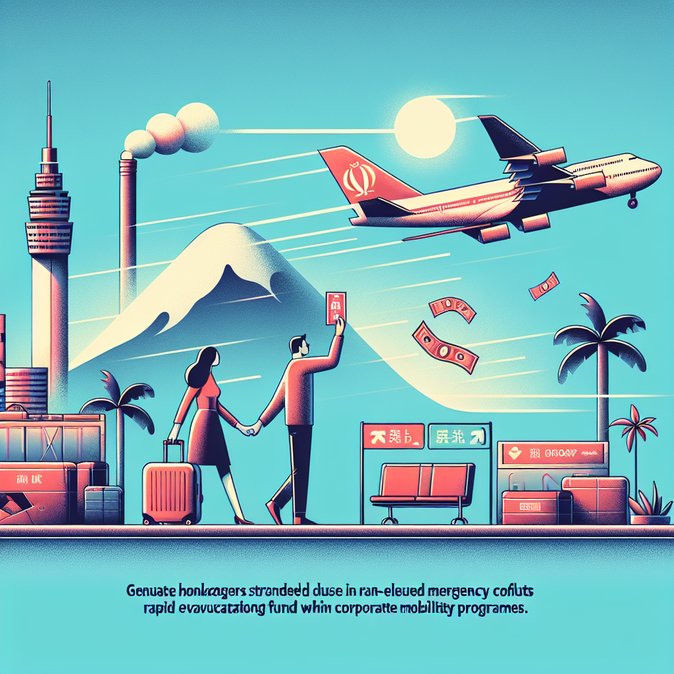
The South China Morning Post reported on 9 March 2026 that construction consultant Yen Kwok and her husband paid nearly HK$50,000 (US$6,400) for last-minute Emirates tickets after eight failed attempts to leave Dubai. Thousands of flights across the Gulf were cancelled or rerouted following the outbreak of US-Israel hostilities with Iran on 28 February. Hong Kong’s Immigration Department said it had fielded 830 inquiries from residents in the region, facilitating safe exit for roughly half by the publication date. The episode highlights the vulnerability of business and leisure travellers to sudden geopolitical shocks. Kwok had originally booked a simple 10-day holiday; the rapidly escalating conflict triggered aviation-insurance restrictions, airspace closures and price surges that stranded scores of Hongkongers. Mental fatigue led her to cancel a pair of confirmed seats, compounding losses.
![Hong Kong couple spends HK$50,000 fleeing Dubai as Iran conflict disrupts Gulf flights]()
Amid such uncertainty, VisaHQ’s Hong Kong portal (https://www.visahq.com/hong-kong/) can lighten the administrative load by expediting emergency visas, monitoring evolving entry restrictions and arranging courier collection of travel documents at short notice. The service operates 24/7, giving both individual travellers and corporate mobility managers a single dashboard for real-time updates and compliance reminders.
For corporate mobility teams, the case underscores the necessity of real-time risk monitoring and emergency-ticketing budgets. Companies with staff on assignment or training in the Gulf should review travel-risk vendor coverage, ensure employee-tracking apps capture stopovers, and pre-authorise premium-fare evacuations. Insurance managers may also need to verify that war-risk exclusions do not void corporate travel policies. The government’s response—consular phone lines, coordination with airlines and digital travel-advisory pushes—demonstrates the importance of registering itineraries with the Immigration Department’s “Outbound Travel Alert” system. Employers are encouraged to integrate the alert feed into their own travel-approval platforms so that red-flag destinations trigger mandatory duty-of-care check-ins before tickets are issued.

Amid such uncertainty, VisaHQ’s Hong Kong portal (https://www.visahq.com/hong-kong/) can lighten the administrative load by expediting emergency visas, monitoring evolving entry restrictions and arranging courier collection of travel documents at short notice. The service operates 24/7, giving both individual travellers and corporate mobility managers a single dashboard for real-time updates and compliance reminders.
For corporate mobility teams, the case underscores the necessity of real-time risk monitoring and emergency-ticketing budgets. Companies with staff on assignment or training in the Gulf should review travel-risk vendor coverage, ensure employee-tracking apps capture stopovers, and pre-authorise premium-fare evacuations. Insurance managers may also need to verify that war-risk exclusions do not void corporate travel policies. The government’s response—consular phone lines, coordination with airlines and digital travel-advisory pushes—demonstrates the importance of registering itineraries with the Immigration Department’s “Outbound Travel Alert” system. Employers are encouraged to integrate the alert feed into their own travel-approval platforms so that red-flag destinations trigger mandatory duty-of-care check-ins before tickets are issued.
More From Hong Kong
View all
Cathay Pacific unveils ‘Spirit of Hong Kong – 80th Anniversary Edition’ livery to reinforce city’s aviation hub ambitions

Fact-check: Hong Kong permanent-residency rules unchanged despite viral ‘bonus-points’ claims