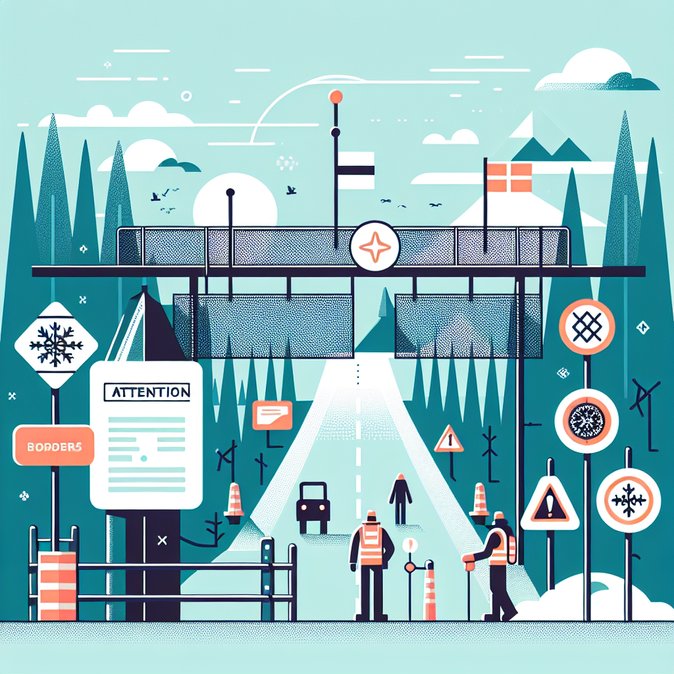
Finland’s Border Guard confirmed on Monday, 9 March 2026, that it has started issuing fixed €500 penalties to foreign visitors who wander—knowingly or not—into the country’s protected frontier zone with Russia. The escalation in enforcement follows a spate of incidents this winter in which small groups of German, Dutch, Swedish and other EU nationals entered the strip of forest that separates Lapland ski resorts from Russia in the hope of ‘getting a selfie at the new NATO border’.
Under the Border Guard Act, the last 3–15 kilometres of territory before the international boundary may only be entered with a special permit. The rule predates Finland’s 2023 NATO accession, but authorities say curiosity-driven infringements have “tripled” since the flag-raising in Brussels. Lieutenant-Colonel Mikko Kauppila of the Lapland Border Guard told local media that ten cases were recorded in February alone, compared with three during the same period a year earlier. The €500 fine may be supplemented by prosecution and a Schengen-wide entry ban if travellers cross the actual border into Russia.
For anyone unsure about whether they need additional paperwork before venturing near Finland’s eastern limits, VisaHQ can help. The company’s portal (https://www.visahq.com/finland/) tracks the latest Finnish entry requirements and can assist with securing special permits, visas, and other documentation—reducing the risk of an unexpected €500 penalty at the border.
![Finland slaps €500 on-the-spot fines on ‘border tourists’ as Russia frontier becomes no-go zone]()
The crackdown has immediate implications for tour operators marketing ‘border safaris’ and for corporate incentive planners who include Kuusamo or Salla in winter programmes. Companies are now legally obliged to brief clients that a normal Schengen visa—or visa-free EU nationality—does not grant access to the frontier strip. Failure to do so can expose the organiser to secondary liability.
Travel-risk consultants advise multinationals with staff in northern Finland to update pre-trip training materials, include geo-fencing alerts in duty-of-care apps and remind employees that mapping tools may underestimate distances in trackless snow. The Foreign Ministry also reiterated that Russia continues to restrict cross-border movement and that any inadvertent entry could lead to detention on the Russian side.
Beyond the immediate fines, the episode illustrates how geopolitical shifts ripple into day-to-day mobility compliance. Companies relocating talent to Finland—or sending teams for short projects—must now treat the eastern border as a high-risk zone requiring the same level of briefing as conflict-affected regions, despite Finland’s Schengen membership and generally low threat profile.
Under the Border Guard Act, the last 3–15 kilometres of territory before the international boundary may only be entered with a special permit. The rule predates Finland’s 2023 NATO accession, but authorities say curiosity-driven infringements have “tripled” since the flag-raising in Brussels. Lieutenant-Colonel Mikko Kauppila of the Lapland Border Guard told local media that ten cases were recorded in February alone, compared with three during the same period a year earlier. The €500 fine may be supplemented by prosecution and a Schengen-wide entry ban if travellers cross the actual border into Russia.
For anyone unsure about whether they need additional paperwork before venturing near Finland’s eastern limits, VisaHQ can help. The company’s portal (https://www.visahq.com/finland/) tracks the latest Finnish entry requirements and can assist with securing special permits, visas, and other documentation—reducing the risk of an unexpected €500 penalty at the border.

The crackdown has immediate implications for tour operators marketing ‘border safaris’ and for corporate incentive planners who include Kuusamo or Salla in winter programmes. Companies are now legally obliged to brief clients that a normal Schengen visa—or visa-free EU nationality—does not grant access to the frontier strip. Failure to do so can expose the organiser to secondary liability.
Travel-risk consultants advise multinationals with staff in northern Finland to update pre-trip training materials, include geo-fencing alerts in duty-of-care apps and remind employees that mapping tools may underestimate distances in trackless snow. The Foreign Ministry also reiterated that Russia continues to restrict cross-border movement and that any inadvertent entry could lead to detention on the Russian side.
Beyond the immediate fines, the episode illustrates how geopolitical shifts ripple into day-to-day mobility compliance. Companies relocating talent to Finland—or sending teams for short projects—must now treat the eastern border as a high-risk zone requiring the same level of briefing as conflict-affected regions, despite Finland’s Schengen membership and generally low threat profile.
More From Finland
View all
Finnair and Foreign Ministry mount Muscat–Helsinki rescue flight after Middle-East airspace closures
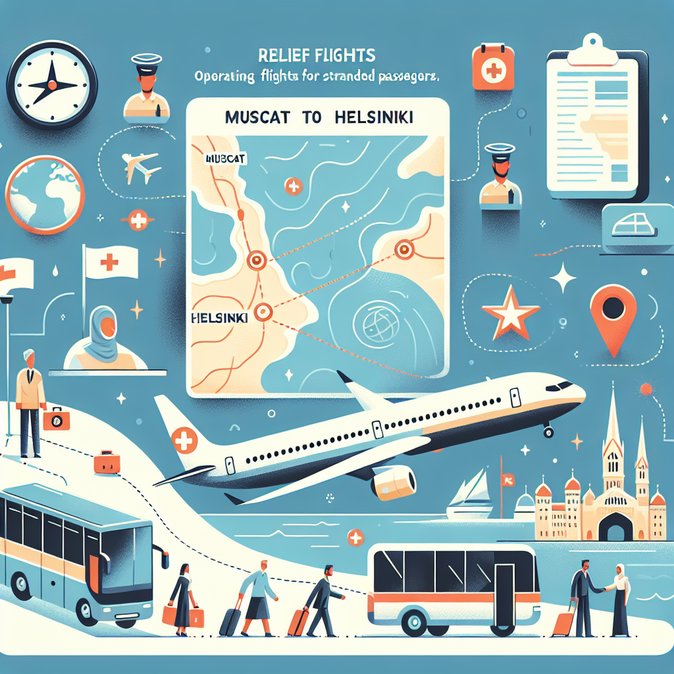
Finnair launches Muscat–Helsinki relief flights to bring home 1,200 passengers stranded by Middle-East airspace closures