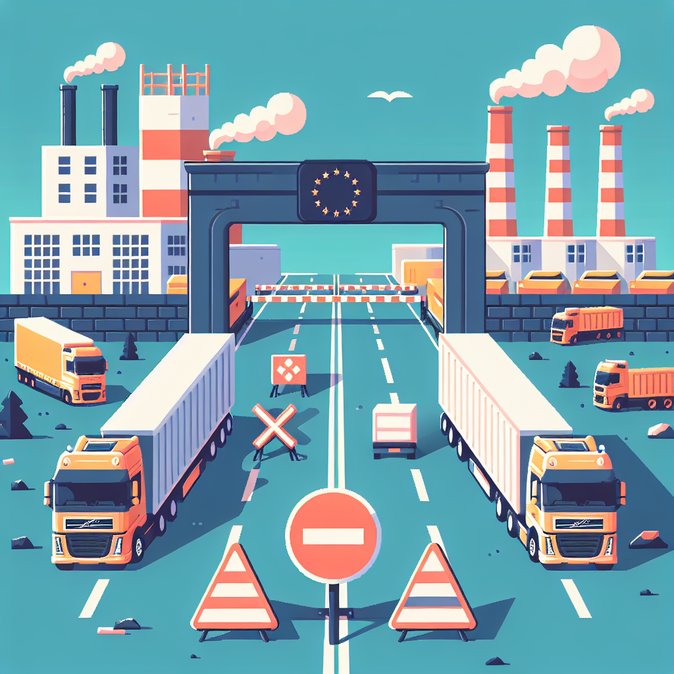
Podgorica/Sarajevo – Freight-forwarding associations from Montenegro, Bosnia-Herzegovina and neighbouring states announced plans today (9 March 2026) to block key border crossings on 12 March unless the EU relaxes upcoming ETIAS requirements for non-EU truck drivers. The industry fears drivers will be treated as ordinary tourists – limited to 90 days in any 180-day period – once ETIAS takes effect in mid-April.
German logistics majors such as DHL Freight, DB Schenker and automotive suppliers relying on just-in-time deliveries from the Western Balkans could face multi-day disruptions if the blockades proceed. The German Freight Forwarding and Logistics Association (DSLV) told members it is ‘examining emergency re-routing via Slovenian Adriatic ports’, but warned that capacity is extremely tight.
![Western Balkan Hauliers Threaten Border Blockades over ETIAS Driver Limits – German Supply Chains on Alert]()
For operators scrambling to understand the new travel authorisation rules, VisaHQ can streamline the process by providing real-time ETIAS updates, personalised document checklists and fast online filing through its Germany portal (https://www.visahq.com/germany/). The platform helps drivers, dispatchers and HR departments cut through red tape, reducing the risk of border delays and ensuring compliance ahead of any potential blockade.
EU officials rejected the hauliers’ request to classify road-freight drivers as ‘transport crew’, a status already granted to airline and maritime personnel, arguing it would breach Schengen law. As a compromise, Brussels suggested that Balkan companies register subsidiaries inside the EU – a proposal dismissed as unrealistic in the short term.
Companies with production sites in southern Germany should review safety-stock thresholds and consider air-freight alternatives for critical parts. HR teams moving South-East European staff on short-term assignments should also note that ETIAS refusals could ground drivers for several days, complicating deployment schedules.
German logistics majors such as DHL Freight, DB Schenker and automotive suppliers relying on just-in-time deliveries from the Western Balkans could face multi-day disruptions if the blockades proceed. The German Freight Forwarding and Logistics Association (DSLV) told members it is ‘examining emergency re-routing via Slovenian Adriatic ports’, but warned that capacity is extremely tight.

For operators scrambling to understand the new travel authorisation rules, VisaHQ can streamline the process by providing real-time ETIAS updates, personalised document checklists and fast online filing through its Germany portal (https://www.visahq.com/germany/). The platform helps drivers, dispatchers and HR departments cut through red tape, reducing the risk of border delays and ensuring compliance ahead of any potential blockade.
EU officials rejected the hauliers’ request to classify road-freight drivers as ‘transport crew’, a status already granted to airline and maritime personnel, arguing it would breach Schengen law. As a compromise, Brussels suggested that Balkan companies register subsidiaries inside the EU – a proposal dismissed as unrealistic in the short term.
Companies with production sites in southern Germany should review safety-stock thresholds and consider air-freight alternatives for critical parts. HR teams moving South-East European staff on short-term assignments should also note that ETIAS refusals could ground drivers for several days, complicating deployment schedules.