In a move widely anticipated by global-mobility managers, Immigration Minister Lena Metlege Diab confirmed on 9 March that Canada has launched a one-time Temporary-Resident-to-Permanent-Resident (TR-to-PR) pathway that will grant permanent residence to up to 33,000 temporary foreign workers already in the country.
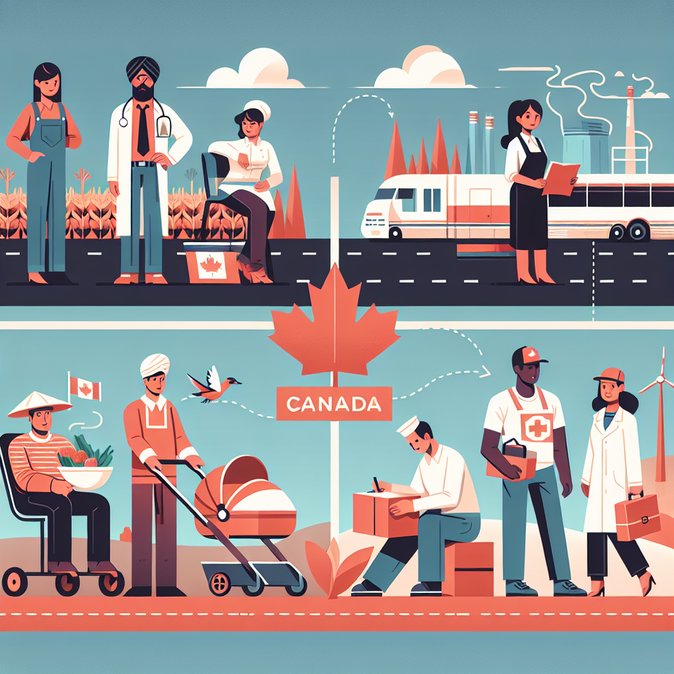
Unlike the 2021 pandemic-era pilot, the new intake operates outside the Express Entry and Provincial Nominee frameworks. Federal officials say the stream is designed to stabilise labour supply in essential, hard-to-staff sectors—including agriculture, hospitality, health-care, transport and skilled trades—while easing pressure from the record 314,000 work-permit expiries projected for Q1 2026. Applicants will have to show maintained legal status, Canadian work experience, recent tax filings, language results and “established community ties,” signalling a policy preference for workers who have put down roots in rural and small-city Canada.
The government has not yet published the formal program guide; IRCC says detailed criteria and application forms will follow in April. Nevertheless, a soft-launch intake has already begun, prompting immigration counsel to advise employers to keep work permits valid and to assemble supporting evidence early. Observers expect the quota to fill quickly, pointing to the 2021 pathway, which hit its cap within 24 hours.
![Canada unveils one-time TR-to-PR pathway for 33,000 in-country workers]()
For employers and applicants looking for guidance on bridging work permits or help compiling supporting documents, VisaHQ offers an end-to-end document-preparation and submission service through its dedicated Canada portal (https://www.visahq.com/canada/). Leveraging real-time tracking of IRCC updates, the platform can streamline everything from police certificates to eTAs, helping ensure files are complete before this limited-quota pathway closes.
For corporate mobility teams the implications are two-fold. First, workers whose permits expire later this year may gain a retention avenue that avoids costly Labour-Market Impact Assessments (LMIAs). Second, employers will need to plan for knock-on logistics—bridging open work permits during processing, provincial health-coverage continuity and, eventually, family sponsorship activity once status converts to permanent residence. Companies relying on large seasonal cohorts should monitor whether IRCC introduces occupation- or region-specific intake windows that could affect eligibility timing.
Although capped and time-limited, the TR-to-PR pathway signals Ottawa’s broader strategy: shifting immigration growth from overseas recruitment to status conversion for people already contributing inside Canada. That pivot will matter for talent-acquisition road-maps, relocation budgets and long-term housing forecasts across the country.
Unlike the 2021 pandemic-era pilot, the new intake operates outside the Express Entry and Provincial Nominee frameworks. Federal officials say the stream is designed to stabilise labour supply in essential, hard-to-staff sectors—including agriculture, hospitality, health-care, transport and skilled trades—while easing pressure from the record 314,000 work-permit expiries projected for Q1 2026. Applicants will have to show maintained legal status, Canadian work experience, recent tax filings, language results and “established community ties,” signalling a policy preference for workers who have put down roots in rural and small-city Canada.
The government has not yet published the formal program guide; IRCC says detailed criteria and application forms will follow in April. Nevertheless, a soft-launch intake has already begun, prompting immigration counsel to advise employers to keep work permits valid and to assemble supporting evidence early. Observers expect the quota to fill quickly, pointing to the 2021 pathway, which hit its cap within 24 hours.

For employers and applicants looking for guidance on bridging work permits or help compiling supporting documents, VisaHQ offers an end-to-end document-preparation and submission service through its dedicated Canada portal (https://www.visahq.com/canada/). Leveraging real-time tracking of IRCC updates, the platform can streamline everything from police certificates to eTAs, helping ensure files are complete before this limited-quota pathway closes.
For corporate mobility teams the implications are two-fold. First, workers whose permits expire later this year may gain a retention avenue that avoids costly Labour-Market Impact Assessments (LMIAs). Second, employers will need to plan for knock-on logistics—bridging open work permits during processing, provincial health-coverage continuity and, eventually, family sponsorship activity once status converts to permanent residence. Companies relying on large seasonal cohorts should monitor whether IRCC introduces occupation- or region-specific intake windows that could affect eligibility timing.
Although capped and time-limited, the TR-to-PR pathway signals Ottawa’s broader strategy: shifting immigration growth from overseas recruitment to status conversion for people already contributing inside Canada. That pivot will matter for talent-acquisition road-maps, relocation budgets and long-term housing forecasts across the country.