The Austrian Ministry of Foreign Affairs (BMEIA) published an expanded security bulletin on 9 March 2026 after daily crisis-cell meetings that have been running since 28 February. The notice keeps the highest Level-4 “Do Not Travel” warning in place for Bahrain, Iran, Iraq, Israel, Jordan, Kuwait, Lebanon, Qatar, Syria and the United Arab Emirates and maintains Level-3 advice for Oman and Saudi-Arabia. Officials stress that the entire region remains volatile, with sporadic rocket fire and rapidly changing air-space restrictions.
![Austria issues updated Level-4 travel warning and organises further evacuation flights from the Middle East]()
Travel planners looking for reliable visa and entry-requirement intelligence can simplify their checks through VisaHQ; the dedicated Austria portal (https://www.visahq.com/austria/) aggregates the latest rules for destinations across the Middle East and can fast-track applications or document reviews for personnel who must redeploy at short notice.
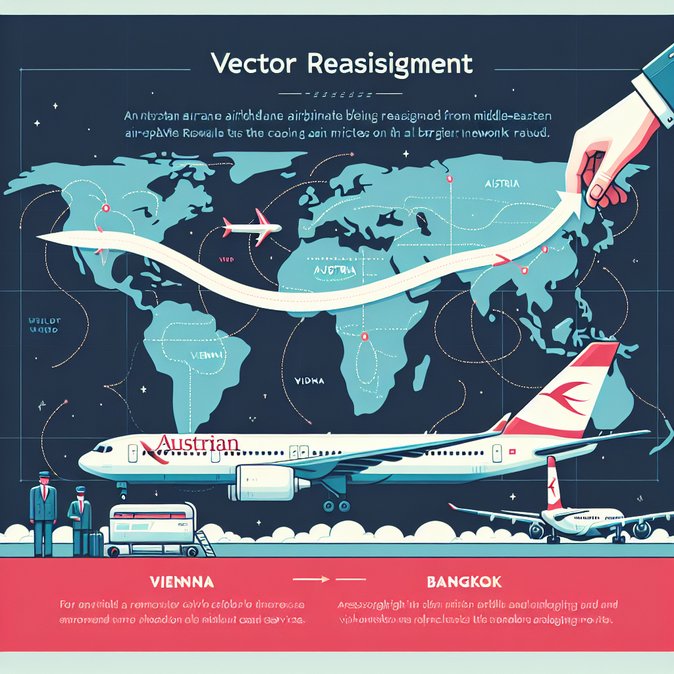
From a mobility perspective the bulletin is notable for the scale of government-backed departures. According to BMEIA, more than 1,300 people have left the region with Austrian assistance since hostilities escalated. Four charter flights and multiple bus convoys, supported by the Austrian armed forces and police, have already operated; a fifth charter landed in Vienna on 8 March with 47 vulnerable passengers. The ministry urges citizens still in the region to use re-opened commercial links—daily Emirates, Air Arabia and FlyDubai services to Vienna are highlighted—and to deregister from the crisis database once they depart. Companies with staff on assignment are advised to treat time spent in evacuation status as working time for social-security purposes and to update A1 or multi-state payroll registrations once employees re-enter Austria or another EU state. Risk managers should also note that land exits via Jordan and the UAE remain possible only “at travellers’ own risk.” Practical implications include higher insurance premiums for duty trips, mandatory tracking of travellers in high-risk zones and potential tax-residency impacts if extended stays in Austria trigger local payroll withholding. Mobility teams should also monitor any expansion of the flight ban beyond 7 March; Austrian Airlines has already suspended Tel Aviv, Beirut, Amman, Erbil and Tehran services and warns that wide-body capacity may be redeployed to Asia or North America if the closure drags on. Finally, the ministry reminds all Austrians abroad to register on reiseregistrierung.at and to keep local embassy numbers at hand. Firms running rotational rosters in the Gulf are encouraged to schedule crew changes through safe hubs such as Muscat or Doha until the security picture improves.

Travel planners looking for reliable visa and entry-requirement intelligence can simplify their checks through VisaHQ; the dedicated Austria portal (https://www.visahq.com/austria/) aggregates the latest rules for destinations across the Middle East and can fast-track applications or document reviews for personnel who must redeploy at short notice.
From a mobility perspective the bulletin is notable for the scale of government-backed departures. According to BMEIA, more than 1,300 people have left the region with Austrian assistance since hostilities escalated. Four charter flights and multiple bus convoys, supported by the Austrian armed forces and police, have already operated; a fifth charter landed in Vienna on 8 March with 47 vulnerable passengers. The ministry urges citizens still in the region to use re-opened commercial links—daily Emirates, Air Arabia and FlyDubai services to Vienna are highlighted—and to deregister from the crisis database once they depart. Companies with staff on assignment are advised to treat time spent in evacuation status as working time for social-security purposes and to update A1 or multi-state payroll registrations once employees re-enter Austria or another EU state. Risk managers should also note that land exits via Jordan and the UAE remain possible only “at travellers’ own risk.” Practical implications include higher insurance premiums for duty trips, mandatory tracking of travellers in high-risk zones and potential tax-residency impacts if extended stays in Austria trigger local payroll withholding. Mobility teams should also monitor any expansion of the flight ban beyond 7 March; Austrian Airlines has already suspended Tel Aviv, Beirut, Amman, Erbil and Tehran services and warns that wide-body capacity may be redeployed to Asia or North America if the closure drags on. Finally, the ministry reminds all Austrians abroad to register on reiseregistrierung.at and to keep local embassy numbers at hand. Firms running rotational rosters in the Gulf are encouraged to schedule crew changes through safe hubs such as Muscat or Doha until the security picture improves.