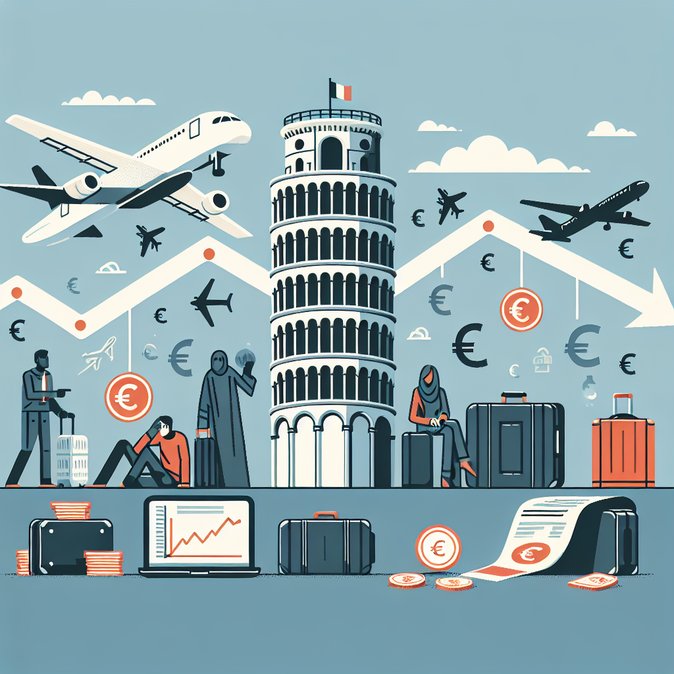
An investigation by Quotidiano Nazionale estimates that over 20,000 flights have been cancelled across the Gulf since 1 March, stranding some 2.3 million passengers worldwide—40,000 of them Italian. Confesercenti and Fiavet calculate that lost bookings could shave up to €1 billion off inbound tourism receipts to Italy over the next two months, as travellers postpone or re-route vacations that would have relied on Gulf hub connections.(quotidiano.net)
The newspaper cites travel-agency data showing at least 3,000 Italian package holidays already annulled, with potential annual revenue losses of €1.5–6 billion when knock-on effects are included. ITA Airways has suspended its Gulf network until 10 March, while Emirates and Qatar Airways are gradually restoring frequencies. Agencies report being “overwhelmed” by refund requests and accuse some foreign carriers of slow processing and limited passenger assistance.
Travellers suddenly rerouting through alternative hubs should remember that new transit or entry‐visa rules may apply. VisaHQ’s Italy portal (https://www.visahq.com/italy/) streamlines emergency visa applications and offers real-time guidance on documentation, helping both holidaymakers and corporate travel managers avoid additional disruption while flight schedules remain unpredictable.
![Gulf conflict cancels 20,000 flights; Italian travel trade warns of €1 bn tourism hit]()
Legal context: Under EU Regulation 261, customers booked on EU carriers (including ITA Airways) are entitled to care and full refunds, whereas Gulf carriers fall under the Montreal Convention, which offers compensation but no duty of care. Italian consumer-rights group Confconsumatori warns that some agencies are refusing fee-free cancellations unless the Farnesina issues an explicit travel ban, a stance that could trigger litigation.
Corporate impact: Multinationals routing staff to Asia via Dubai or Doha need to budget for higher fares and longer itineraries as airlines detour around restricted airspace. Insurance premiums on tickets transiting the Gulf have risen by up to 15 %. Companies should verify that their TMCs are applying the correct refund rules and, if necessary, escalate disputes through ENAC’s conciliation service.
Outlook: Industry bodies expect capacity to normalise gradually after 15 March, but warn that further drone or missile incidents could prolong volatility. Italian tour operators are lobbying for a temporary state-funded credit-voucher scheme similar to the “Voucher Covid” model used in 2020.
The newspaper cites travel-agency data showing at least 3,000 Italian package holidays already annulled, with potential annual revenue losses of €1.5–6 billion when knock-on effects are included. ITA Airways has suspended its Gulf network until 10 March, while Emirates and Qatar Airways are gradually restoring frequencies. Agencies report being “overwhelmed” by refund requests and accuse some foreign carriers of slow processing and limited passenger assistance.
Travellers suddenly rerouting through alternative hubs should remember that new transit or entry‐visa rules may apply. VisaHQ’s Italy portal (https://www.visahq.com/italy/) streamlines emergency visa applications and offers real-time guidance on documentation, helping both holidaymakers and corporate travel managers avoid additional disruption while flight schedules remain unpredictable.

Legal context: Under EU Regulation 261, customers booked on EU carriers (including ITA Airways) are entitled to care and full refunds, whereas Gulf carriers fall under the Montreal Convention, which offers compensation but no duty of care. Italian consumer-rights group Confconsumatori warns that some agencies are refusing fee-free cancellations unless the Farnesina issues an explicit travel ban, a stance that could trigger litigation.
Corporate impact: Multinationals routing staff to Asia via Dubai or Doha need to budget for higher fares and longer itineraries as airlines detour around restricted airspace. Insurance premiums on tickets transiting the Gulf have risen by up to 15 %. Companies should verify that their TMCs are applying the correct refund rules and, if necessary, escalate disputes through ENAC’s conciliation service.
Outlook: Industry bodies expect capacity to normalise gradually after 15 March, but warn that further drone or missile incidents could prolong volatility. Italian tour operators are lobbying for a temporary state-funded credit-voucher scheme similar to the “Voucher Covid” model used in 2020.