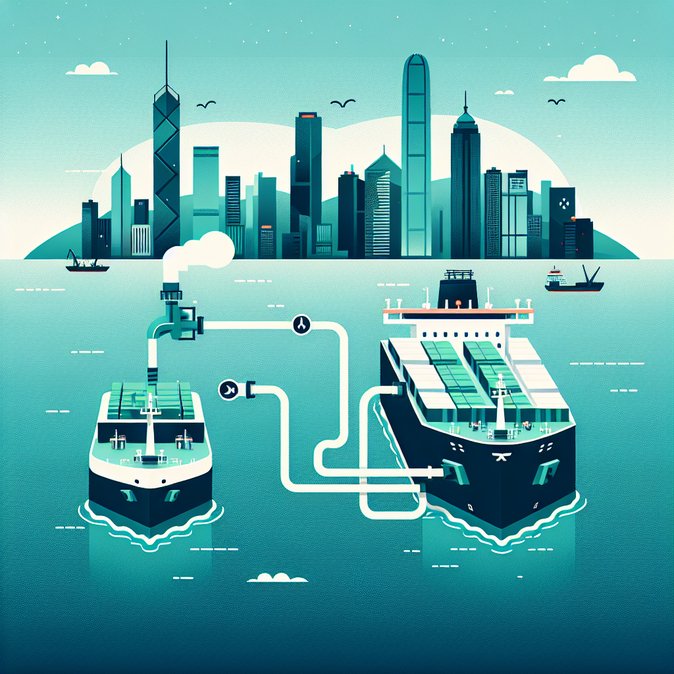
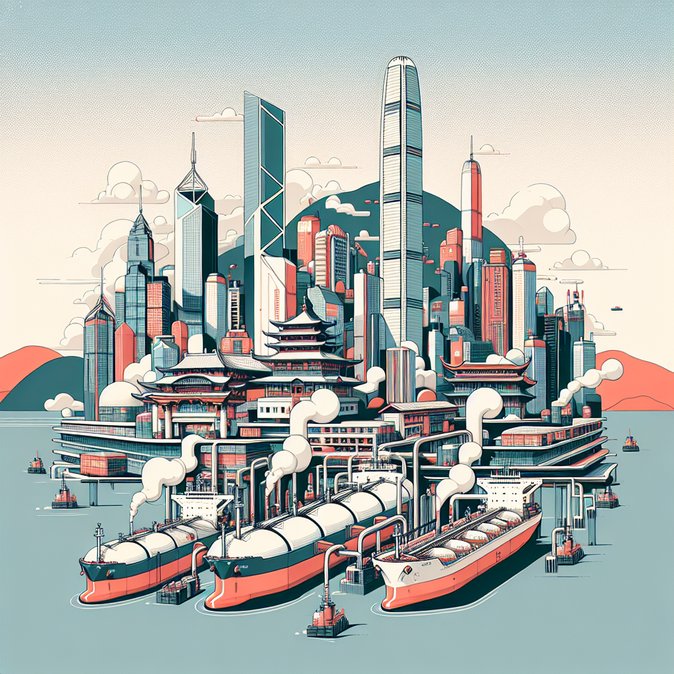
Hong Kong took a decisive step toward becoming Asia’s green-fuel bunkering centre after the world’s first methanol dual-fuel ro/ro vessel, CM Hong Kong, received 500 tonnes of green methanol at anchor off the city on March 5. The milestone was formally announced on March 8 by project partners China Merchants Energy Shipping, Sinopec (Hong Kong) and CIMC Enric at a ceremony attended by Transport and Logistics Secretary Mable Chan and other senior officials. Green methanol—produced from renewable feedstocks and certified under the ISCC EU scheme—cuts lifecycle greenhouse-gas emissions by roughly 85 per cent versus conventional marine diesel. The operation required unprecedented coordination: Sinopec provided ship-to-ship transfer services, the Marine Department and Customs oversaw safety protocols, while the Immigration Department fast-tracked clearances for 22 foreign technicians flown in for the bunkering trial.
![First green-methanol bunkering completed in Hong Kong, paving way for low-carbon shipping hub]()
Professionals travelling to Hong Kong for similar clean-energy initiatives can simplify their visa and travel-document needs through VisaHQ. The company’s digital platform (https://www.visahq.com/hong-kong/) offers up-to-date guidance and expedited application services, making it easier for crews, engineers and sustainability experts to arrive on schedule and fully compliant with local regulations.
Analysts say the successful demonstration gives Hong Kong a first-mover advantage in the scramble to serve the hundreds of methanol-ready vessels on order worldwide. Clarksons Research counts more than 130 deep-sea ships scheduled for delivery by 2028, many on Asia-Europe lanes that already call at Kwai Tsing or anchor for crew change outside Hong Kong waters. Shipowners presently rely on very limited methanol supply in Scandinavia or Houston; adding an Asian hub will shorten repositioning voyages and enhance fuel-mix flexibility. For multinational logistics and manufacturing groups headquartered in the SAR, the development brings practical benefits. Sustainability-linked contracts increasingly require suppliers to decarbonise Scope 3 emissions, and being able to bunker green fuel en route through Hong Kong helps carriers meet those targets without costly detours. The government plans to publish a regulatory sandbox for ammonia and bio-LNG bunkering later this year, underscoring its ambition to build a full-spectrum alternative-fuel ecosystem.
Professionals travelling to Hong Kong for similar clean-energy initiatives can simplify their visa and travel-document needs through VisaHQ. The company’s digital platform (https://www.visahq.com/hong-kong/) offers up-to-date guidance and expedited application services, making it easier for crews, engineers and sustainability experts to arrive on schedule and fully compliant with local regulations.
Analysts say the successful demonstration gives Hong Kong a first-mover advantage in the scramble to serve the hundreds of methanol-ready vessels on order worldwide. Clarksons Research counts more than 130 deep-sea ships scheduled for delivery by 2028, many on Asia-Europe lanes that already call at Kwai Tsing or anchor for crew change outside Hong Kong waters. Shipowners presently rely on very limited methanol supply in Scandinavia or Houston; adding an Asian hub will shorten repositioning voyages and enhance fuel-mix flexibility. For multinational logistics and manufacturing groups headquartered in the SAR, the development brings practical benefits. Sustainability-linked contracts increasingly require suppliers to decarbonise Scope 3 emissions, and being able to bunker green fuel en route through Hong Kong helps carriers meet those targets without costly detours. The government plans to publish a regulatory sandbox for ammonia and bio-LNG bunkering later this year, underscoring its ambition to build a full-spectrum alternative-fuel ecosystem.