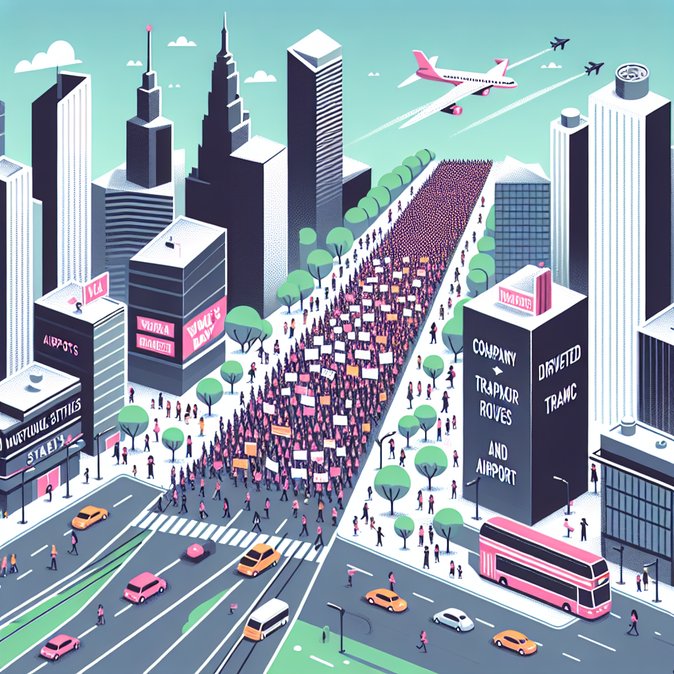
Helsinki’s city centre became a pedestrian zone on Sunday, 8 March, as an estimated 15 000 people marched from the central railway square (Rautatientori) to Kansalaistori outside the Parliament, demanding stronger safeguards for women’s and girls’ rights. The procession blocked Mikonkatu, Aleksanterinkatu and Mannerheimintie between 14:00 and 15:30, forcing Helsinki Region Transport (HSL) to divert seven tram lines and reroute north-south bus traffic to Hämeentie and Runeberginkatu. While the rally was peaceful, mobility professionals should note the operational impact: taxis faced pickup delays exceeding 20 minutes, on-demand ride-hail zones near Hotel Kämp were temporarily closed, and the Airport Rail Link ran at reduced frequency because train drivers were instructed to slow through the Central Station throat where crowds gathered on overpasses. Finavia issued an advisory urging outbound passengers to add 30 minutes to their transfer time to Helsinki Airport; several evening departures reported higher than usual numbers of late check-ins.
![15 000 Rally in Helsinki on International Women’s Day, Shutting Key Arterials for Three Hours]()
For international visitors looking to stay agile amid such disruptions, VisaHQ’s Finland portal (https://www.visahq.com/finland/) can help by streamlining visa and passport processing, delivering real-time entry regulation updates, and flagging local advisories—including large public demonstrations—so that travellers and corporate mobility managers can plan with greater confidence.
Event organisers, led by UN Women Finland and Naisasialiitto Unioni, had filed for the route permit weeks earlier, but final attendance exceeded police forecasts by nearly 5 000, illustrating the need for dynamic crowd-management scenarios in corporate travel risk assessments. For businesses scheduling client meetings or crew changes in the capital, the lesson is clear: major civic demonstrations—even planned ones—can snarl last-mile connections. Embedding real-time HSL API alerts into traveller apps and arranging flexible meeting start times can mitigate disruption.

For international visitors looking to stay agile amid such disruptions, VisaHQ’s Finland portal (https://www.visahq.com/finland/) can help by streamlining visa and passport processing, delivering real-time entry regulation updates, and flagging local advisories—including large public demonstrations—so that travellers and corporate mobility managers can plan with greater confidence.
Event organisers, led by UN Women Finland and Naisasialiitto Unioni, had filed for the route permit weeks earlier, but final attendance exceeded police forecasts by nearly 5 000, illustrating the need for dynamic crowd-management scenarios in corporate travel risk assessments. For businesses scheduling client meetings or crew changes in the capital, the lesson is clear: major civic demonstrations—even planned ones—can snarl last-mile connections. Embedding real-time HSL API alerts into traveller apps and arranging flexible meeting start times can mitigate disruption.