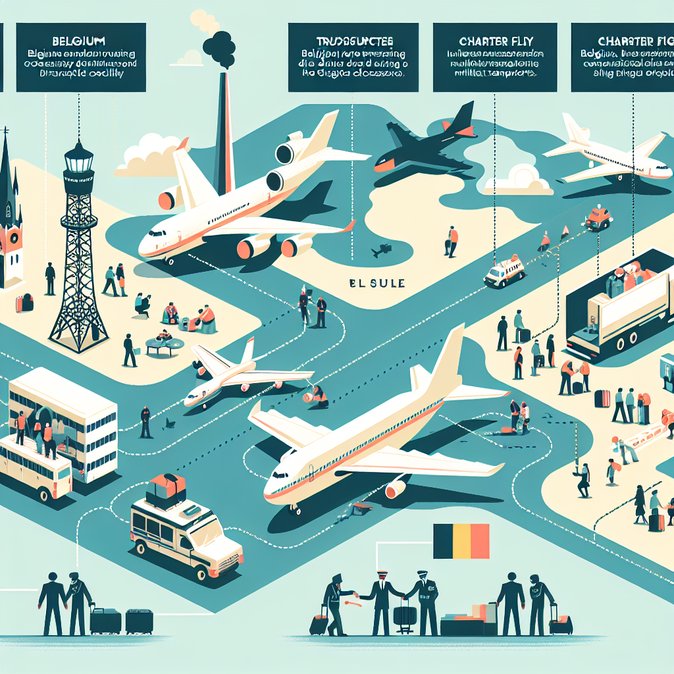
With commercial aviation across the Gulf still heavily disrupted by escalating U.S.–Iran hostilities, Belgium has activated a complex evacuation plan to bring home hundreds of tourists and short-term assignees. The first charter carrying 195 Belgians, plus citizens from Spain, France, Luxembourg and Sweden, touched down at Brussels Airport at 07:30 on 8 March after routing Muscat–Hurghada–Brussels.
The Foreign Ministry estimates that roughly 560 Belgian nationals remain in the region, most of them holiday-makers who found themselves marooned when Dubai and Abu Dhabi flights were abruptly cancelled. A three-tiered extraction corridor is now in motion: bus convoys are transferring travellers from the UAE to Muscat; Belgian A400M military transports are then ferrying groups to Hurghada, Egypt; finally an Airbus A330 MRTT and chartered Cyprus Airways jets complete the last leg to Brussels.
Diplomats are also coordinating with Dutch and Luxembourg authorities so that vacant seats on partner flights can be allocated to Belgians where capacity allows. The operation is being updated daily to reflect shifting air-space restrictions and insurance limitations for civilian aircraft.
![Belgium launches multi-leg airlift to repatriate 560 citizens stranded in Middle-East conflict zone]()
Evacuees have been told to expect itinerary changes of “two to five hours” as crews juggle overflight permits.
Travellers scrambling for alternative routes or sudden transit permissions may find professional visa support invaluable. VisaHQ’s Brussels team can liaise with embassies to expedite emergency visas or travel authorizations for Egypt, Oman, Cyprus and other diversion points, and its online portal (https://www.visahq.com/belgium/) lets both individuals and corporate mobility managers monitor changing entry rules in real time—expertise that dovetails neatly with the Foreign Ministry’s rolling extraction schedule.
For multinational companies, the episode is a reminder that employee-tracking systems and emergency extraction protocols must cover not only resident staff but also transient business travellers. Employers should verify that mobility policies allow rapid advances for unexpected costs, including routing employees through third countries that do not require advance visas for Schengen nationals.
Belgium’s crisis-response playbook, honed during previous evacuations from Afghanistan and Sudan, again underscores the value of EU-level cooperation. Consular officials said electronic passenger manifests shared in real time with neighbouring member states accelerated border-clearance and customs formalities on arrival in Brussels, minimising onward domestic-travel delays for the returnees.
The Foreign Ministry estimates that roughly 560 Belgian nationals remain in the region, most of them holiday-makers who found themselves marooned when Dubai and Abu Dhabi flights were abruptly cancelled. A three-tiered extraction corridor is now in motion: bus convoys are transferring travellers from the UAE to Muscat; Belgian A400M military transports are then ferrying groups to Hurghada, Egypt; finally an Airbus A330 MRTT and chartered Cyprus Airways jets complete the last leg to Brussels.
Diplomats are also coordinating with Dutch and Luxembourg authorities so that vacant seats on partner flights can be allocated to Belgians where capacity allows. The operation is being updated daily to reflect shifting air-space restrictions and insurance limitations for civilian aircraft.

Evacuees have been told to expect itinerary changes of “two to five hours” as crews juggle overflight permits.
Travellers scrambling for alternative routes or sudden transit permissions may find professional visa support invaluable. VisaHQ’s Brussels team can liaise with embassies to expedite emergency visas or travel authorizations for Egypt, Oman, Cyprus and other diversion points, and its online portal (https://www.visahq.com/belgium/) lets both individuals and corporate mobility managers monitor changing entry rules in real time—expertise that dovetails neatly with the Foreign Ministry’s rolling extraction schedule.
For multinational companies, the episode is a reminder that employee-tracking systems and emergency extraction protocols must cover not only resident staff but also transient business travellers. Employers should verify that mobility policies allow rapid advances for unexpected costs, including routing employees through third countries that do not require advance visas for Schengen nationals.
Belgium’s crisis-response playbook, honed during previous evacuations from Afghanistan and Sudan, again underscores the value of EU-level cooperation. Consular officials said electronic passenger manifests shared in real time with neighbouring member states accelerated border-clearance and customs formalities on arrival in Brussels, minimising onward domestic-travel delays for the returnees.
More From Belgium
View all
12 March national strike will shut down all passenger departures at Brussels and Charleroi airports
Dubai International partially reopens; Belgian carriers and travellers face rolling schedule changes