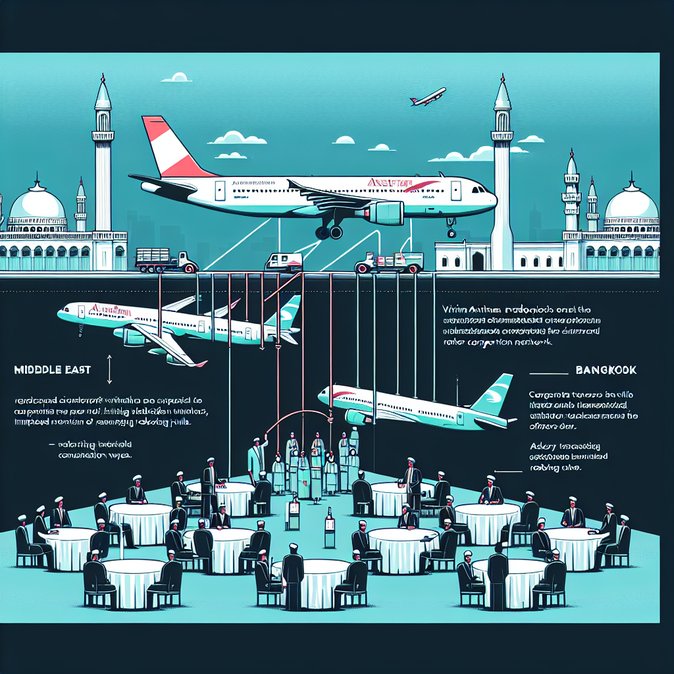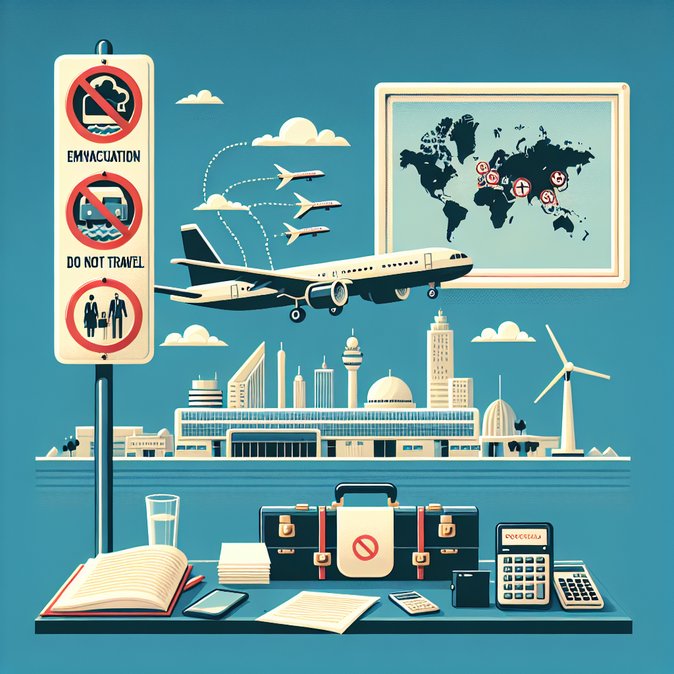
Austria’s Federal Ministry for European and International Affairs (BMEIA) confirmed on 8 March 2026 that another special charter from Muscat landed safely in Vienna with 45 repatriated Austrians on board. The flight, organised in cooperation with Oman’s authorities and EU partners, is the fifth government-assisted evacuation since regional hostilities flared at the end of February. In a detailed situation report issued at 14:00 CET, the ministry said the entire Middle-East region remains “dangerous and highly volatile”. Level-4 travel warnings – the highest on Austria’s four-tier scale – continue to apply to Bahrain, Iran, Iraq, Israel, Jordan, Kuwait, Lebanon, Qatar, Syria and the United Arab Emirates.
![Austria flies 45 more citizens home and keeps Level-4 “Do Not Travel” notice for the Middle East]()
In this context, Austrian citizens and residents seeking the latest entry regulations or emergency transit options can turn to VisaHQ’s Austria portal (https://www.visahq.com/austria/). The platform aggregates real-time governmental advisories, facilitates rapid visa or travel-document processing for alternative routes, and offers personalised support—particularly useful when local consulates are overwhelmed during crises.
For Oman and Saudi Arabia the advisory is set at Level 3 (high risk). Commercial services out of the Gulf are resuming slowly, but the BMEIA urges citizens still in the region to use any viable commercial option and to deregister from the ministry’s crisis database once they have left. Officials said some 1,300 Austrians have now departed the region with consular assistance—800 of them on four earlier evacuation charters from Oman, Saudi Arabia and the UAE. A further 100 individuals left on EU-coordinated bus convoys via Saudi Arabia and Hungary. The crisis cell in Vienna remains on 24-hour duty, and embassy staff are deploying mobile teams to airports and land borders to facilitate departures for vulnerable travellers such as pregnant women and people with medical conditions. The travel warning carries significant business-mobility consequences. Austrian companies must suspend trips, re-route cargo flows away from Gulf hubs and review insurance because most corporate policies exclude Level-4 territories. Global mobility managers are being advised to keep evacuation plans current, maintain daily contact lists for all travellers and expatriates in the wider region, and remind staff that consular support may be severely limited under Level-4 conditions. With the warning to be reviewed “no earlier than 8 March”, the BMEIA signalled that a downgrade is unlikely until a sustained de-escalation is evident. Employers with rotational staff in energy, construction and aid projects across the Gulf therefore face at least several more weeks of complex duty-of-care and staffing challenges.

In this context, Austrian citizens and residents seeking the latest entry regulations or emergency transit options can turn to VisaHQ’s Austria portal (https://www.visahq.com/austria/). The platform aggregates real-time governmental advisories, facilitates rapid visa or travel-document processing for alternative routes, and offers personalised support—particularly useful when local consulates are overwhelmed during crises.
For Oman and Saudi Arabia the advisory is set at Level 3 (high risk). Commercial services out of the Gulf are resuming slowly, but the BMEIA urges citizens still in the region to use any viable commercial option and to deregister from the ministry’s crisis database once they have left. Officials said some 1,300 Austrians have now departed the region with consular assistance—800 of them on four earlier evacuation charters from Oman, Saudi Arabia and the UAE. A further 100 individuals left on EU-coordinated bus convoys via Saudi Arabia and Hungary. The crisis cell in Vienna remains on 24-hour duty, and embassy staff are deploying mobile teams to airports and land borders to facilitate departures for vulnerable travellers such as pregnant women and people with medical conditions. The travel warning carries significant business-mobility consequences. Austrian companies must suspend trips, re-route cargo flows away from Gulf hubs and review insurance because most corporate policies exclude Level-4 territories. Global mobility managers are being advised to keep evacuation plans current, maintain daily contact lists for all travellers and expatriates in the wider region, and remind staff that consular support may be severely limited under Level-4 conditions. With the warning to be reviewed “no earlier than 8 March”, the BMEIA signalled that a downgrade is unlikely until a sustained de-escalation is evident. Employers with rotational staff in energy, construction and aid projects across the Gulf therefore face at least several more weeks of complex duty-of-care and staffing challenges.