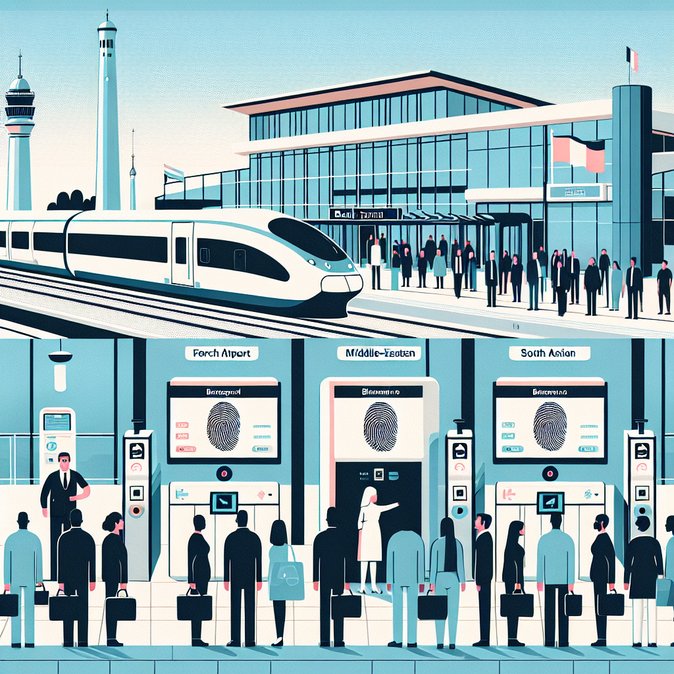
From 25 February 2026 anyone travelling to the United Kingdom from 85 visa-exempt countries—including France—must hold a validated Electronic Travel Authorisation (ETA) before boarding a plane, train or ferry. The Home Office move, confirmed in an 7 March guidance notice, closes the loophole that let Schengen nationals enter with just an ID card and will apply to cross-Channel routes from Calais, Dunkirk, St-Malo and Le Havre as well as Eurostar services from Paris and Lille.
![UK makes Electronic Travel Authorisation compulsory – French short-haul visitors must apply online before boarding]()
For travellers who prefer expert assistance rather than navigating the new rules on their own, VisaHQ can manage the ETA application on your behalf. The agency’s France platform (https://www.visahq.com/france/) offers step-by-step guidance, document pre-checks and live status alerts, helping ensure approvals arrive in time for stress-free departures.
Applying for the ETA is fully digital: travellers upload a passport photo via a mobile app, answer security questions and pay a £16 fee. Most French applicants receive approval “within minutes”, but UK Border Force recommends applying at least 72 hours in advance in case of manual checks. The authorisation is valid for multiple visits of up to six months over a two-year period or until passport expiry, whichever comes first. Dual British-French nationals are exempt but—crucially—must now present a valid British passport or a pricey Certificate of Entitlement instead of relying on their EU document. For French businesses the new requirement alters last-minute travel habits built around the open border. Airlines such as Air France-Hop and easyJet have updated check-in systems to reject passengers without an ETA, while ferry operators DFDS and Brittany Ferries warn that ground staff will face fines if anyone without valid clearance is carried. Corporate travel managers are therefore integrating ETA prompts into booking platforms and traveller-tracking dashboards to prevent expensive denied boarding incidents. UK officials stress that the ETA is “not a visa” and does not change work-permit rules, but immigration lawyers say the data collected will give authorities earlier intelligence on frequent business visitors and could feed into future risk-scoring. French chambers of commerce have asked London to guarantee that meeting clients, attending trade shows or installing equipment will remain classified as “permissible business activity” under visitor regulations, and to publish processing-time metrics to reassure SMEs that urgent trips will still be feasible. Practically, travellers should download the UK ETA app, keep the digital approval to hand for airline agents and ensure their passport contains a biometric chip readable at e-gates. Under the EU’s own ETIAS scheme—now slated for late-2026—Britons will face a reciprocal obligation. Logistics teams on both sides of the Channel therefore see the ETA as the first step toward a fully pre-clearance model that will become the norm for short-haul business mobility after Brexit.

For travellers who prefer expert assistance rather than navigating the new rules on their own, VisaHQ can manage the ETA application on your behalf. The agency’s France platform (https://www.visahq.com/france/) offers step-by-step guidance, document pre-checks and live status alerts, helping ensure approvals arrive in time for stress-free departures.
Applying for the ETA is fully digital: travellers upload a passport photo via a mobile app, answer security questions and pay a £16 fee. Most French applicants receive approval “within minutes”, but UK Border Force recommends applying at least 72 hours in advance in case of manual checks. The authorisation is valid for multiple visits of up to six months over a two-year period or until passport expiry, whichever comes first. Dual British-French nationals are exempt but—crucially—must now present a valid British passport or a pricey Certificate of Entitlement instead of relying on their EU document. For French businesses the new requirement alters last-minute travel habits built around the open border. Airlines such as Air France-Hop and easyJet have updated check-in systems to reject passengers without an ETA, while ferry operators DFDS and Brittany Ferries warn that ground staff will face fines if anyone without valid clearance is carried. Corporate travel managers are therefore integrating ETA prompts into booking platforms and traveller-tracking dashboards to prevent expensive denied boarding incidents. UK officials stress that the ETA is “not a visa” and does not change work-permit rules, but immigration lawyers say the data collected will give authorities earlier intelligence on frequent business visitors and could feed into future risk-scoring. French chambers of commerce have asked London to guarantee that meeting clients, attending trade shows or installing equipment will remain classified as “permissible business activity” under visitor regulations, and to publish processing-time metrics to reassure SMEs that urgent trips will still be feasible. Practically, travellers should download the UK ETA app, keep the digital approval to hand for airline agents and ensure their passport contains a biometric chip readable at e-gates. Under the EU’s own ETIAS scheme—now slated for late-2026—Britons will face a reciprocal obligation. Logistics teams on both sides of the Channel therefore see the ETA as the first step toward a fully pre-clearance model that will become the norm for short-haul business mobility after Brexit.