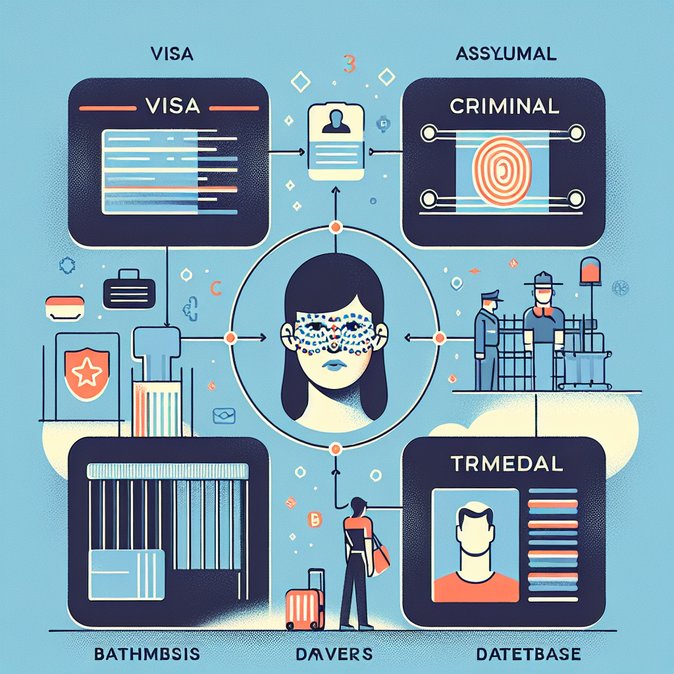
On 7 March investigative website *Dissecting Security Architectures* published leaked EU-LISA papers confirming a new “interoperability roadmap” that will knit together every major border-management and law-enforcement system—SIS II, Eurodac, VIS, the forthcoming Entry/Exit System and ETIAS—under a single biometric matching service by 2030. For Germany the implications are profound.
![EU Sets 2030 Roadmap to Link Schengen Biometric Databases—Germany to Integrate Police Files]()
Organizations needing to navigate this shifting landscape can leverage VisaHQ’s services; its Germany-specific portal (https://www.visahq.com/germany/) offers up-to-date guidance on Schengen visa categories, biometric enrollment rules and the forthcoming ETIAS registration, streamlining compliance for both individual travellers and corporate mobility teams.
The plan envisages feeding the Federal Criminal Police Office’s INPOL photo archive (currently 8 million images, many of asylum applicants and deportees) into the shared Biometric Matching Service as early as 2027. Facial-recognition queries under the Prüm II framework would then allow other EU states—and potentially the U.S. under a proposed Enhanced Border Security Partnership—to receive hit/no-hit responses against German records. From April, when EES goes live, every non-EU traveller entering or leaving the Schengen Area—including those on German short-stay visas—will have fingerprints and a facial image stored for three years. Visa-exempt arrivals will follow suit once ETIAS launches later in 2026. Corporate mobility teams must prepare expatriates and frequent travellers for longer biometric capture at external borders and ensure that privacy notices in assignment policies cover the expanded data sharing. Employers moving non-EU staff between Schengen countries will also have to watch over-stay risks more closely, as real-time alerts will flag travellers who exceed their authorised period. Civil-liberties groups in Berlin signalled they will challenge any bulk facial-recognition deployments, arguing that asylum seekers should not become a testing ground for broader surveillance technologies.

Organizations needing to navigate this shifting landscape can leverage VisaHQ’s services; its Germany-specific portal (https://www.visahq.com/germany/) offers up-to-date guidance on Schengen visa categories, biometric enrollment rules and the forthcoming ETIAS registration, streamlining compliance for both individual travellers and corporate mobility teams.
The plan envisages feeding the Federal Criminal Police Office’s INPOL photo archive (currently 8 million images, many of asylum applicants and deportees) into the shared Biometric Matching Service as early as 2027. Facial-recognition queries under the Prüm II framework would then allow other EU states—and potentially the U.S. under a proposed Enhanced Border Security Partnership—to receive hit/no-hit responses against German records. From April, when EES goes live, every non-EU traveller entering or leaving the Schengen Area—including those on German short-stay visas—will have fingerprints and a facial image stored for three years. Visa-exempt arrivals will follow suit once ETIAS launches later in 2026. Corporate mobility teams must prepare expatriates and frequent travellers for longer biometric capture at external borders and ensure that privacy notices in assignment policies cover the expanded data sharing. Employers moving non-EU staff between Schengen countries will also have to watch over-stay risks more closely, as real-time alerts will flag travellers who exceed their authorised period. Civil-liberties groups in Berlin signalled they will challenge any bulk facial-recognition deployments, arguing that asylum seekers should not become a testing ground for broader surveillance technologies.