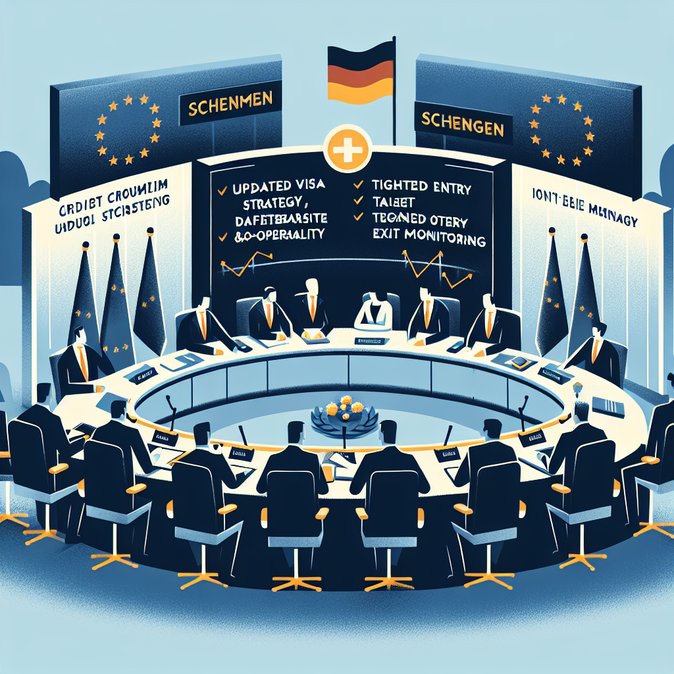
Meeting in Brussels on 6 March, EU Justice and Home Affairs ministers—including German interior minister Nancy Faeser—took stock of the Schengen area and debated ways to increase both voluntary and forced returns of migrants whose asylum claims are rejected. An official summary from the European Commission’s DG HOME notes that several delegations pressed for “credible consequences for non-compliance with return decisions”. (home-affairs.ec.europa.eu)
Faeser, facing domestic pressure to cut irregular arrivals, backed the Presidency’s plan for a technical meeting on a new EU-wide visa strategy aimed at discouraging secondary movements. The ministers also reviewed preparations for the Pact on Migration and Asylum, which enters full force on 11-12 June. (home-affairs.ec.europa.eu)
For companies and individual travelers trying to stay ahead of these shifting requirements, VisaHQ offers a streamlined way to secure the correct documentation and monitor rule changes. Its Germany portal (https://www.visahq.com/germany/) consolidates Schengen updates, provides step-by-step application support, and helps ensure compliance as new systems like EES and ETIAS come online.
![EU Justice & Home Affairs Council reviews Schengen ‘health check’ and new visa strategy; Germany pushes for faster returns]()
For German employers the discussion matters because the forthcoming interoperability of EU databases (EES, ETIAS, VIS) will change how talent from third countries is vetted and how overstays are detected. Companies moving staff around Europe need to prepare for stricter entry/exit recording and faster information-sharing among border forces.
The Council additionally examined the security implications of the Syria–Iran escalation, with Europol briefings on terror-finance risks. While no immediate policy change emerged, diplomats said the debate sets the tone for Schengen governance in the run-up to Germany assuming the rotating EU Council presidency in January 2027.
Global mobility teams should track the June ministerial in Nicosia, which could lock in timelines for the Entry/Exit System’s post-2026 roadmap—critical for travel-tech integration and HR compliance.
Faeser, facing domestic pressure to cut irregular arrivals, backed the Presidency’s plan for a technical meeting on a new EU-wide visa strategy aimed at discouraging secondary movements. The ministers also reviewed preparations for the Pact on Migration and Asylum, which enters full force on 11-12 June. (home-affairs.ec.europa.eu)
For companies and individual travelers trying to stay ahead of these shifting requirements, VisaHQ offers a streamlined way to secure the correct documentation and monitor rule changes. Its Germany portal (https://www.visahq.com/germany/) consolidates Schengen updates, provides step-by-step application support, and helps ensure compliance as new systems like EES and ETIAS come online.

For German employers the discussion matters because the forthcoming interoperability of EU databases (EES, ETIAS, VIS) will change how talent from third countries is vetted and how overstays are detected. Companies moving staff around Europe need to prepare for stricter entry/exit recording and faster information-sharing among border forces.
The Council additionally examined the security implications of the Syria–Iran escalation, with Europol briefings on terror-finance risks. While no immediate policy change emerged, diplomats said the debate sets the tone for Schengen governance in the run-up to Germany assuming the rotating EU Council presidency in January 2027.
Global mobility teams should track the June ministerial in Nicosia, which could lock in timelines for the Entry/Exit System’s post-2026 roadmap—critical for travel-tech integration and HR compliance.