In her first major policy address since taking office, Home Secretary Shabana Mahmood told an Institute for Public Policy Research audience on 5 March that the UK is embarking on “some of the most significant reforms to migration – both legal and asylum – in a generation.” The speech set out a new strategic framework that blends tighter controls with targeted openness.
Key measures confirmed include:
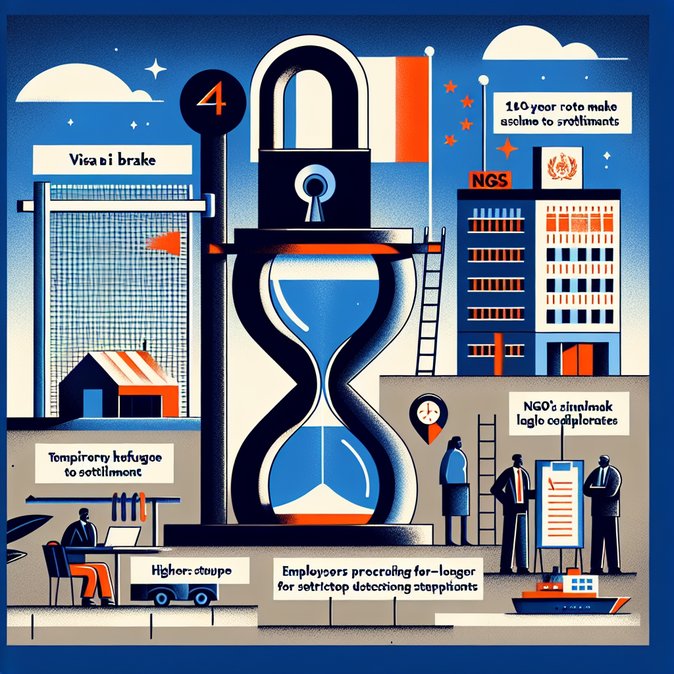
• A new ‘visa brake’ suspending Student visas for nationals of Afghanistan, Cameroon, Myanmar and Sudan, and Skilled-Worker visas for Afghans, from 26 March;
• Cutting initial refugee leave from five years to 30 months, with active reviews and possible return once conditions improve;
• Doubling the standard qualifying period for settlement from five to 10 years (with shorter routes for high-skilled public-service workers) and raising the English-language requirement to CEFR B2 from 2027;
• Consultation on incentives of up to £40,000 for failed-asylum families who depart voluntarily, coupled with tougher enforcement powers if they refuse;
• Plans to revoke the statutory duty to provide asylum support, making assistance discretionary and conditional on compliance.(gov.uk)
Against this evolving backdrop, organisations and individuals navigating the UK’s shifting visa categories can streamline the process through VisaHQ’s online portal. The dedicated UK page (https://www.visahq.com/united-kingdom/) monitors regulatory updates in real time and offers step-by-step application support, document checks and courier options—helping employers, skilled workers and students stay compliant with the Home Office’s new requirements.
![Home Secretary unveils ‘fair but firm’ migration overhaul in landmark IPPR speech]()
Mahmood framed the package as “compassionate but controlled” and argued that net migration had already fallen 70 % since its 2024 peak. She said further action was needed to restore public confidence, protect public services and deter people-smuggling gangs that move migrants across the Channel.
For employers the headline is stability and predictability for high-skill routes—but tighter compliance. Managers of health-care, hospitality and logistics workforces that rely on lower-skill labour will face longer sponsorship horizons and higher language thresholds. Global-mobility teams should audit current assignees’ paths to settlement, check English-language scores and budget for an extended 10-year timeframe.
Refugee-support NGOs immediately warned that temporary protection and the withdrawal of a duty to support will increase destitution and administrative churn. Businesses, however, welcomed clarity on settlement criteria and the promise of new safe-and-legal work routes to be unveiled later this year. A draft Immigration Reform Bill is expected before Parliament in the summer, giving stakeholders a narrow window to lobby for adjustments.
Key measures confirmed include:
• A new ‘visa brake’ suspending Student visas for nationals of Afghanistan, Cameroon, Myanmar and Sudan, and Skilled-Worker visas for Afghans, from 26 March;
• Cutting initial refugee leave from five years to 30 months, with active reviews and possible return once conditions improve;
• Doubling the standard qualifying period for settlement from five to 10 years (with shorter routes for high-skilled public-service workers) and raising the English-language requirement to CEFR B2 from 2027;
• Consultation on incentives of up to £40,000 for failed-asylum families who depart voluntarily, coupled with tougher enforcement powers if they refuse;
• Plans to revoke the statutory duty to provide asylum support, making assistance discretionary and conditional on compliance.(gov.uk)
Against this evolving backdrop, organisations and individuals navigating the UK’s shifting visa categories can streamline the process through VisaHQ’s online portal. The dedicated UK page (https://www.visahq.com/united-kingdom/) monitors regulatory updates in real time and offers step-by-step application support, document checks and courier options—helping employers, skilled workers and students stay compliant with the Home Office’s new requirements.

Mahmood framed the package as “compassionate but controlled” and argued that net migration had already fallen 70 % since its 2024 peak. She said further action was needed to restore public confidence, protect public services and deter people-smuggling gangs that move migrants across the Channel.
For employers the headline is stability and predictability for high-skill routes—but tighter compliance. Managers of health-care, hospitality and logistics workforces that rely on lower-skill labour will face longer sponsorship horizons and higher language thresholds. Global-mobility teams should audit current assignees’ paths to settlement, check English-language scores and budget for an extended 10-year timeframe.
Refugee-support NGOs immediately warned that temporary protection and the withdrawal of a duty to support will increase destitution and administrative churn. Businesses, however, welcomed clarity on settlement criteria and the promise of new safe-and-legal work routes to be unveiled later this year. A draft Immigration Reform Bill is expected before Parliament in the summer, giving stakeholders a narrow window to lobby for adjustments.