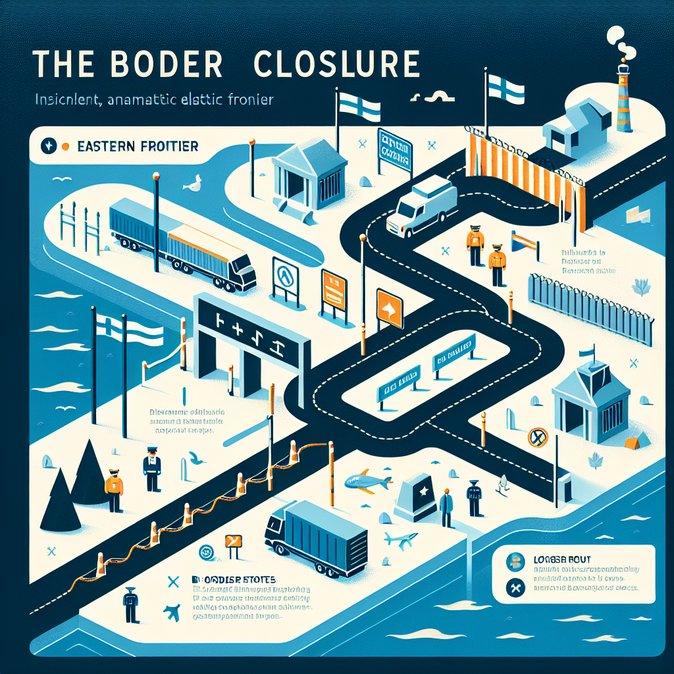
The Ministry for Foreign Affairs has formally notified carriers and Schengen partners that, from 1 June 2026, only Russian passports containing an electronic chip will be accepted for entry or transit through Finland. Non-biometric booklets—still held by an estimated 4 million Russian citizens—will trigger automatic refusal of entry. Exceptions will be limited to minors under 18 and holders of an existing Finnish residence permit issued before the cut-off date. Humanitarian cases may be considered individually, but border officials stress the threshold is high.
![Finland confirms 1 June deadline for biometric passports as part of tighter Russia border policy]()
For anyone unsure whether their passport complies with the incoming biometric rule—or needing assistance with related Schengen visa matters—VisaHQ can act as a one-stop resource. Their Finland portal (https://www.visahq.com/finland/) lets travelers and corporate mobility teams verify requirements instantly, begin renewal or visa applications online, and arrange courier collection, streamlining what might otherwise be a stressful process.
The policy aligns Finland with Estonia, Latvia, Lithuania and Poland, all of which introduced similar bans after Russia’s 2022 invasion of Ukraine. The change has practical consequences for dual nationals and shuttle traders who depended on the land border before its closure: anyone planning for the eventual reopening must renew documents now, as Russian consulates are reporting a six-week queue for biometric passports. Airlines, ferry operators and bus companies have received an updated Timatic alert; carriers that transport passengers holding non-compliant passports after 1 June will face fines and liability for return costs. Corporate mobility teams should revise client travel-checklists and remind Russian employees in Finland to verify passport types when applying for residence-permit extensions or Schengen visas issued by third countries. Although the measure was announced on 2 March, it became a focal point of Finnish media coverage on 6 March as newspapers ran explanatory guides and travel-agencies updated their booking engines. The Border Guard is expected to publish English-language FAQs by the end of the month.

For anyone unsure whether their passport complies with the incoming biometric rule—or needing assistance with related Schengen visa matters—VisaHQ can act as a one-stop resource. Their Finland portal (https://www.visahq.com/finland/) lets travelers and corporate mobility teams verify requirements instantly, begin renewal or visa applications online, and arrange courier collection, streamlining what might otherwise be a stressful process.
The policy aligns Finland with Estonia, Latvia, Lithuania and Poland, all of which introduced similar bans after Russia’s 2022 invasion of Ukraine. The change has practical consequences for dual nationals and shuttle traders who depended on the land border before its closure: anyone planning for the eventual reopening must renew documents now, as Russian consulates are reporting a six-week queue for biometric passports. Airlines, ferry operators and bus companies have received an updated Timatic alert; carriers that transport passengers holding non-compliant passports after 1 June will face fines and liability for return costs. Corporate mobility teams should revise client travel-checklists and remind Russian employees in Finland to verify passport types when applying for residence-permit extensions or Schengen visas issued by third countries. Although the measure was announced on 2 March, it became a focal point of Finnish media coverage on 6 March as newspapers ran explanatory guides and travel-agencies updated their booking engines. The Border Guard is expected to publish English-language FAQs by the end of the month.