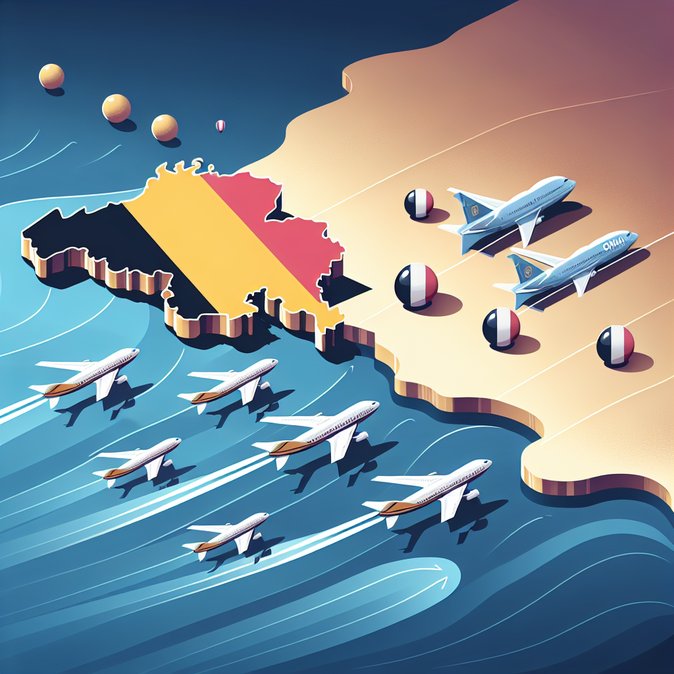
Belgium’s Crisis Centre confirmed on 6 March that it has secured landing slots for four evacuation flights over the coming weekend, an operation that will bring home up to 565 Belgian nationals caught in the latest flare-up between Iran, Israel and allied forces. A multi-role tanker transport (MRTT) will lift 185 passengers from Muscat on Saturday, while two A400M air-lifters will shuttle evacuees from Dubai to Hurghada for onward transfer to Brussels. A Cyprus Airways charter will round out the air-bridge on Sunday night. Foreign Minister Maxime Prévot praised “round-the-clock coordination” between his staff, the Defence Ministry and EU partners. Eighty Crisis Centre operators have been fielding calls as companies scramble to locate mobile employees and dependants. The government is waiving the usual €600 per-head charge for military repatriation, a gesture applauded by corporate-risk managers who faced steep invoices during the 2024 Israel–Gaza airlift. Practically, employers must furnish a Belgian ID, proof of employment and a signed liability waiver before staff can board military aircraft. Mobility teams should also note that seats on the Dubai–Hurghada legs will be open to EU nationals, triggering data-privacy obligations when sharing manifests. The episode is an object lesson in the value of up-to-date traveller tracking: several firms admitted they only learned employees were in Oman after dependants contacted the hotline. Experts advise linking HRIS records to travel-risk platforms that can ingest flight, hotel and visa data in near-real time.
![Belgium charters four flights to repatriate 565 nationals from Middle-East hotspots]()
In fast-moving situations like these, VisaHQ’s Belgium portal (https://www.visahq.com/belgium/) can streamline the process of securing the emergency visas and transit permits that travelers may need when routing through multiple hubs such as Muscat, Dubai or Hurghada. The platform consolidates entry requirements, offers real-time application tracking and integrates with corporate travel tools, giving mobility teams a single dashboard to keep manifests current and compliant while staff are moved at short notice.
Looking ahead, insurance underwriters warn that premiums for evacuation cover are likely to spike for assignments within the so-called ‘Shiraz Arc’ that stretches from the Gulf to the Levant. Belgian multinationals with projects in Saudi Arabia, Qatar or the UAE should review contractual force-majeure clauses and consider dual-jurisdiction employment contracts that enable rapid payroll relocation if conflict widens.

In fast-moving situations like these, VisaHQ’s Belgium portal (https://www.visahq.com/belgium/) can streamline the process of securing the emergency visas and transit permits that travelers may need when routing through multiple hubs such as Muscat, Dubai or Hurghada. The platform consolidates entry requirements, offers real-time application tracking and integrates with corporate travel tools, giving mobility teams a single dashboard to keep manifests current and compliant while staff are moved at short notice.
Looking ahead, insurance underwriters warn that premiums for evacuation cover are likely to spike for assignments within the so-called ‘Shiraz Arc’ that stretches from the Gulf to the Levant. Belgian multinationals with projects in Saudi Arabia, Qatar or the UAE should review contractual force-majeure clauses and consider dual-jurisdiction employment contracts that enable rapid payroll relocation if conflict widens.