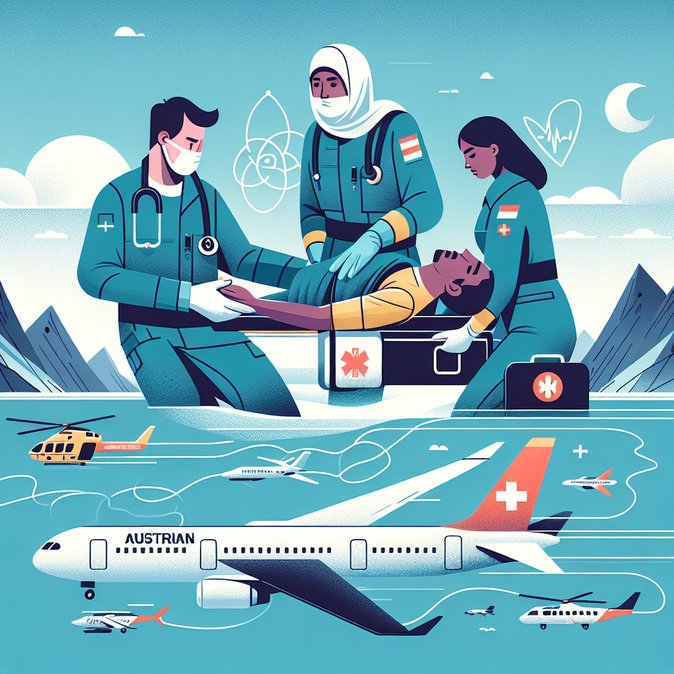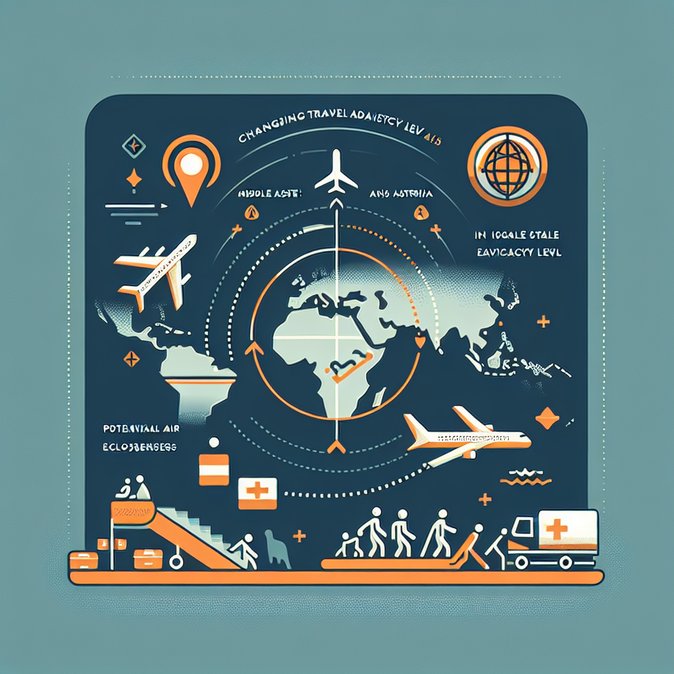
Austria’s Ministry for European and International Affairs (BMEIA) published an updated security bulletin on 6 March that lifts the country’s travel advice for the entire Middle-East conflict zone to the maximum Level-4 “Do Not Travel”. The daily update confirms that almost 1,100 Austrian citizens and their family members have now been assisted in leaving the region in the five days since hostilities escalated.
The crisis unit in Vienna meets several times a day and has chartered four wide-body aircraft—two from Muscat, one from Riyadh and, most recently, one from Abu Dhabi that landed in Vienna on Friday night with 244 passengers on board. The ministry has also secured bus corridors to Jordan and Oman and seats on allied evacuation flights operated by the Czech Republic, Slovakia and Hungary. Around 17,500 Austrians are still registered in the region; they are urged to de-register once they have left so planners can allocate scarce seats more accurately.
Commercial capacity remains severely constrained. According to the bulletin, only 25 percent of normal traffic is operating at Dubai International, and European carriers continue to avoid Iranian, Iraqi and Syrian airspace. The ministry therefore warns travellers to expect short-notice cancellations, airport curfews and circuitous routings that lengthen duty times for crews and increase costs for employers.
![Austria Steps Up Middle-East Evacuations as Foreign Ministry Issues Fresh Level-4 Warning]()
For travellers and employers scrambling to secure alternative routings or emergency entry permits, VisaHQ can step in with expedited visa processing, real-time status updates and expert guidance on shifting documentation rules; details are available at https://www.visahq.com/austria/
Corporate mobility managers are advised to: (1) verify that all staff have completed the BMEIA travel registration; (2) review company insurance for war-risk exclusions; (3) budget for possible self-pay components—while the government currently covers most costs under the EU Civil Protection Mechanism, officials indicate that a means-tested co-payment could be introduced if the evacuation operation drags on.
The episode also underscores the importance of real-time traveller tracking and of partnering with airlines that have security clearances to operate ad-hoc charters. Multinationals with large regional workforces should pre-position visa support teams in safe hubs such as Athens, Bucharest or Vienna to accelerate secondary relocations once evacuees reach Europe.
The crisis unit in Vienna meets several times a day and has chartered four wide-body aircraft—two from Muscat, one from Riyadh and, most recently, one from Abu Dhabi that landed in Vienna on Friday night with 244 passengers on board. The ministry has also secured bus corridors to Jordan and Oman and seats on allied evacuation flights operated by the Czech Republic, Slovakia and Hungary. Around 17,500 Austrians are still registered in the region; they are urged to de-register once they have left so planners can allocate scarce seats more accurately.
Commercial capacity remains severely constrained. According to the bulletin, only 25 percent of normal traffic is operating at Dubai International, and European carriers continue to avoid Iranian, Iraqi and Syrian airspace. The ministry therefore warns travellers to expect short-notice cancellations, airport curfews and circuitous routings that lengthen duty times for crews and increase costs for employers.
For travellers and employers scrambling to secure alternative routings or emergency entry permits, VisaHQ can step in with expedited visa processing, real-time status updates and expert guidance on shifting documentation rules; details are available at https://www.visahq.com/austria/
Corporate mobility managers are advised to: (1) verify that all staff have completed the BMEIA travel registration; (2) review company insurance for war-risk exclusions; (3) budget for possible self-pay components—while the government currently covers most costs under the EU Civil Protection Mechanism, officials indicate that a means-tested co-payment could be introduced if the evacuation operation drags on.
The episode also underscores the importance of real-time traveller tracking and of partnering with airlines that have security clearances to operate ad-hoc charters. Multinationals with large regional workforces should pre-position visa support teams in safe hubs such as Athens, Bucharest or Vienna to accelerate secondary relocations once evacuees reach Europe.