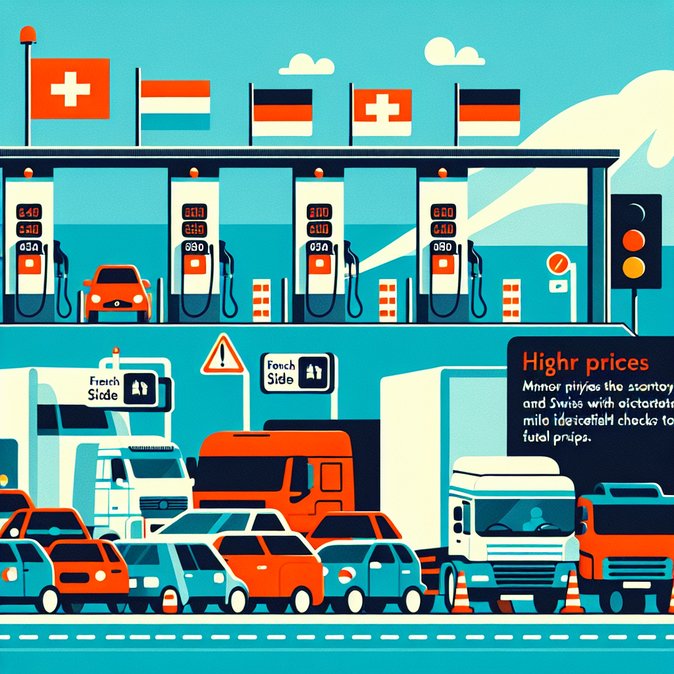
Economic daily Economie Matin reports that between 1 February and 5 March 2026 diesel prices in Germany jumped past the €2/L mark while French averages hovered around €1.88. Similar spreads emerged with Switzerland, prompting motorists to cross into France to fill up. Service-station operators in Moselle and Bas-Rhin say throughput rose 18 % week-on-week, causing temporary fuel-pump queues and increased spot-pricing volatility. The spike coincides with heightened road-traffic volumes captured by France’s Direction Interministérielle des Routes, which registered a 12 % year-on-year increase in light-vehicle crossings at the Forbach/Saarbrücken A320/A6 corridor on 5 March.
![Fuel-Price Gap Spurs Cross-Border Traffic Surges at French-German and French-Swiss Borders]()
For companies whose staff or contractors need to cross multiple jurisdictions on short notice, ensuring that travel documents remain compliant is another moving part. VisaHQ’s online platform streamlines visa, passport, and travel-authorisation requests, providing real-time guidance on Schengen, Brexit-related, or long-haul paperwork from one dashboard. Fleet operators and logistics planners can explore tailored support at https://www.visahq.com/france/ to keep personnel moving smoothly even when border protocols tighten.
Logistics firms flagged delays of up to 40 minutes for commercial vans subject to random customs checks linked to France’s still-in-force internal Schengen controls. Cross-border retailers welcome the windfall, but local chambers of commerce warn that sudden traffic surges strain parking infrastructure and can disrupt just-in-time supply chains that depend on predictable delivery slots. Fuel-tourism also complicates France’s greenhouse-gas accounting because many fill-ups are exported for use abroad. For mobility managers, the price divergence offers savings on fleet-refueling contracts but raises duty-of-care questions: drivers may face longer waits and limited amenities at overstretched border stations. Enterprises should update routing software and build buffer time into schedules until price spreads normalise.
For companies whose staff or contractors need to cross multiple jurisdictions on short notice, ensuring that travel documents remain compliant is another moving part. VisaHQ’s online platform streamlines visa, passport, and travel-authorisation requests, providing real-time guidance on Schengen, Brexit-related, or long-haul paperwork from one dashboard. Fleet operators and logistics planners can explore tailored support at https://www.visahq.com/france/ to keep personnel moving smoothly even when border protocols tighten.
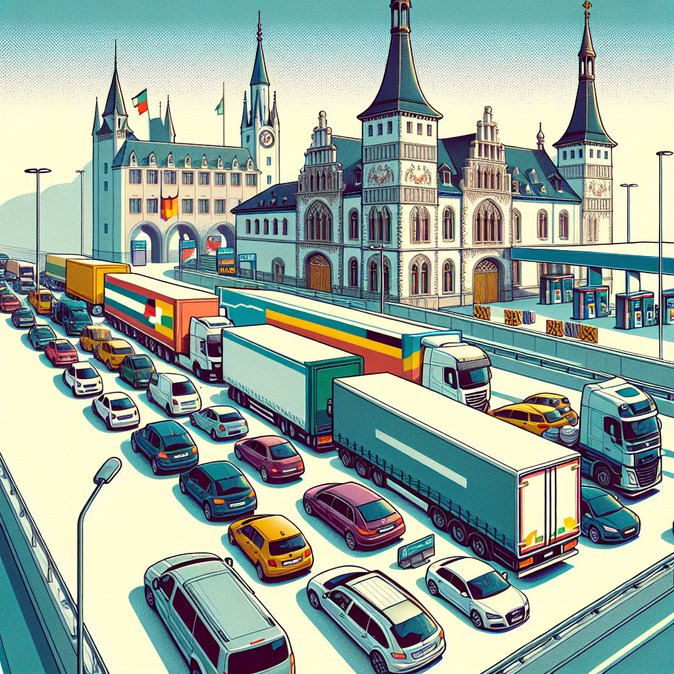
Logistics firms flagged delays of up to 40 minutes for commercial vans subject to random customs checks linked to France’s still-in-force internal Schengen controls. Cross-border retailers welcome the windfall, but local chambers of commerce warn that sudden traffic surges strain parking infrastructure and can disrupt just-in-time supply chains that depend on predictable delivery slots. Fuel-tourism also complicates France’s greenhouse-gas accounting because many fill-ups are exported for use abroad. For mobility managers, the price divergence offers savings on fleet-refueling contracts but raises duty-of-care questions: drivers may face longer waits and limited amenities at overstretched border stations. Enterprises should update routing software and build buffer time into schedules until price spreads normalise.