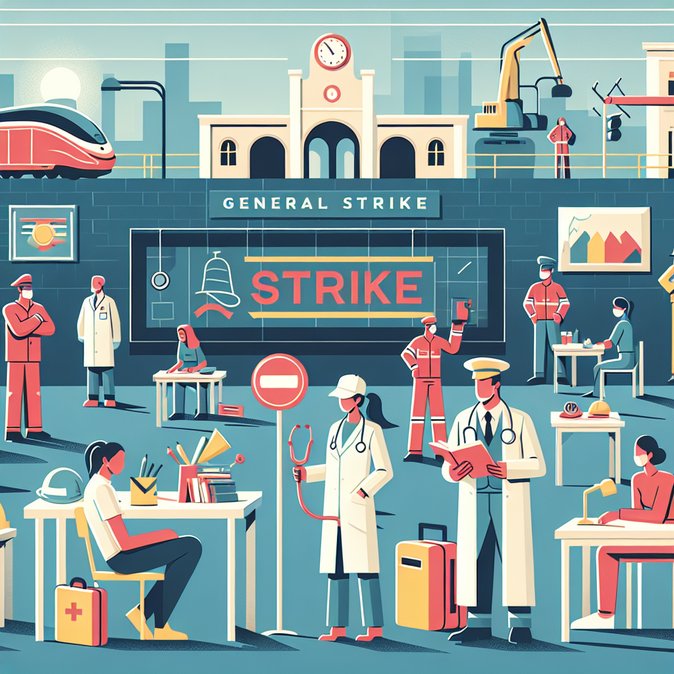
Slai-Cobas and a constellation of grassroots unions formally lodged a strike notice on 4 March 2026, setting the stage for a 24-hour cross-sector shutdown on Monday 9 March. The timing is symbolic: the mobilisation was announced just after International Women’s Day and targets what organisers call the “persistent gender gap in pay and job security”. Education, healthcare, local government, aviation, rail and maritime logistics are all included. Transport is where the impact on global mobility will be felt most sharply. Airlines have started waiving change fees for travel into or over Italian airspace on 9 March, while the air-traffic-control provider ENAV has warned of flow-management delays between 10:00 and 18:00 CET. Trenitalia and Italo will run the legally-mandated minimum services, but business travellers can expect widespread cancellations of long-distance Frecciarossa services.
![Nation-wide 24-hour general strike set for 9 March; unions file notice on International Women’s Day eve]()
Travellers adjusting their plans should also ensure that their visa or residence paperwork is in order; VisaHQ’s dedicated Italy service (https://www.visahq.com/italy/) can expedite applications, monitor consular-hour changes during the industrial action and provide real-time status updates, saving HR teams valuable time when disruptions strike.
Local metro and bus operators in Milan and Naples have published separate four-hour stoppages that overlap with the national action, complicating airport connectivity. Multinationals planning board meetings around Milan’s Paralympic test events (7–10 March) are reassessing itineraries. Travel-risk consultants advise either arriving no later than Sunday morning or switching to virtual attendance. Companies with posted workers should remember that the strike entitles employees who cannot physically reach their workplace to apply for the government’s ‘CIGS for objective impediment’ wage-support scheme. For HR and mobility managers the immediate tasks are clear: 1) issue updated travel guidance; 2) verify that posted-worker notifications filed through the Italian Ministry of Labour’s online portal contain contact channels that remain reachable during the strike; and 3) brief expatriate families on emergency medical-care arrangements, as many public hospitals will be working with skeletal staff. Should the strike achieve high participation rates, analysts believe it could accelerate parliamentary debate on the long-awaited enabling law for remote-work tax harmonisation—a reform business associations argue would reduce dependence on physical commuting and improve Italy’s attractiveness for foreign talent.

Travellers adjusting their plans should also ensure that their visa or residence paperwork is in order; VisaHQ’s dedicated Italy service (https://www.visahq.com/italy/) can expedite applications, monitor consular-hour changes during the industrial action and provide real-time status updates, saving HR teams valuable time when disruptions strike.
Local metro and bus operators in Milan and Naples have published separate four-hour stoppages that overlap with the national action, complicating airport connectivity. Multinationals planning board meetings around Milan’s Paralympic test events (7–10 March) are reassessing itineraries. Travel-risk consultants advise either arriving no later than Sunday morning or switching to virtual attendance. Companies with posted workers should remember that the strike entitles employees who cannot physically reach their workplace to apply for the government’s ‘CIGS for objective impediment’ wage-support scheme. For HR and mobility managers the immediate tasks are clear: 1) issue updated travel guidance; 2) verify that posted-worker notifications filed through the Italian Ministry of Labour’s online portal contain contact channels that remain reachable during the strike; and 3) brief expatriate families on emergency medical-care arrangements, as many public hospitals will be working with skeletal staff. Should the strike achieve high participation rates, analysts believe it could accelerate parliamentary debate on the long-awaited enabling law for remote-work tax harmonisation—a reform business associations argue would reduce dependence on physical commuting and improve Italy’s attractiveness for foreign talent.