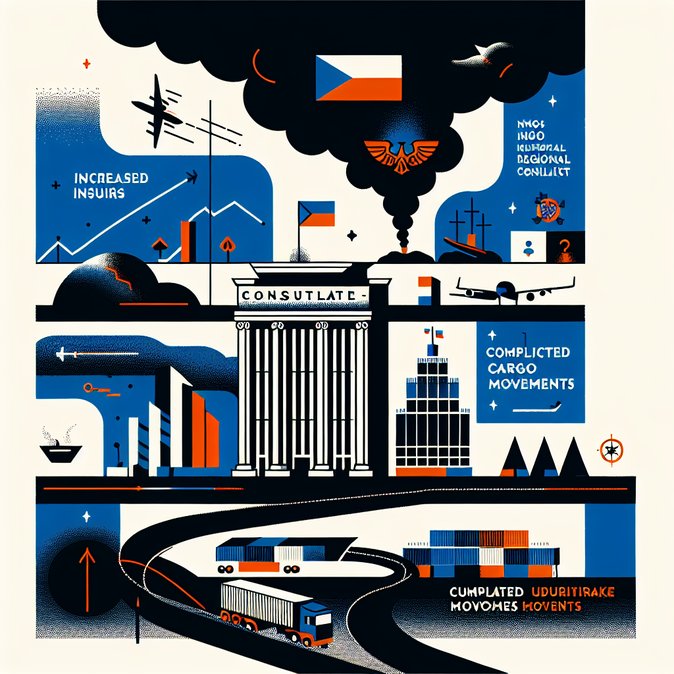
The Czech Ministry of Foreign Affairs upgraded its travel advice for Iraq to the highest warning level on 4 March 2026, urging citizens to avoid all travel to the country following U.S.–Israeli strikes on Iranian targets and retaliatory militia activity across the region. The notice, published by the Czech Consulate General in Erbil, applies to the entire Iraqi territory, including the semi-autonomous Kurdistan region that has traditionally been considered comparatively safe for business travel. Officials cited "deteriorating security conditions" and the risk of indiscriminate rocket attacks on airports and oil infrastructure.
![Czech Consulate in Erbil issues ‘do not travel’ advisory for Iraq amid regional escalation]()
Travelers who nevertheless must arrange urgent itineraries—or who need to reroute personnel through alternative regional hubs—can ease the paperwork burden by using VisaHQ. The platform gives Czech passport holders up-to-date visa information, application facilitation and document courier services for Iraq as well as neighboring countries, helping companies adapt quickly to shifting security advisories. More details are available at https://www.visahq.com/czech-republic/
Czech nationals already in Iraq are advised to restrict movement, keep a low profile, and ensure they have contingency evacuation plans. The consulate reiterated that emergency assistance outside working hours is available via the 24/7 helpline of the ministry’s Consular Operations Centre (+420 222 420 222) and encouraged travellers to register trips in the DROZD database. The advisory affects dozens of Czech engineering firms and NGOs operating projects in Basra, Baghdad and Dohuk, many of which rely on short-term rotation of technical staff. Employers must now reassess duty-of-care obligations under EU occupational-safety directives and may need to downgrade assignments to remote support or shift work to nearby hubs in Jordan or the UAE. Insurance brokers have already warned that war-risk premiums for personnel and cargo headed to Iraq could rise by 25–40 percent. Project logistics face immediate hurdles: several international airlines have suspended flights to Baghdad and Najaf, and road convoys must negotiate additional checkpoints. Czech exporters shipping heavy machinery via Turkey’s Habur/Zakho land crossing should anticipate longer clearance times as Kurdish authorities tighten security. The ministry said the advisory will remain under continuous review but gave no timeline for downgrading the threat level, meaning travel approvals for government and corporate staff are likely to remain frozen through the second quarter.

Travelers who nevertheless must arrange urgent itineraries—or who need to reroute personnel through alternative regional hubs—can ease the paperwork burden by using VisaHQ. The platform gives Czech passport holders up-to-date visa information, application facilitation and document courier services for Iraq as well as neighboring countries, helping companies adapt quickly to shifting security advisories. More details are available at https://www.visahq.com/czech-republic/
Czech nationals already in Iraq are advised to restrict movement, keep a low profile, and ensure they have contingency evacuation plans. The consulate reiterated that emergency assistance outside working hours is available via the 24/7 helpline of the ministry’s Consular Operations Centre (+420 222 420 222) and encouraged travellers to register trips in the DROZD database. The advisory affects dozens of Czech engineering firms and NGOs operating projects in Basra, Baghdad and Dohuk, many of which rely on short-term rotation of technical staff. Employers must now reassess duty-of-care obligations under EU occupational-safety directives and may need to downgrade assignments to remote support or shift work to nearby hubs in Jordan or the UAE. Insurance brokers have already warned that war-risk premiums for personnel and cargo headed to Iraq could rise by 25–40 percent. Project logistics face immediate hurdles: several international airlines have suspended flights to Baghdad and Najaf, and road convoys must negotiate additional checkpoints. Czech exporters shipping heavy machinery via Turkey’s Habur/Zakho land crossing should anticipate longer clearance times as Kurdish authorities tighten security. The ministry said the advisory will remain under continuous review but gave no timeline for downgrading the threat level, meaning travel approvals for government and corporate staff are likely to remain frozen through the second quarter.