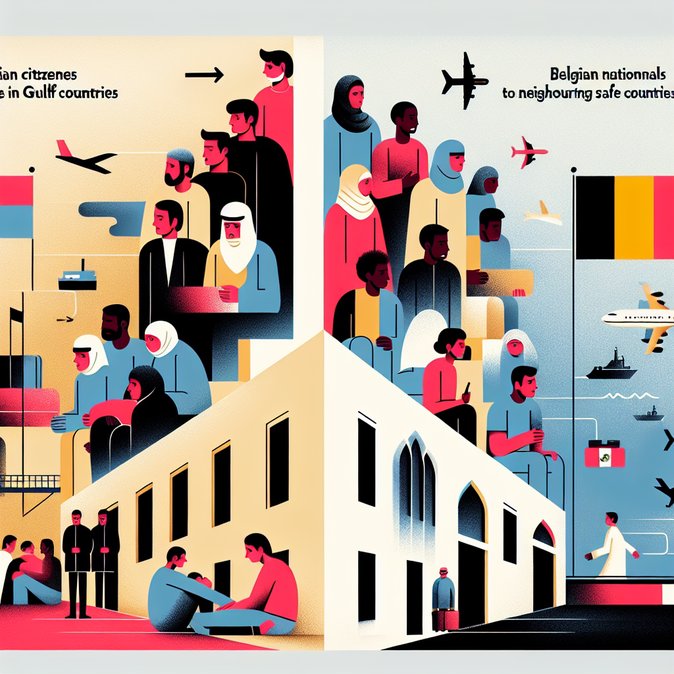
As fighting escalates in the Gulf, Belgium’s Foreign and Defence ministries have outlined an improvised evacuation plan: citizens currently in the United Arab Emirates, Qatar and neighbouring states will be bused to "safe" third countries—mainly Saudi Arabia or Oman—where they must purchase their own commercial tickets home. (brusselstimes.com)
The government has deployed three military transport aircraft with space for 600 passengers but says capacity is reserved for the most vulnerable. Long-term residents are excluded. Around 2,500 Belgians have registered as stranded on the Travellers Online portal; officials urge anyone who has not done so to sign up immediately so that consular teams can plan bus manifests and issue transit letters. (brusselstimes.com)
In situations like these, specialised visa and travel-documentation services can relieve much of the administrative burden. VisaHQ, for instance, provides expedited passport renewals, transit-visa procurement and real-time advisory support for Belgian travellers and their employers; full details are available at https://www.visahq.com/belgium/
![Belgium tells citizens stranded in Middle East conflict they must self-book repatriation flights from ‘safe’ countries]()
For global-mobility teams the message is clear: companies with expatriates in the region should not rely on state-organised charter flights. Travel managers should liaise now with preferred carriers on routes out of Riyadh and Muscat, hold refundable tickets and ensure staff passports have at least six months’ validity for onward travel via the Schengen area.
Immigration implications extend beyond Belgium. Employees transiting through the EU on short-notice one-way tickets may face additional screening under EU Passenger Name Record (PNR) rules. HR should equip travellers with assignment letters and proof of Belgian residence to smooth checks at connecting hubs.
Finally, the episode underscores the importance of integrated crisis-response planning. Belgian authorities have hinted that future evacuation efforts will prioritise passport-holders who uploaded itineraries to Travellers Online before departure. Companies may wish to embed that registration step into their standard pre-trip approval workflow.
The government has deployed three military transport aircraft with space for 600 passengers but says capacity is reserved for the most vulnerable. Long-term residents are excluded. Around 2,500 Belgians have registered as stranded on the Travellers Online portal; officials urge anyone who has not done so to sign up immediately so that consular teams can plan bus manifests and issue transit letters. (brusselstimes.com)
In situations like these, specialised visa and travel-documentation services can relieve much of the administrative burden. VisaHQ, for instance, provides expedited passport renewals, transit-visa procurement and real-time advisory support for Belgian travellers and their employers; full details are available at https://www.visahq.com/belgium/

For global-mobility teams the message is clear: companies with expatriates in the region should not rely on state-organised charter flights. Travel managers should liaise now with preferred carriers on routes out of Riyadh and Muscat, hold refundable tickets and ensure staff passports have at least six months’ validity for onward travel via the Schengen area.
Immigration implications extend beyond Belgium. Employees transiting through the EU on short-notice one-way tickets may face additional screening under EU Passenger Name Record (PNR) rules. HR should equip travellers with assignment letters and proof of Belgian residence to smooth checks at connecting hubs.
Finally, the episode underscores the importance of integrated crisis-response planning. Belgian authorities have hinted that future evacuation efforts will prioritise passport-holders who uploaded itineraries to Travellers Online before departure. Companies may wish to embed that registration step into their standard pre-trip approval workflow.