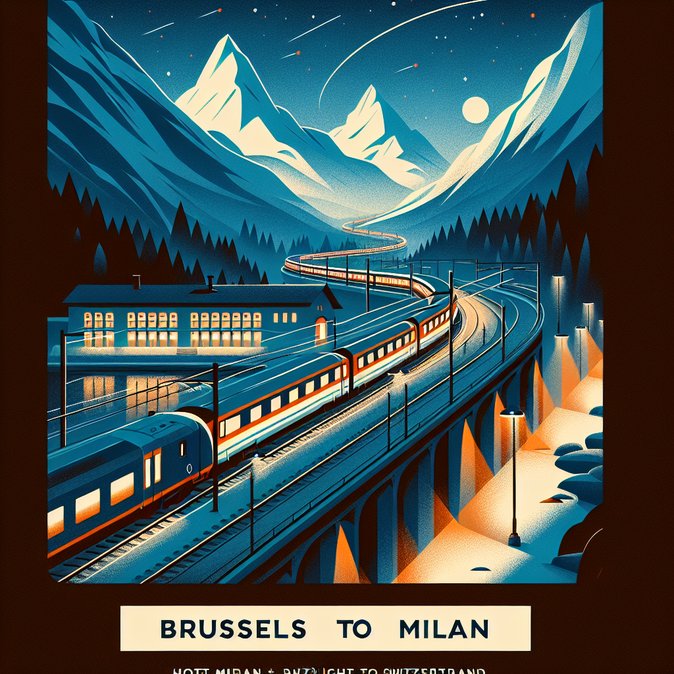
Sleeper-train start-up European Sleeper has chosen 3 March to publish a substantial revision of its Brussels–Milan project—good news for cross-border commuters who regard the overnight rail link as a viable alternative to red-eye flights. Engineering works on the Simplon line forced the operator back to the drawing board; the new itinerary will run through Switzerland’s historic Gotthard mountain route instead, with key stops in Zürich, Lugano, Como and Bellinzona before arriving at Milano Porta Garibaldi. The cooperative promises a thrice-weekly frequency from 9 September 2026. Ticket sales open “two weeks from today”, giving travel buyers a mid-March target to lock in contract fares.
![European Sleeper reroutes Brussels–Milan night train via Gotthard, tickets open mid-March]()
For passengers who may need visas—particularly non-EU staff connecting from Brussels or Zürich—VisaHQ can streamline the paperwork. The platform provides up-to-date Schengen visa requirements, document checklists and expedited processing for Italy and neighbouring countries, letting companies secure travel documents as easily as they book rail tickets. More details are available at https://www.visahq.com/italy/
While the Amsterdam portion of the service is postponed to 2027, Belgian and Italian businesses will still benefit from through-sleepers, bicycle carriage and breakfast-in-bed service—elements that have helped European Sleeper’s Brussels–Prague line achieve load factors above 80 %. Route changes are more than cartographic. By avoiding the Simplon Base Tunnel closure, European Sleeper gains timetable reliability—crucial for duty-of-care and for travellers connecting to early meetings in Milan’s Porta Nuova business district. Environmental, Social and Governance (ESG) teams also point out that the overnight rail trip can shave at least 250 kg of CO₂ per passenger return compared with short-haul flying, aligning with corporate decarbonisation trajectories. However, the switch to the steep Gotthard crest means the train will not use the fast base tunnel and will top out at a modest 57 km/h average speed. Journey time remains roughly 17 hours, putting pressure on European Sleeper to deliver a high-comfort onboard product—upgraded “Comfort Plus” couchettes and refurbished AB30 sleepers are confirmed. From a mobility-policy angle, the service underscores renewed EU interest in night trains as part of the Green Deal. Italy’s Transport Ministry has already pledged to streamline path authorisations, while Swiss infrastructure manager SBB will waive certain surcharges to encourage modal shift. Employers with offices in Brussels, Cologne, Zürich and Milan should review their travel policies to leverage the tax-advantaged ‘Green Travel Day’ allowances available in Belgium and Italy.

For passengers who may need visas—particularly non-EU staff connecting from Brussels or Zürich—VisaHQ can streamline the paperwork. The platform provides up-to-date Schengen visa requirements, document checklists and expedited processing for Italy and neighbouring countries, letting companies secure travel documents as easily as they book rail tickets. More details are available at https://www.visahq.com/italy/
While the Amsterdam portion of the service is postponed to 2027, Belgian and Italian businesses will still benefit from through-sleepers, bicycle carriage and breakfast-in-bed service—elements that have helped European Sleeper’s Brussels–Prague line achieve load factors above 80 %. Route changes are more than cartographic. By avoiding the Simplon Base Tunnel closure, European Sleeper gains timetable reliability—crucial for duty-of-care and for travellers connecting to early meetings in Milan’s Porta Nuova business district. Environmental, Social and Governance (ESG) teams also point out that the overnight rail trip can shave at least 250 kg of CO₂ per passenger return compared with short-haul flying, aligning with corporate decarbonisation trajectories. However, the switch to the steep Gotthard crest means the train will not use the fast base tunnel and will top out at a modest 57 km/h average speed. Journey time remains roughly 17 hours, putting pressure on European Sleeper to deliver a high-comfort onboard product—upgraded “Comfort Plus” couchettes and refurbished AB30 sleepers are confirmed. From a mobility-policy angle, the service underscores renewed EU interest in night trains as part of the Green Deal. Italy’s Transport Ministry has already pledged to streamline path authorisations, while Swiss infrastructure manager SBB will waive certain surcharges to encourage modal shift. Employers with offices in Brussels, Cologne, Zürich and Milan should review their travel policies to leverage the tax-advantaged ‘Green Travel Day’ allowances available in Belgium and Italy.