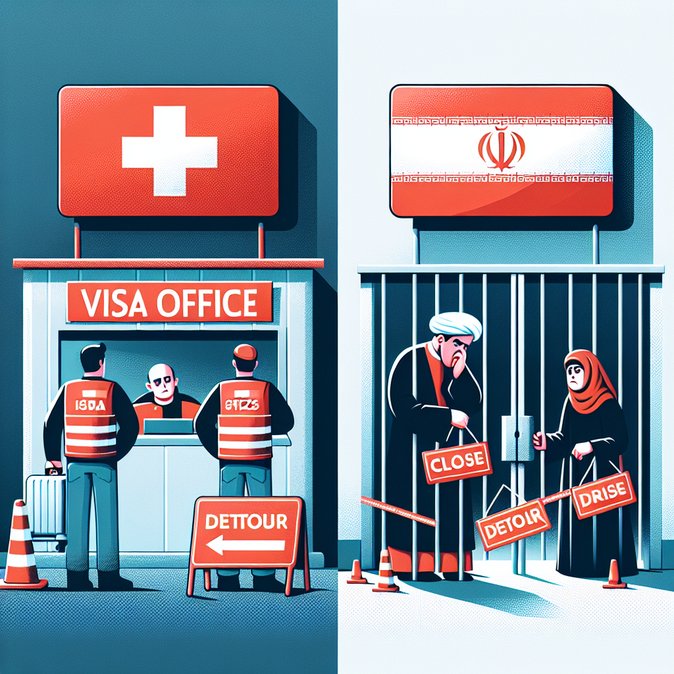
The Swiss Federal Department of Foreign Affairs (FDFA) has suspended all visa and consular services at the embassy in Tehran with immediate effect, citing the rapid deterioration of regional security and repeated telecommunications outages. In a travel advisory updated 1 March 2026, the FDFA moved Iran to a “Do Not Travel” category and called on Swiss citizens to exit the country while commercial flights remain available.(schengen90.app)
The embassy closure means Iranian business travellers and students bound for Switzerland must now lodge applications in third-country consulates such as Ankara or Abu Dhabi. Swiss universities estimate that around 700 Iranian students will be affected this semester alone, potentially delaying enrolments and internship start dates. Corporations with supply-chain links to Iran, particularly in machinery and pharma, are advised to review assignment plans and consider remote-work alternatives until visa services resume.
![Bern Halts Visa Processing in Tehran and Urges Swiss Nationals to Leave Iran]()
For applicants suddenly forced to redirect their paperwork, online facilitators can ease the transition. VisaHQ, for example, provides document checklists, appointment scheduling and real-time status updates for Swiss visas filed at alternative consulates—services that can save both time and costly rework. Travellers can learn more at https://www.visahq.com/switzerland/
For Swiss nationals on the ground, consular assistance will be “severely limited,” the FDFA warned. The government is coordinating with Lufthansa Group carriers to maintain evacuation capacity via Dubai and Doha, but the volatile air-space picture means routings could change at short notice. Employers with staff in Iran should activate emergency tracking systems and verify that travel-insurance polices cover security evacuations.
Unlike some previous advisories, Bern’s notice offers no timeline for reinstating visa services. Mobility managers should anticipate knock-on effects on family-reunification cases and humanitarian visas, and may need to redirect applicants to Swiss representations in neighbouring countries, adding processing time and cost.
The embassy closure means Iranian business travellers and students bound for Switzerland must now lodge applications in third-country consulates such as Ankara or Abu Dhabi. Swiss universities estimate that around 700 Iranian students will be affected this semester alone, potentially delaying enrolments and internship start dates. Corporations with supply-chain links to Iran, particularly in machinery and pharma, are advised to review assignment plans and consider remote-work alternatives until visa services resume.

For applicants suddenly forced to redirect their paperwork, online facilitators can ease the transition. VisaHQ, for example, provides document checklists, appointment scheduling and real-time status updates for Swiss visas filed at alternative consulates—services that can save both time and costly rework. Travellers can learn more at https://www.visahq.com/switzerland/
For Swiss nationals on the ground, consular assistance will be “severely limited,” the FDFA warned. The government is coordinating with Lufthansa Group carriers to maintain evacuation capacity via Dubai and Doha, but the volatile air-space picture means routings could change at short notice. Employers with staff in Iran should activate emergency tracking systems and verify that travel-insurance polices cover security evacuations.
Unlike some previous advisories, Bern’s notice offers no timeline for reinstating visa services. Mobility managers should anticipate knock-on effects on family-reunification cases and humanitarian visas, and may need to redirect applicants to Swiss representations in neighbouring countries, adding processing time and cost.